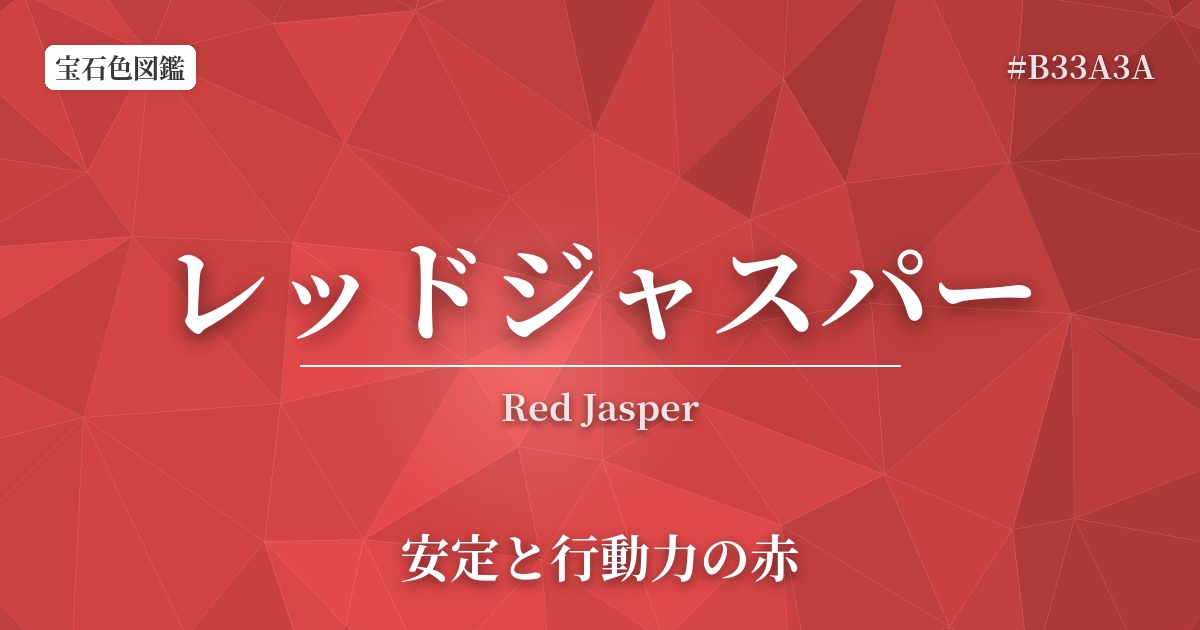
| English name | Red Jasper |
|---|---|
| Katakana | Red Jasper |
| HEX | #B33A3A |
| RGB | 179, 58, 58 |
| Mineralogy | Silicate minerals |
What is Red Jasper? Origin and Mineralogy
Red jasper, also known in Japanese as "sekihekigyoku," is a gemstone characterized by its deep, calm red color. Its name is said to originate from the Greek word "iaspis," meaning "spotted stone." This is because jasper often contains other minerals, resulting in patterns. Mineralogically, it is classified as a type of chalcedony, formed from fine crystals of quartz. The red color is due to fine iron oxide particles, and the shade varies subtly depending on the iron oxide content. With a Mohs hardness of 6.5 to 7, it is relatively hard and is a familiar mineral to us, found in various locations around the world. Major sources include India, Russia, Egypt, Australia, Brazil, and the United States.
The history and culture of Red Jasper
Red jasper has a long history, deeply intertwined with people since the time of ancient civilizations. In ancient Egypt, it was considered a symbol of the blood of the goddess Isis and was cherished as an amulet for vitality and regeneration. This stone is also frequently used in sculptures of scarabs (dung beetles). In ancient Greece and Rome, it is said that warriors wore it as an amulet to the battlefield, seeking courage and protection. In Native American culture, it was considered a sacred stone symbolizing a connection to the earth and was used in rain-making rituals. In medieval Europe, it was considered a stone symbolizing the Apostle Peter in Christianity, and due to its hardness, it was said to have taken on the meaning of a "foundation of faith" and was used in church decorations.
Red Jasper and Color Psychology
The deep, earthy red of red jasper gives the viewer a powerful energy and a sense of solid stability. While red generally symbolizes passion and vitality, the red of red jasper evokes a sense of calm and persistence, like magma residing deep within the earth, rather than a raging fire. For this reason, red jasper is known as the "stone of stability and action." It is said to have a "grounding" effect, solidifying the mental foundation and promoting grounded thinking. It is believed to alleviate anxiety and impatience, and help cultivate the endurance and mental strength needed to face difficult situations. It is also said to support realistic decision-making and execution skills for steadily taking action toward achieving goals, making it a popular amulet for those starting new challenges or those who wish to see things through to the end.
Color scheme preview
This is to check the readability of the text when this color is used as the background.
Red Jasper color scheme proposal
Sandy Brown (#F4A460)
The deep red of the red jasper creates a warm, natural atmosphere. The color scheme, reminiscent of the earth and desert, provides a sense of security and tranquility.
Charcoal (#36454F)
The deep red combined with the weighty feel of charcoal creates a very modern and powerful impression. It's a sophisticated combination that exudes luxury and is expected to tighten up the overall design.
Old Lace (#FDF5E6)
The warm off-white color complements the red of the red jasper, creating a classic and elegant impression. It adds brightness and softness to the space, creating a graceful atmosphere.
Practical Scenes
Due to its rich color and durability, red jasper is used in a variety of settings. In jewelry, it is often cut into cabochons, making its presence felt in rings, pendants, and bracelets. It pairs particularly well with silver, and can be used in a wide range of designs, from ethnic to modern. It is also a popular gemstone for men's accessories. In interior design, incorporating it into accent walls, cushions, rugs, and other textiles brings warmth and a sense of depth to a space. Combining it with natural materials such as wood and leather creates a calm and comfortable atmosphere. In the fields of fashion and web design, its powerful red color is effective in attracting people's attention and encouraging action. Using it as an accent color in accessories such as bags and shoes, or adopting it as a button or key color on a website, can give the design both energy and stability.