
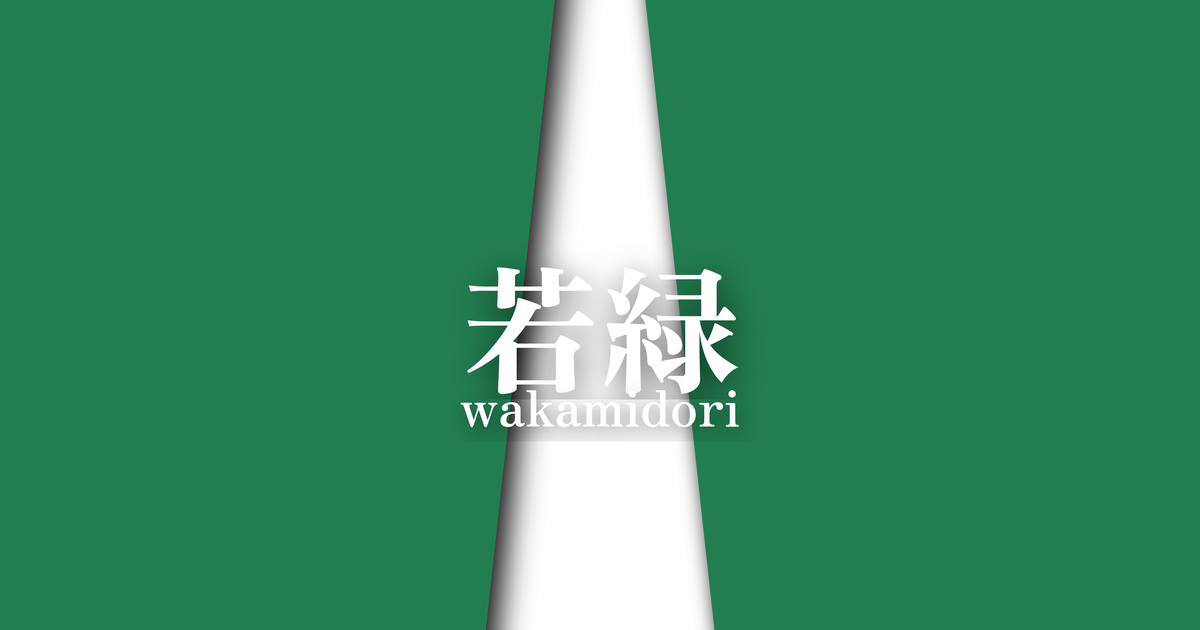
| Japanese color name | Young Green |
|---|---|
| reading | wakamidori |
| season | Miscellaneous (year-round/celebratory) |
| Color of the table | Green (midori) |
| Back color | White (shiro) |
- What is Wakadori? Origin and etymology
- The historical background of Wakadori
- Related literature, waka poetry, and seasonal words
- The season and scenery of fresh green
- A proposed color scheme using light green.
- Practical Scenes
- FAQ
- Color combinations for the same season (miscellaneous (year-round/celebratory))
What is Wakadori? Origin and etymology
Wakamidori, as its name suggests, is a color combination that represents the fresh, vibrant green of newly sprouted leaves. It is often likened to the color of young pine leaves, an evergreen tree. As a "tokiwagi" (evergreen tree), the pine tree remains green throughout the year, making it a symbol of longevity and permanence, and it has long been cherished as an auspicious pattern and subject in art. This color combination is also thought to incorporate the vitality and freshness of the pine tree into clothing.
The historical background of Wakadori
In the Heian period court, the color scheme of one's attire was an important element in demonstrating an individual's aesthetic sense and refinement. "Wakamidori" (young green) was a "miscellaneous" color not bound by any particular season, and was permitted to be worn year-round. In particular, due to the youthfulness of its name and the auspiciousness of the pine tree from which it is said to have been derived, it was favored for celebratory occasions such as New Year's celebrations and festive ceremonies. It was incorporated in various forms depending on the rank and occasion, such as in men's sokutai and naoshi, and in women's uchigi (outer robes) of the tsutsuginu karaginu mo (twelve-layered kimono), adding to the atmosphere of celebratory events.
Related literature, waka poetry, and seasonal words
The word "wakamidori" (young green) is frequently used in classical literature to describe the vibrant scenes of spring. In the "Wakana" chapter of "The Tale of Genji," for example, it appears as the fresh color of the plants and trees in the fields and mountains in early spring, adding a sense of the season and vibrancy to the story. In waka poetry, "wakamidori" is also used as a seasonal word for spring, expressing feelings of joy at the arrival of a new season and a celebration of youthful life.
It is thought that "wakamidori" (young green), as a color combination for layered garments, was also loved by people because it was associated with these literary images.
In the lush green of Kasugano, perhaps we can find our way; in the hazy sky, wild geese fly away.
The season and scenery of fresh green
The "Wakamidori" (young green) color combination symbolizes the vibrant green of young grass sprouting with the arrival of spring and the fresh green of young pine leaves. Its life-giving hue evokes feelings of hope and youthfulness in those who see it. Although classified as a "miscellaneous" color that can be worn year-round, its charm is particularly striking at celebrations in the New Year and early spring. In ceremonies celebrating life's milestones, such as coming-of-age ceremonies and weddings, this color was chosen to express hope for the future and a wish for prosperity.
The contrast between the deep green on the front and the pure white on the back creates an atmosphere that is both solemn and cheerful.
A proposed color scheme using light green.
Plum blossom color (#E16B8C)
This auspicious color scheme evokes the red and white plum blossoms of early spring. The vitality of the young green and the splendor of the red plum complement each other, creating a bright impression suitable for celebratory occasions. This combination was also favored in Heian period attire.
Yamabuki (#F8B500)
This color scheme expresses the vibrant contrast between green leaves and kerria flowers. It evokes the beautiful harmony of nature and gives a lively and bright impression. In modern design, it can be used as a highly visible and energetic combination.
Suou (#9E3D3F)
By combining it with the deep reddish-purple of sappanwood, the vibrancy of the young green stands out even more, creating a sense of calm and elegance. This sophisticated color scheme, reminiscent of the attire of Heian-era nobles, creates a chic and mature atmosphere.
Practical Scenes
As a garment, "wakamidori" (young green) was primarily worn at celebratory ceremonies. In modern Japanese attire, incorporating this color into visiting kimonos, furisode (long-sleeved kimonos), or accessories such as obiage (sash ties) and obijime (sash cords) worn at spring weddings and parties can create a youthful and cheerful impression. In particular, when paired with white, light pink, or cream-colored kimonos, the vibrancy of the green stands out, resulting in an elegant coordination.
"Wakamidori" (young green) can be widely used in modern lifestyles. In interior design, using it in wallpaper and fabrics brings a natural feel and tranquility to a room. It harmonizes particularly well with natural and Japanese modern spaces. In the fields of graphic and web design, its fresh image makes it effective as a key color for brands with themes such as health, environment, and growth.