
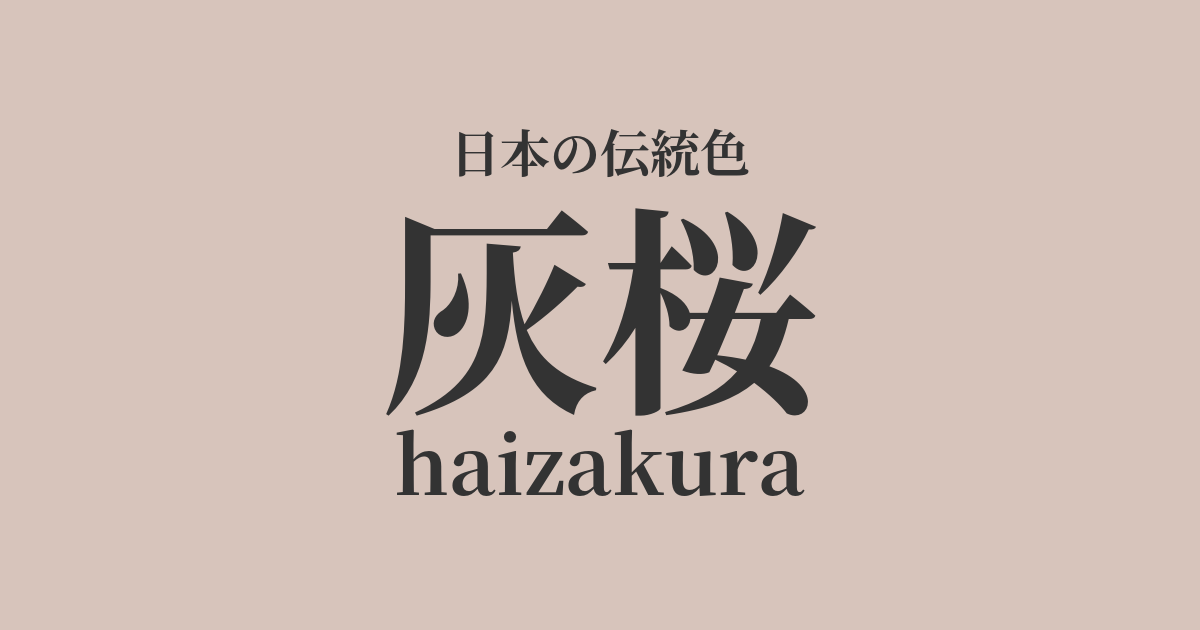
| Japanese color name | Ash Cherry Blossom |
|---|---|
| reading | haizakura |
| HEX | #D7C4BB |
| RGB | 215, 196, 187 |
What is Haizakura? Origin and etymology
As the name suggests, "Haizakura" (grayish cherry blossom pink) is a color name meaning "grayish cherry blossom pink." Rather than the vividness of cherry blossoms in full bloom, it expresses a quiet and tranquil atmosphere, like cherry blossoms seen under a cloudy sky or those just beginning to fall. This delicate shade can be said to be one of the colors that symbolizes the Japanese aesthetic sense, which has captured natural landscapes with keen sensitivity and expressed them as colors.
This color is said to be one of the colors that originated from the countless variations of brown and gray known as "Shijūhacchahyakunezumi" (forty-eight shades of brown and one hundred shades of gray), which developed during the Edo period. While extravagant colors were restricted by the shogunate's sumptuary laws, people found subtle differences in hue within subdued colors and enjoyed that "chic." Ash-cherry blossom is also a manifestation of this refined sense of color born from the townspeople's culture of Edo.
Historical background of Ash Cherry Blossom
Ash-pink was particularly popular from the mid to late Edo period. Repeated sumptuary laws limited the colors of clothing worn by commoners to subdued colors such as brown, gray, and indigo. Within these constraints, people pursued subtle differences in shades within the permitted range of colors, enjoying individuality and fashion.
Ash-cherry blossom, with its exquisite shade of grayish-pink, was said to have been particularly popular among women in Edo (present-day Tokyo) because it embodied the spirit of "iki"—a refined elegance that is not flashy but stylish. This color was used in kimonos, obi sashes, and accessories, and was cherished for its understated yet elegant splendor.
Related literature, waka poetry, and seasonal words
While there aren't many classical literary works that directly mention the color "Ash Cherry Blossom," the sentiment evoked by this color resonates with the worldview of many waka and haiku poems. For example, poems that celebrate the beauty of cherry blossoms and their fleeting nature evoke the shade of Ash Cherry Blossom, a color that adds a touch of shadow to its splendor. This color embodies a uniquely Japanese sensibility that finds beauty not only in cherry blossoms in full bloom, but also in the ever-changing forms of nature.
While the term "ash cherry blossom" is not an established seasonal word, its hue strongly evokes the tranquil scenery of late spring. It harmonizes with the slightly hazy sky and light of the time when cherry blossoms begin to fall and young leaves sprout. When reading descriptions of cherry blossoms in literary works, imagining this ash cherry blossom color will allow you to appreciate the scenery more deeply.
Color scheme preview
This is to check the readability of the text when this color is used as the background.
Ash Cherry Blossom Color Scheme Proposal
Soot bamboo (#6E5B50)
The calm and elegant atmosphere of the ash-pink color is complemented by the deep, rich brown of the sooty bamboo, creating a sophisticated and tranquil impression that emphasizes a Japanese aesthetic. It is a combination that evokes a sense of traditional charm.
鶸Menghuang (#8D9949)
The pale reddish hue of the ash cherry blossom and the youthful yellowish-green of the yellow-green jasmine complement each other beautifully. This color scheme evokes a natural harmony, reminiscent of cherry blossoms and young leaves in spring. It creates a bright yet refined impression, expressing both vitality and elegance simultaneously.
Dark blue (#0F2350)
The soft hues of the ash-pink are highlighted by the deep, sophisticated navy blue of the dark indigo. The significant difference in brightness and saturation creates a strong contrast, resulting in a modern and dignified atmosphere. This color scheme perfectly balances trustworthiness and elegance.
Practical Scenes
In the world of traditional Japanese clothing, ash-pink is widely used in everything from kimonos and obi sashes to accessories like obi ties. It is especially often incorporated into spring outfits, giving an elegant and refined impression without being overly flashy. It is a versatile color that can show a variety of expressions when combined with other light colors or, conversely, dark colors.
In interior design, using it in fabrics such as wallpaper, curtains, and cushions brings a calm and gentle atmosphere to a space. It pairs very well with wooden furniture and neutral colors such as white and gray, making it suitable for creating Japanese modern, natural, and minimalist style spaces.
In web and graphic design, using it as a background or accent color can create a feminine and sophisticated impression. It is particularly well-suited to brand images related to beauty, fashion, and lifestyle. When combined with other pale tones, it helps express a delicate and gentle worldview.