
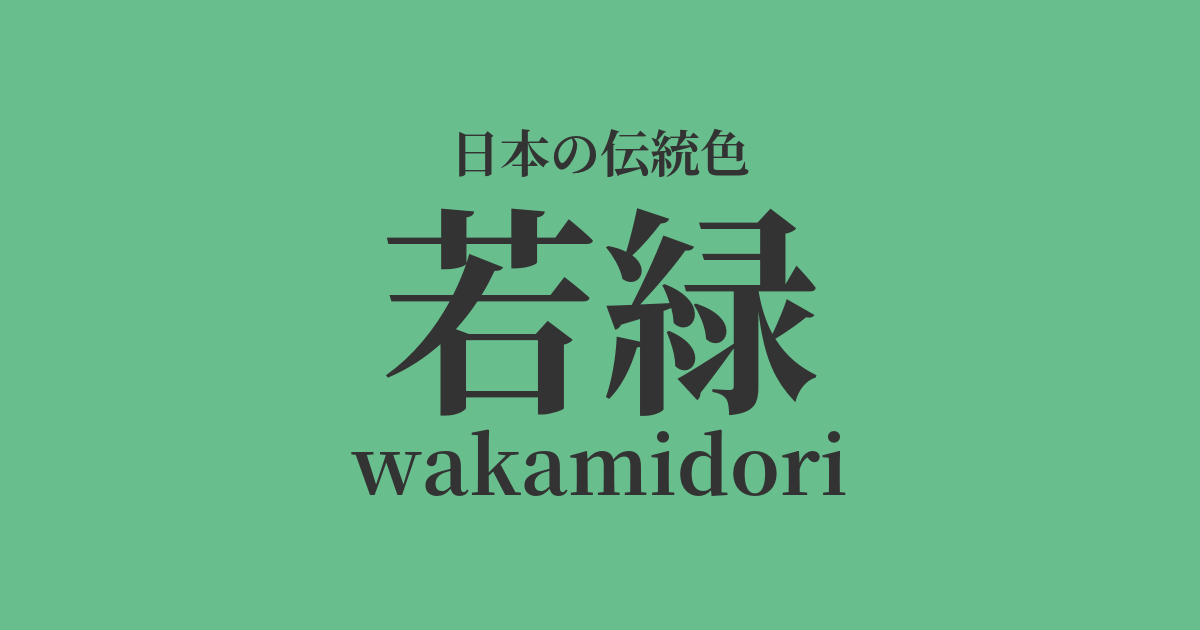
| Japanese color name | Young Green |
|---|---|
| reading | wakamidori |
| HEX | #68BE8D |
| RGB | 104, 190, 141 |
What is Wakadori? Origin and etymology
Wakamidori, as the name suggests, is a color name that refers to a fresh and vibrant green, like the young leaves that have just sprouted in spring. As the prefix "waka" indicates, it symbolizes a fresh image of youth, vitality, and hope. This color evokes the powerful breath of nature and has been deeply rooted in the sensibilities of the Japanese people since ancient times.
It is believed that this vibrant green color was achieved by combining the yellow dye, kariyasu, with the blue dye, indigo.
The historical background of Wakadori
The color name "wakamidori" (young green) has existed since the Heian period and can be found in classical literature such as "The Tale of Genji" and "The Pillow Book." It was particularly favored as a color for the clothing of young women and sons of nobles, and was used to express youthfulness and nobility. "Wakamidori" also existed as a color combination in layered garments, and in spring attire, it was skillfully used to express a sense of the season by combining wakamidori for the outer fabric with sprout green for the lining.
During the Edo period, the color Wakamidori (young green) spread among both samurai and commoners, and came to be used in various everyday items such as kimonos, curtains, and accessories. It was particularly popular as a color that represented the cheerful mood of early spring, and its color can be seen in ukiyo-e prints. Across generations, it has continued to be cherished as a color that heralds the beginning of life.
Related literature, waka poetry, and seasonal words
Young green leaves have been a seasonal word for spring and have been featured in many waka and haiku poems. As the color of newly sprouted plants, they play a symbolic role in announcing the end of winter and the arrival of a new season. Through the vibrant color of young green leaves, poets have expressed the vitality of nature, the passage of time, and their own feelings.
In Heian period literature, particularly in "The Tale of Genji," young green is effectively used as the color of the characters' clothing. For example, it is used to symbolize the youthful freshness of Hikaru Genji or the loveliness of the ladies. This adds a colorful depth and sense of the season to the story, making it an important element that stimulates the reader's imagination.
As I sit on the young green grass of Kasugano, dew settles on my sleeves.
Color scheme preview
This is to check the readability of the text when this color is used as the background.
A proposed color scheme using light green.
Cherry blossom pink (#FEEAFA)
This color scheme, reminiscent of fresh spring leaves and cherry blossoms in full bloom, symbolizes Japanese spring. It evokes a sense of new beginnings and fresh starts, giving a bright, hopeful, and gentle impression. It is suitable for designs related to traditional Japanese clothing and spring events.
Golden (#E6B422)
The vibrant young green and shimmering golden color powerfully complement each other. This color scheme expresses youthful energy, abundance, and dignity simultaneously, creating a luxurious yet refined impression.
Blue and white (#EBF4F8)
The vibrant green of the young leaves is gently enhanced by a very pale bluish-white color. This combination evokes a refreshing impression reminiscent of the clear skies and new greenery of early summer, making it ideal for creating a clean and calming space.
Practical Scenes
In the world of traditional Japanese clothing, light green is a particularly popular color for formal wear, especially for young women, such as furisode (long-sleeved kimono) and houmongi (formal visiting kimono). Its youthful and vibrant hue is suitable for celebratory occasions such as coming-of-age ceremonies and weddings, and it enhances the wearer's loveliness. It is also effective to incorporate it as an accent in accessories such as obi (sash) and obiage (sash tie).
In interior design, using light green as an accent color brings brightness and vitality to a space. Incorporating it into one wall of wallpaper, cushions, or curtains will give the entire room a fresh feel. It pairs particularly well with natural and Scandinavian-style interiors.
In the fields of website and graphic design, light green is an ideal color for conveying concepts such as "growth," "nature," "eco," and "health." Using it in startup logos or organic product packaging can create a positive and trustworthy impression on users.