
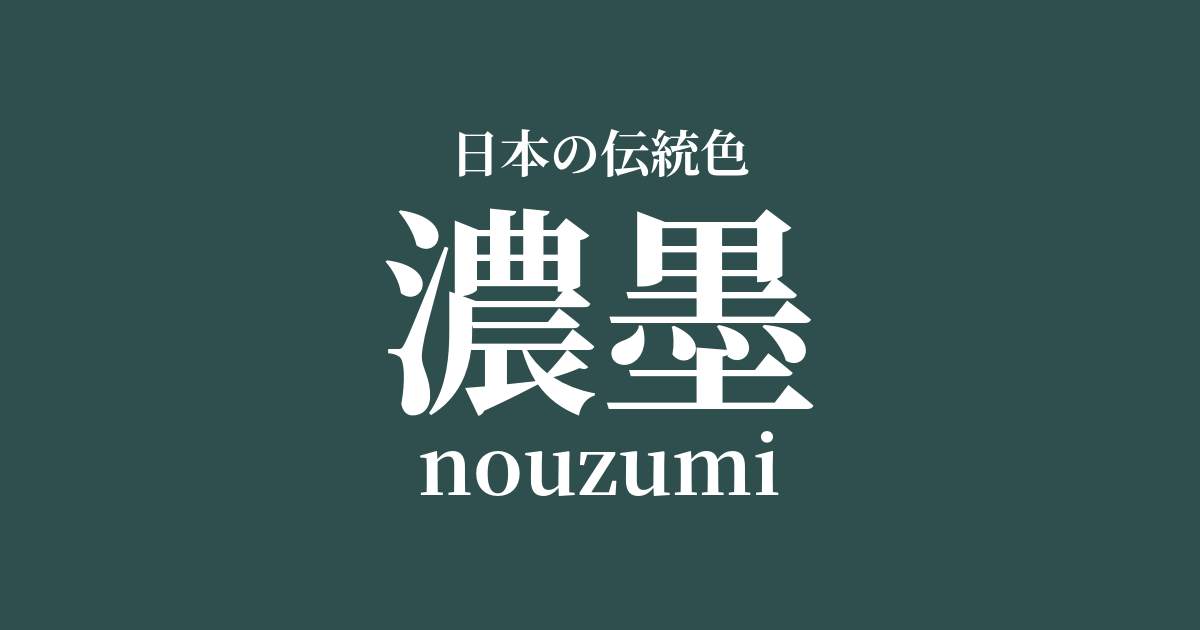
| Japanese color name | Dark ink |
|---|---|
| reading | nouzumi |
| HEX | #2F4F4F |
| RGB | 47, 79, 79 |
What is dark ink? Origin and etymology
"Nouzumi" (濃墨) is a color name derived from the darkest shade of ink used in calligraphy and ink painting. Ink is made by kneading soot and animal glue together, and various shades are produced by dissolving it in water. Among these, the color of ink that is close to the undiluted solution and used with little to no water added is called "nouzumi." It is not simply black, but depending on the type of soot used as raw material and the manufacturing method, it can have a subtle bluish or greenish tint, and this deep hue is its characteristic feature.
The name "dark ink" is derived directly from the phrase "dark ink." Ink, deeply rooted in Japanese culture since ancient times, was not merely a writing tool but also a medium for expressing spirituality. Therefore, each shade of ink was given a name, distinguishing subtle differences in color. "Dark ink," as the pinnacle of this gradation, is recognized as a color symbolizing gravitas, dignity, and tranquility.
Historical background of dark ink
Ink itself has a long history, and it is believed to have been introduced to Japan along with Buddhism during the Asuka period. Initially, it was mainly used for religious purposes such as copying sutras, but in the Heian period, the culture of writing waka and kanshi poetry spread as a form of education among the aristocracy, and the demand for ink increased. During this period, the beauty and quality of ink's color became important, and it is thought that the deep hues of concentrated ink were also highly valued.
In particular, dark ink played a crucial role in artistic expression in sumi-e (ink painting), which developed during the Muromachi period. In sumi-e, linked to Zen Buddhist philosophy, nature and the spiritual world were depicted solely through variations in ink color. Dark ink was used for strong outlines and the darkest parts of the canvas, and was an essential color for giving depth and tension to the work. This technique had a significant influence on later Japanese painting.
Related literature, waka poetry, and seasonal words
The color name "dark ink" is rarely used directly in waka poetry or stories. However, in Heian period literary works such as "The Tale of Genji" and "The Pillow Book," the exchange of letters is frequently depicted, and the shade of ink used in these letters is an important element that hints at the characters' feelings and level of education. Letters written in dark, lustrous ink convey the writer's sincere feelings and dignity, and the presence of dark ink is felt in the background.
In haikai poetry, "ink" itself is not a seasonal word, but words like "grinding ink" and "first inkstone" are used as seasonal words for the New Year. These poems depict the scene of preparing oneself mentally and beginning calligraphy as one welcomes the new year. The quiet time spent grinding ink, and the dark color of the ink accumulating in the inkstone, combined with the crisp winter air, create a solemn and pure atmosphere.
Color scheme preview
This is to check the readability of the text when this color is used as the background.
Suggested color scheme using dark ink
White training (#FEFFBFB)
The contrast between dark ink and white ink creates a classic and beautiful contrast reminiscent of the relationship between ink and negative space in sumi-e (ink painting). Despite the strong contrast, the slight yellowish whiteness of the white ink prevents it from becoming too cold, giving it an elegant and refined impression.
Golden (#E6B422)
Combining deep, rich black ink with vibrant gold creates a luxurious and dignified impression. Like the screen paintings of the Azuchi-Momoyama period, the combination of black and gold is a symbol of traditional Japanese beauty. The greenish tint of the dark ink further enhances the brilliance of the gold.
Rusty light green (#86A8A7)
The green elements of the dark ink and the muted blue-green of the rusty light blue resonate with each other, creating a unified and calm color scheme. The combination of similar colors with reduced saturation exudes a gentle and intellectual atmosphere, evoking quiet natural scenes such as rain-soaked rocks and moss.
Practical Scenes
In the world of kimono, dark ink-colored kimonos and haori jackets are sometimes used as formal attire for men. Especially as a color second only to black crested kimonos in terms of formality, it conveys a sense of calm and dignity. Pairing it with brighter colors for the obi and accessories allows for a stylish and sophisticated look.
In interior design, incorporating dark ink into wallpaper or furniture creates a sense of weight and tranquility in a space. Using it as an accent wall tightens the overall look of the room, giving it a modern and sophisticated feel. It also pairs very well with natural materials such as light-colored wood and bamboo.
In web and graphic design, using white or gold as a background color enhances content visibility and conveys a sense of luxury and trustworthiness. It's particularly suitable for websites of museums, traditional crafts, and luxury brands. Using white or gold for text allows for a balance between readability and design appeal.