
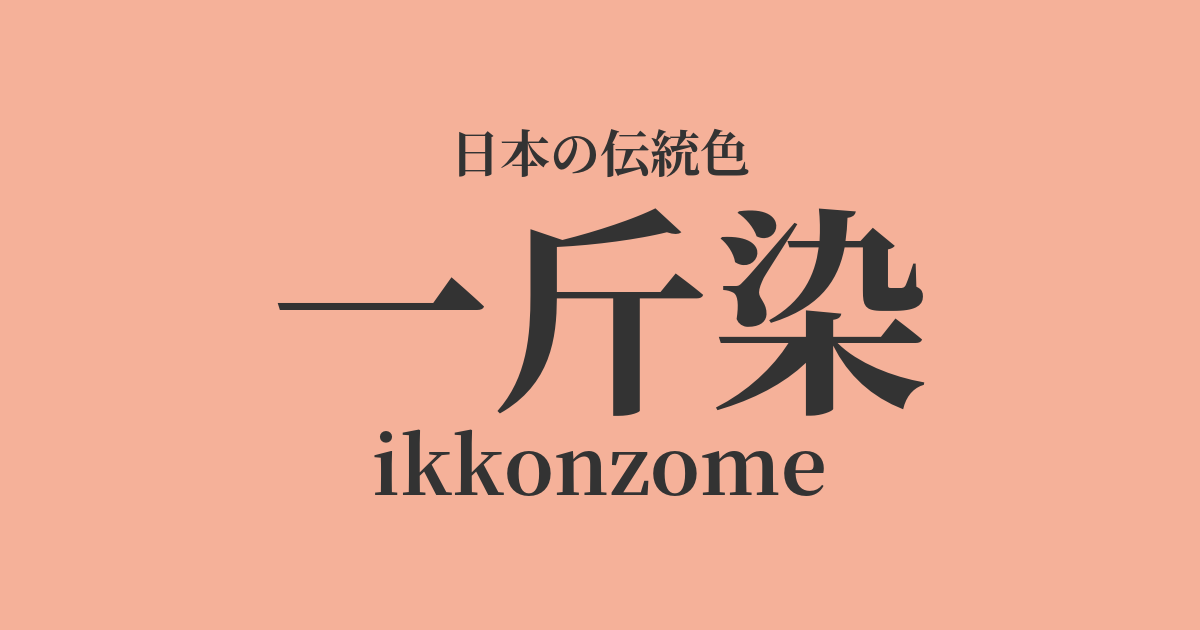
| Japanese color name | One loaf dyed |
|---|---|
| reading | ikkonzome |
| HEX | #F5B199 |
| RGB | 245, 177, 153 |
What is Ikkin-zome? Origin and etymology
Ikkin-zome refers to a pale pink color with a slight yellowish tint, achieved by dyeing with safflower. Its name originates from the "Engishiki," a collection of laws from the Heian period, where it refers to the use of one kin (approximately 600g) of safflower, which was considered precious at the time, to dye one hiki (equivalent to two bolts of silk). It is considered the palest color among safflower dyes, and its delicate hue is its defining characteristic.
It's known as a color that's slightly more reddish than cherry blossom pink, giving a warm and gentle impression.
Historical background of Ikkin-zome
During the Heian period, the amount of dye used was closely linked to the social class system. Deep crimson, in particular, dyed with expensive safflower, was a "forbidden color" that only the emperor and a select few high-ranking individuals were permitted to wear. On the other hand, because it used less safflower, one-kin dye was a "permitted color" second only to the forbidden colors, and was widely used by women of the aristocratic class.
This color was particularly favored as a symbol of the freshness and loveliness of young women, and it is said to have been frequently used in clothing and furnishings of the time.
Related literature, waka poetry, and seasonal words
Ikkinzome is a color that graces Heian period literature and appears in numerous works. In the "Suetsumuhana" chapter of "The Tale of Genji," Princess Suetsumuhana, who is not beautiful but kind-hearted, is depicted wearing an old-fashioned Ikkinzome garment. This depiction is effectively used to symbolize her modest and simple character.
Furthermore, in Sei Shonagon's "The Pillow Book," examples of "elegant things" include "a light-colored white silk undergarment, grape-dyed fabric, wisteria flowers, and one-pound dye," suggesting that these colors were recognized as elegant and refined in the aristocratic society of the time.
Color scheme preview
This is to check the readability of the text when this color is used as the background.
Color scheme proposal for one loaf of dyed bread
Light green (#A9D159)
The combination with a fresh green reminiscent of spring leaves gives a vibrant and youthful impression. This classic color scheme, also seen in the "kasane no irome" (layered color combinations) of the Heian period, creates a bright and cheerful harmony that evokes the arrival of spring.
White training (#FCFAF2)
When paired with pure white silk, the soft and gentle hues of the single-dye technique are highlighted, creating an elegant and refined atmosphere. This combination, often seen in kimono layering and traditional Japanese accessories, expresses a modest yet dignified elegance.
Dark color (#634950)
By combining it with a deep, rich purple, the brightness of the single-ply dyed fabric stands out, giving the overall look a refined and sophisticated feel. This contrasting color scheme, also seen in the attire of Heian-period aristocrats, creates a refined and mature impression that balances elegance and composure.
Practical Scenes
In the world of traditional Japanese clothing, ikkanzome (a type of dye) is used as part of the background color or pattern for furisode (long-sleeved kimono), houmongi (formal visiting kimono), and komon (casual kimono). It is particularly popular as a color suitable for the spring season and is often combined with floral patterns such as cherry blossoms and plum blossoms. Incorporating it into accessories such as obiage (sash ties) and obijime (sash cords) can add a soft and elegant touch to the entire outfit.
In interior design, using it in fabrics such as wallpaper, curtains, and cushions creates a bright and gentle atmosphere throughout the space. It pairs well with spaces based on white or beige tones, and with natural wooden furniture, making it suitable for creating a calm and relaxing environment.
In web and graphic design, it creates a friendly and soft impression, making it effective for websites targeting women's products and services, as well as spring campaign pages. It's easy to use as both a main color and an accent color, and when combined with white or light gray, it can create an elegant and sophisticated design.