
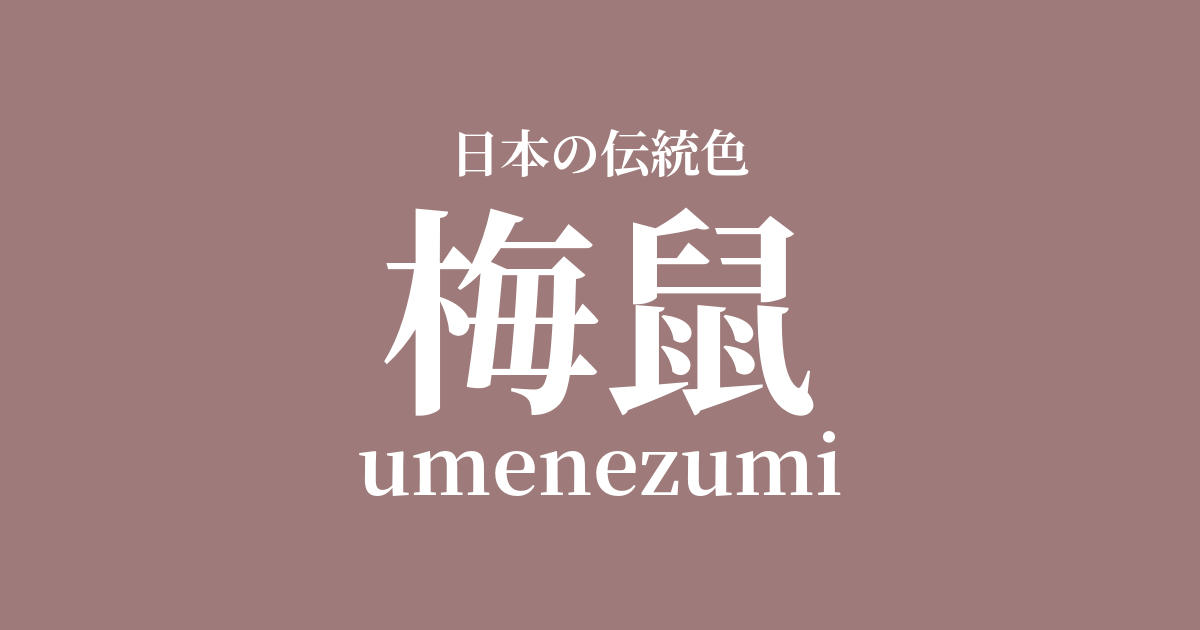
| Japanese color name | Plum mouse |
|---|---|
| reading | umenezumi |
| HEX | #9E7A7A |
| RGB | 158, 122, 122 |
What is a "Ume-nezumi"? Origin and etymology
Ume-nezumi is a gentle and subdued shade of gray, with a slight reddish tint reminiscent of plum blossoms. As the name suggests, it is a combination of "ume" (plum) and "nezumi" (gray), and is considered one of the diverse shades of gray that originated in the Edo period. At that time, the shogunate's sumptuary laws restricted the use of flashy colors, so common people began to enjoy finding subtle nuances within muted colors such as brown and gray.
In this culture of "chic" and refined taste, ume-nezumi (plum gray) was cherished as a sophisticated color that combined the achromatic gray with the elegance of plum blossoms, which herald the arrival of spring.
Historical background of the plum-gray color
The plum-gray color is said to have been particularly popular during the Bunka-Bunsei period (1804-1830), from the mid to late Edo period. During this time, townspeople's culture flourished, and a wide variety of browns and grays were created, so much so that it was called "forty-eight shades of brown and one hundred shades of gray." Plum-gray was one of these "one hundred shades of gray" and was widely used for kimonos, obi sashes, and accessories. It is said to have been particularly popular among women because, while not being flashy, its subtle reddish tint had the effect of brightening the complexion.
This color is one of the colors that symbolizes the refined sense of color of the common people of Edo.
Related literature, waka poetry, and seasonal words
Currently, no famous waka poems or classical literary works have been identified that directly feature the color name "ume-nezumi" (plum gray). However, the "ume" (plum blossom) has long been cherished in the world of waka poetry as a flower that heralds spring, and has been frequently depicted as a symbol of elegance and vitality. On the other hand, "nezumi" (gray gray) is a color that has been frequently depicted in Edo period humorous books and ukiyo-e prints as representing the stylish attire of Edoites.
Plum gray is a color that fuses elements from these two cultural backgrounds, and its name itself can be said to embody literary poetic sentiment and the aesthetic sensibilities of the Edo period.
Color scheme preview
This is to check the readability of the text when this color is used as the background.
Plum Gray Color Scheme Proposal
Haizakura (#E8D3D1)
The reddish tones of the plum gray and the pale pink of the ash cherry blossom harmonize naturally, creating a very gentle and elegant impression. This color scheme evokes a calm and delicate atmosphere reminiscent of a hazy landscape in early spring.
鶸Menghuang (#8F9923)
By combining a calm, reddish plum gray with a vibrant, fresh green reminiscent of young grass, the colors complement each other beautifully. This creates a modern color scheme full of vitality, evoking the feeling of spring's budding.
Dark blue (#001134)
This combination features a soft plum-gray hue that is sharpened by a deep, intellectual dark indigo. It conveys an impression of trustworthiness and sophistication, creating a chic and dignified atmosphere not only in traditional Japanese clothing but also in modern designs.
Practical Scenes
In the world of traditional Japanese clothing, plum-gray is used in a variety of items, including formal kimonos, casual kimonos, obiage (sash ties), and obijime (sash cords). Its exquisite color, neither too flashy nor too plain, can be worn elegantly by people of all ages and adds a sense of seasonality, especially to spring outfits.
In interior design, using it on large areas such as wallpaper, curtains, and sofas brings a sense of calm and warmth to a space. It also pairs well with basic colors such as wood, white, and black, contributing to the creation of a peaceful and relaxing environment.
In web and graphic design, using it as a background or accent color creates a sophisticated impression. It's a color that gives users a sense of comfort and is particularly well-suited to natural and minimalist designs.