
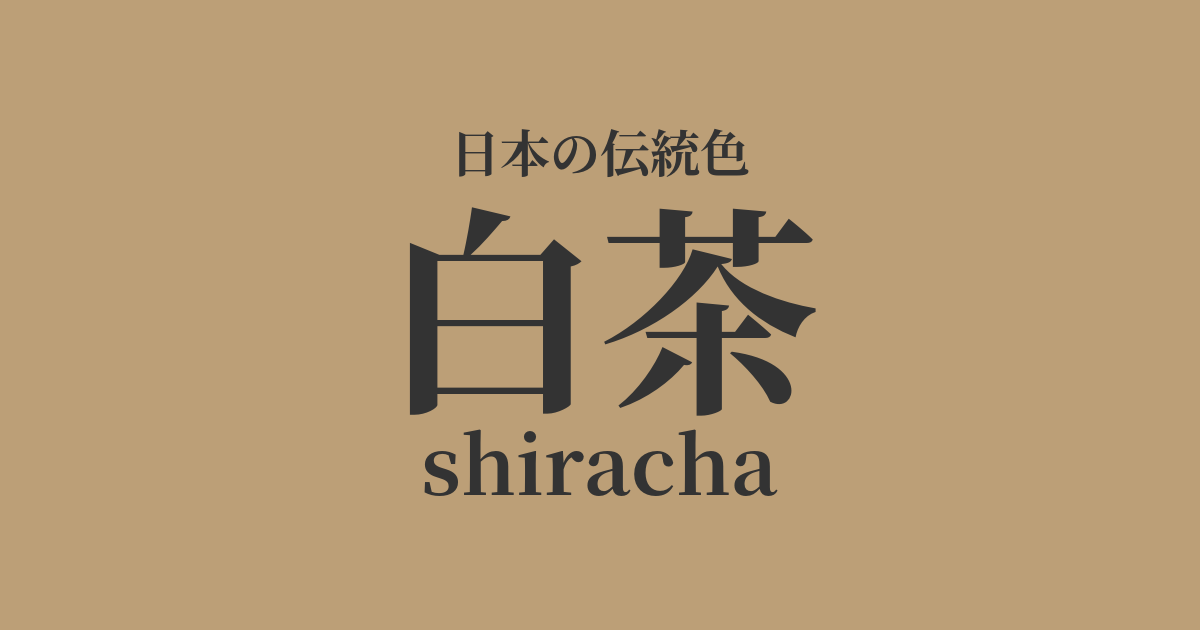
| Japanese color name | white tea |
|---|---|
| reading | shiracha |
| HEX | #BC9F77 |
| RGB | 188, 159, 119 |
What is white tea? Origin and etymology
Shiracha, as the name suggests, is a color name meaning "a whitish brown." Here, "white" does not refer to mixing in actual white, but is used as a prefix to indicate a light or pale color. During the Edo period, when tea dyeing became popular among common people, this pale shade was created by reducing the number of times the fabric was dyed with the tea leaf dye or by using a weaker dye solution.
It can be said that this color name reflects the delicate sense of color of the Japanese people, possessing a natural and simple texture.
The name itself directly originates from "tea dyeing," which used sencha or bancha as dyes. During the Edo period, due to sumptuary laws that restricted extravagant colors, subdued shades such as brown and gray were considered "chic," leading to the creation of a wide variety of shades. Shirocha is one such shade, and it is said to have been given this name because it is particularly bright among the many shades of brown, with a gentle, yellowish hue.
Historical background of white tea
The color name "shiracha" (white tea) first appears in history from the mid-Edo period onward. At that time, the shogunate frequently issued sumptuary laws, restricting commoners from wearing brightly colored clothing. As a reaction to this, people began to find enjoyment in subtle differences in shades of muted colors such as brown and gray, resulting in such a diverse range of colors that it was called "shijūhacchahyakunezumi" (forty-eight shades of brown and one hundred shades of gray).
White tea was one of the colors that emerged during this trend, and it is said to have been widely loved, especially from around the Genroku era (1688-1704), when townspeople's culture flourished. While various shades of brown became popular, such as "Danjuro tea," which was favored by the Kabuki actor Ichikawa Danjuro, as well as Rokō tea and Kobi tea, white tea, with its elegant and understated hue, was used in kimonos and accessories, and became established as a color that symbolized the refined aesthetic sense of Edo.
Related literature, waka poetry, and seasonal words
Because white tea (shirocha) is a relatively new color that originated in the Edo period, it is not found in Heian classical literature such as "The Tale of Genji." However, a variety of shades of brown, including white tea, frequently appear in works that reflect the popular culture of the Edo period, such as sharebon (humorous novels), kibyoshi (yellow-covered books), and ukiyo-e (woodblock prints). In these works, white tea is depicted as the color of the kimonos worn by the characters, conveying to us the fashion trends and color sensibilities of the time.
While "white tea" is rarely mentioned directly in specific waka or haiku poems, its color evokes autumn scenes. Because it resembles the color of withered fields, ripe fruit, and dry earth, in literary expressions it is sometimes associated with feelings of loneliness, tranquility, or the end of the harvest season. Although not designated as a seasonal word, it is recognized as one of the colors that evokes the changing seasons of Japan.
Color scheme preview
This is to check the readability of the text when this color is used as the background.
White and brown color scheme proposal
Dark brown (#6F4B3E)
The lightness of the white tea and the deep shade of the dark brown complement each other beautifully. Using similar colors creates a unified, elegant, and dignified impression. The clear contrast in brightness ensures high visibility, making it suitable for expressing calmness and depth in traditional Japanese clothing and designs.
Tsune Meng Huang (#8FBB65)
The natural, dry, earthy impression of white tea harmonizes with the vibrant green of young yellow leaves, creating a calm and pleasant atmosphere. The combination of earth tones is easy on the eyes and has a calming effect in natural-style interiors and web designs.
Bellflower color (#564F8A)
Combining a subtle, warm off-white tea with a noble and refined bellflower pink creates a chic and modern atmosphere. The near-complementary relationship between the two colors enhances each other, resulting in a unique yet dignified color scheme. It's ideal for accessories and fashion accents.
Practical Scenes
In the world of traditional Japanese clothing, off-white is widely used for kimonos, obi sashes, and haori jackets. Its elegant and understated hue makes it highly valued as a base color that complements other colors and patterns. It is particularly favored in autumn and is a staple color for creating a calm and mature look. Its versatility, being easy to match with both men's and women's kimonos, is also a major appeal.
In interior design, incorporating off-white or light brown into wallpaper, curtains, and furniture can create a warm and calming space. It also pairs well with natural light, giving the entire room a bright and tranquil feel. It is particularly compatible with natural materials such as wood, Japanese paper, and earthen walls, making it suitable for creating Japanese modern or natural style spaces.
White and brown are also effectively used in web and graphic design. When used as a background color, they can maintain content readability while conveying a sense of trust and reliability to the entire site. They are particularly effective when you want to create an elegant and sincere impression, such as for e-commerce sites dealing with traditional crafts, content with historical themes, or the brand image of organic products.