
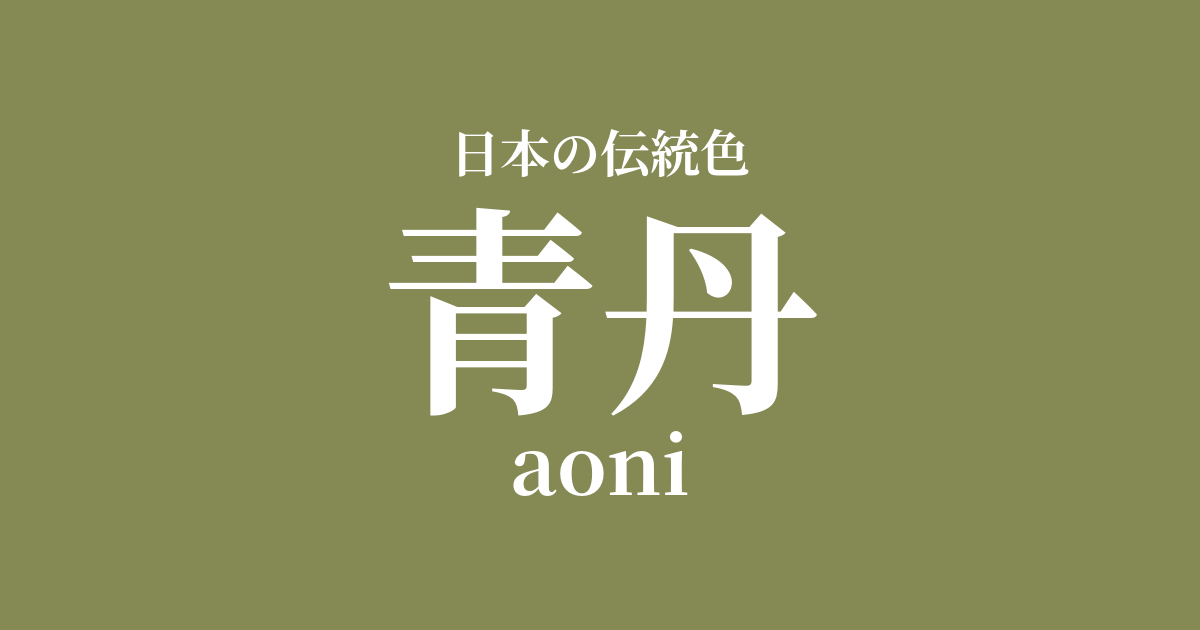
| Japanese color name | Aotan |
|---|---|
| reading | aoni |
| HEX | #858954 |
| RGB | 133, 137, 84 |
What is Aotani? Origin and etymology
Aotani is a traditional Japanese color referring to a muted, greenish-blue. Its etymology is said to originate from "iwarokushō," a natural mineral pigment. In archaic Japanese, "ao" referred to a broad range of colors including green, and "tan" meant red clay or pigment. In other words, "aootani" literally refers to the "blue (green) pigment" itself, and this term has become established as a color name.
This verdigris is made from powdered malachite and has been used for coloring paintings and architecture since ancient times.
Historical background of Aotani
Aotani is particularly known as a color symbolizing the Nara period. At that time, influenced by culture introduced from the continent, the palaces and temples of Heijo-kyo, the capital, were adorned with vibrant colors. It is said that one of the main pigments used was Iwa-ryokushō, or aotani. This color is thought to have been used in the pillars and murals of buildings such as Yakushi-ji and Hōryū-ji, playing an important role in creating the splendor of the capital. Made from precious minerals, this pigment was also a symbol of power and wealth at the time.
Related literature, waka poetry, and seasonal words
When discussing Aoni, it is essential to mention the makurakotoba (pillow word) "Aoniyoshi" which appears in the Manyoshu anthology. This word is very famous as a makurakotoba that modifies "Nara" and was used to praise the beauty of the capital. A representative poem is "Aoniyoshi Nara no Miyako wa Saku Hana no Nihou ga gotoku Ima zakari nari" (The capital of Nara, beautifully adorned with Aoni, is now in full bloom, like the fragrance of blooming flowers). This poem beautifully depicts how the capital of Nara, adorned with Aoni, is flourishing like a flower in full bloom.
This epithet transformed Aotani from a mere color name into a literary symbol evoking the vibrant scenery of the ancient capital of Nara.
The capital city of Nara, Aoniyoshi, is now in its prime, its fragrance wafting through the air like blooming flowers.
Color scheme preview
This is to check the readability of the text when this color is used as the background.
Aotani's color scheme proposal
Red (#A23921)
The "tan" in "aotan" means red clay, so the combination with the reddish color tan has a high etymological affinity. It evokes the pillars (painted in tan) and murals (painted in aotan) of temples and shrines in Nara, recreating the solemn and tranquil atmosphere of the ancient capital.
Golden (#E6B422)
The decorations of temples and shrines that used Aotani often featured gold leaf and gold-plated metal fittings. The combination of the dull green of Aotani and the gleaming gold enhanced each other's colors, creating a luxurious and dignified impression.
Shirato (#F4F0E0)
When Aotani was used in murals and other artwork, white clay (such as plaster) was used as the base coat. By combining it with the warm, off-white color of white clay, the calm hue of Aotani stands out, creating a sense of cleanliness and elegance.
Practical Scenes
In traditional Japanese clothing, incorporating Aotani (a type of blue-green) into accessories such as obi (sash), obi-jime (sash cord), and han-eri (collar) gives the entire outfit a classic and intellectual impression. It pairs particularly well with off-white and brown kimonos, and is suitable for creating a calm and mature style. While not flashy, its deep hue enhances the wearer's dignity.
In interior design, using Aotani (a type of wood color) for accent walls or fabrics can create a calm and modern Japanese space. Because it harmonizes exceptionally well with wood, it blends naturally not only with traditional Japanese architectural styles but also with contemporary homes. It also complements the greenery of houseplants, creating a peaceful and relaxing atmosphere.
In web and graphic design, Aotani (blue-green) is effective when you want to convey reliability and historical significance. When used as a background color, it gives content a sense of gravitas and calmness. It is particularly often adopted as a key color for websites related to traditional crafts or history, or for brands that emphasize luxury.