
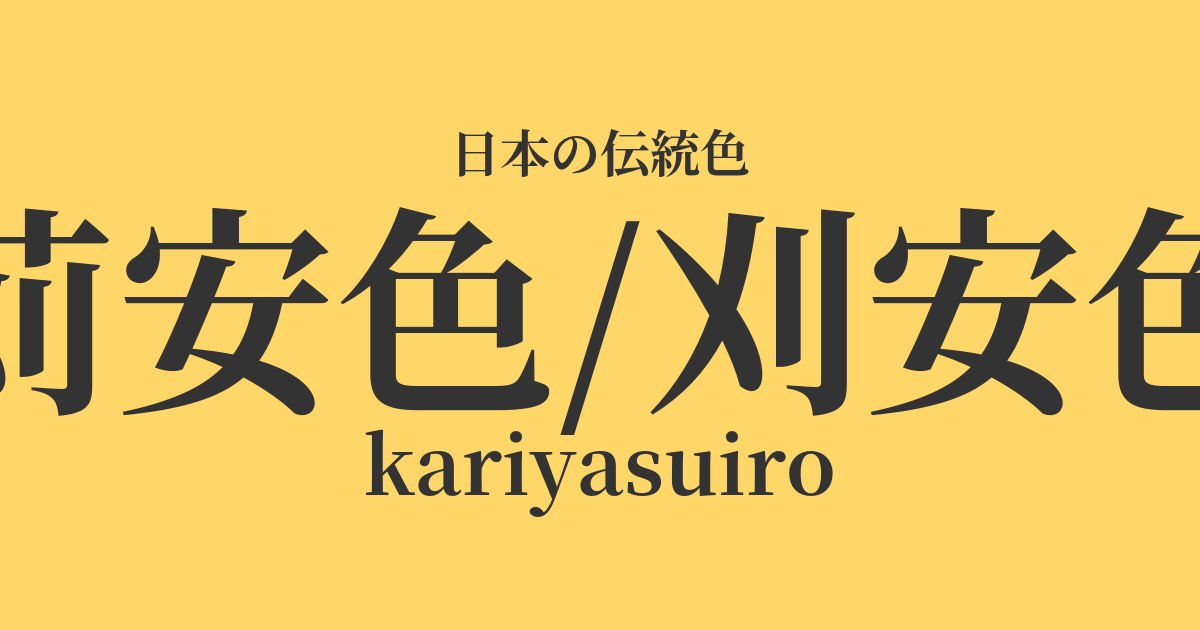
| Japanese color name | Kariyasu color/Kariyasu color |
|---|---|
| reading | kariyasuiro |
| HEX | #FFD768 |
| RGB | 255, 215, 104 |
- What is Kariyasu-iro (a type of iris)? Origin and etymology.
- Kariyasu-iro - Historical background of Kariyasu-iro
- Related literature, waka poetry, and seasonal words
- Color scheme preview
- Kariyasu-iro (a type of green) - Kariyasu-iro color scheme proposal
- Practical Scenes
- FAQ
- Kariyasu-iro - A Japanese color similar to Kariyasu-iro
What is Kariyasu-iro (a type of iris)? Origin and etymology.
Kariyasu-iro refers to a bright, vivid yellow color dyed using Kariyasu (a type of perennial grass belonging to the Poaceae family). Kariyasu is a plant very similar to Japanese pampas grass and grows wild in the mountains and fields throughout Japan. One theory about its name is that it comes from the word "kariboshi" (to cut and dry), because the green color remains well even when dried. The dye solution extracted by boiling the stems and leaves of this plant has been used as an important yellow dye since ancient times.
Kariyasu-iro - Historical background of Kariyasu-iro
Dyeing with Kariyasu has a long history, and it is believed to have been practiced as early as the Nara period. Among the treasures stored in the Shōsōin, there are still textiles that are believed to have been dyed with Kariyasu. This fact indicates that it was recognized as an important yellow dye even back then.
In the Heian period, the color of kariyasu took on an even more important role. The color of the robe worn by the emperor during important ceremonies, "kōrozen," was a forbidden color that could not be used by anyone other than the emperor. Since the color dyed with kariyasu could produce a hue similar to kōrozen, it was treated as a substitute, or as a color of the next highest nobility.
The "Engishiki," compiled in the mid-Heian period, lists kariyasu (a type of dye) as a dyeing material in the section on the Nuidono-tsukasa (Bureau of Sewing), indicating that it was managed as an official dye. In the Edo period, with the spread of cotton, it became popular among common people and was used in various items such as kimonos and hand towels.
Related literature, waka poetry, and seasonal words
Kariyasu color also makes an appearance in the world of classical literature. In Heian period literature such as "The Tale of Genji," there are many scenes in which noble figures wear yellowish clothing. Although these descriptions do not directly mention "Kariyasu color," it is thought that the clothing was dyed with Kariyasu, as it was a major yellow dye at the time.
Furthermore, the plant "kariyasu," which is the raw material for dyes, is used as a seasonal word for autumn in the world of haiku poetry. The sight of kariyasu swaying in the wind in the autumn mountains and fields evokes the quintessential Japanese landscape. While it is rare for the color name itself to directly become a seasonal word, it is linked to the sense of the season through the plant that is its background.
Autumn in the fields, where the ears of grain begin to emerge from the harvested stalks.
Color scheme preview
This is to check the readability of the text when this color is used as the background.
Kariyasu-iro (a type of green) - Kariyasu-iro color scheme proposal
Indigo (#243A6C)
The combination of bright yellow-green and deep indigo creates a contrast that enhances each other's beauty. This traditional Japanese color scheme evokes a sense of calm and dignity. It can give a refined impression in kimono patterns and Japanese-style designs.
Dark brown (#663300)
The combination of dark brown, a color derived from nature like Kariyasu, creates a gentle and warm harmony reminiscent of earth and trees. It evokes a calm atmosphere like an autumn landscape and is suitable for expressing a sense of security and elegance in interior design and fashion.
Bamboo green (#78C2A4)
The vibrant yellow of Kariyasu and the refreshing green of Wakatake green evoke the fresh leaves and plants of spring, creating a lively and energetic color scheme. It gives a bright and cheerful impression and creates visual comfort. It is effective in creating a fresh and natural atmosphere in Japanese clothing accessories and web design.
Practical Scenes
In the world of traditional Japanese clothing, kariyasu yellow is a popular accent color for formal kimonos, casual kimonos, and obiage (sash ties). This bright yellow enhances the complexion and adds a touch of elegance to an outfit. It is particularly valued for its ability to evoke a sense of the seasons, as it reminds us of the budding of spring and the harvest of autumn.
In interior design, incorporating it into cushion covers, curtains, or parts of wallpaper creates a bright and warm atmosphere throughout the space. It pairs particularly well with wooden furniture and blends naturally into Japanese modern spaces. Using it as an accent color adds vibrancy and a friendly feel to the space.
In web design and graphic design, using dark colors as accents for backgrounds, buttons, and icons attracts user attention while creating a friendly impression. It is particularly effective for websites themed around tradition, nature, and health. For readability, it is recommended to combine it with dark-colored text.