
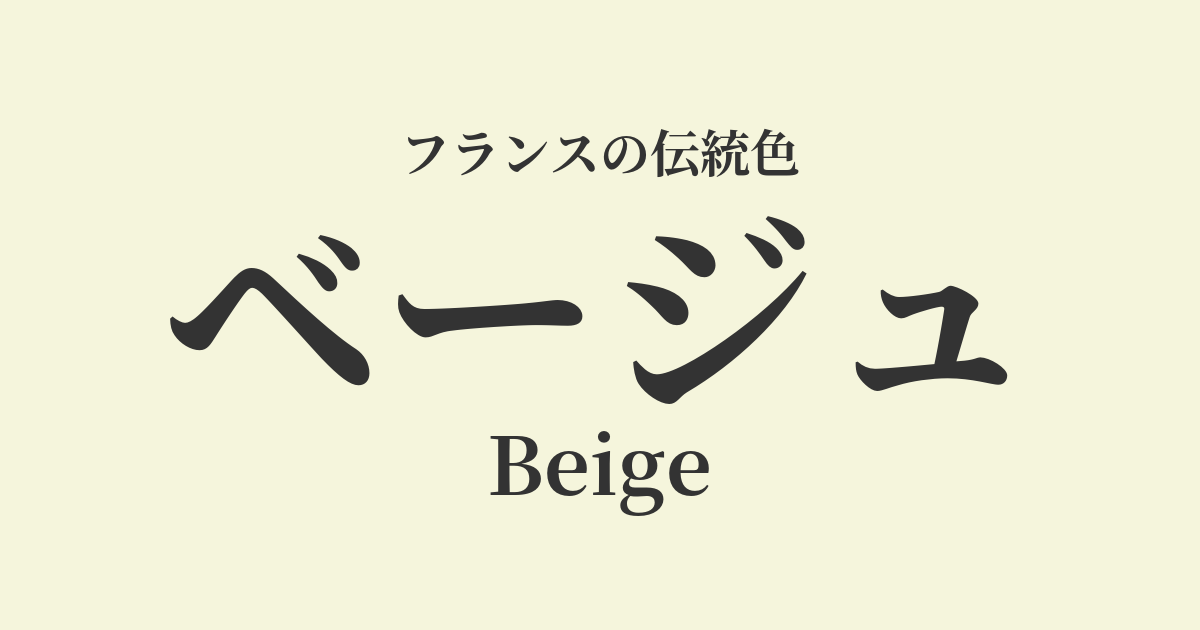
| French | Beige |
|---|---|
| Katakana | beige |
| HEX | #F5F5DC |
| RGB | 245, 245, 220 |
What is beige? Origin and etymology
The color beige originates from a French word meaning "undyed wool." As the name suggests, it was created to refer to the natural, light yellowish-brown color inherent in wool.
Because of its natural, unadorned color, it has long been a color deeply rooted in people's lives, symbolizing simplicity and unpretentious beauty. In the mid-19th century, it was adopted as a color name in English-speaking countries, and today it is one of the basic colors loved all over the world.
The historical background of beige
Historically, beige was a color that symbolized commoners and rural life, in contrast to the opulent and extravagant colors of the aristocracy. However, in the 18th century, Marie Antoinette favored wearing simple, rustic cotton dresses on the gardens of the Petit Trianon Palace, and it is said that natural off-white and beige shades influenced court fashion.
From the 19th to the 20th century, beige established itself as a more practical color. In particular, its adoption in the trench coat that emerged during World War I added a functional and sophisticated image to the color.
And it was designer Coco Chanel who definitively elevated the value of beige. She transformed beige, which had previously been considered a plain color, into a color that represents "French chic," alongside black and white. By pairing it with jersey suits and little black dresses, beige was reborn as an elegant color that symbolizes the modern, independent woman.
Beige in the world of art and fashion
In the art world, the Barbizon School painters who were active in 19th-century France discovered the simple beauty of beige. The colors of the peasant clothing and the dry earth depicted in Jean-François Millet's "The Gleaners" perfectly embody this worldview of beige. They realistically depicted nature and people's lives as they were, using earth tones.
The revolution of beige in fashion was brought about by Coco Chanel. She said, "I like beige because it's natural," and drew inspiration from the color of beach sand, using this color extensively in many of her collections. Chanel's beige was more than just a color; it symbolized a new lifestyle that pursued unpretentious elegance and comfort.
In textile culture, beige has long been an integral part of French life, as the color of natural materials such as linen, cotton, and wool. In particular, in the interiors of the Provence region of southern France, beige linen curtains and tablecloths are combined with stone houses, creating a comfortable space that allows you to feel the light and breeze.
I love beige because it's natural.
Color scheme preview
This is to check the readability of the text when this color is used as the background.
Beige color scheme suggestions
Blue Roi (#234B9B)
When combined with noble royal blue, the warmth of beige is enhanced, creating an intelligent and classic impression. This sophisticated color scheme exudes reliability and elegance, perfect for the modern woman.
Rose Pompadour (#ED87A3)
By combining it with the elegant pink that symbolizes the Rococo era, it creates a soft and feminine atmosphere. The beige moderately tones down the sweetness of the pink, resulting in a refined and gentle impression.
Vert Épinard (#2A4026)
The combination with a deep, calming green like spinach creates an earthy color palette reminiscent of nature. It's perfect for when you want to give off a gentle, relaxed, and organic impression.
Practical Scenes
In the world of fashion, beige is an essential color for timeless classics such as trench coats, chinos, and linen shirts. It harmonizes easily with any color and forms the foundation of any outfit. In particular, a beige monochrome outfit highlights the differences in textures and gives a very sophisticated impression.
In interior design, using it on large areas such as wallpaper, curtains, and sofas creates a bright, calm, and warm atmosphere throughout the entire space. It pairs exceptionally well with wooden furniture, houseplants, and metal materials, harmonizing with a wide range of styles from French country to modern and minimalist.
In web and graphic design, using this color as a background enhances content readability while creating a natural, eye-friendly impression. It is suitable for brand websites and lifestyle media that aim to convey a sense of luxury and trustworthiness.