
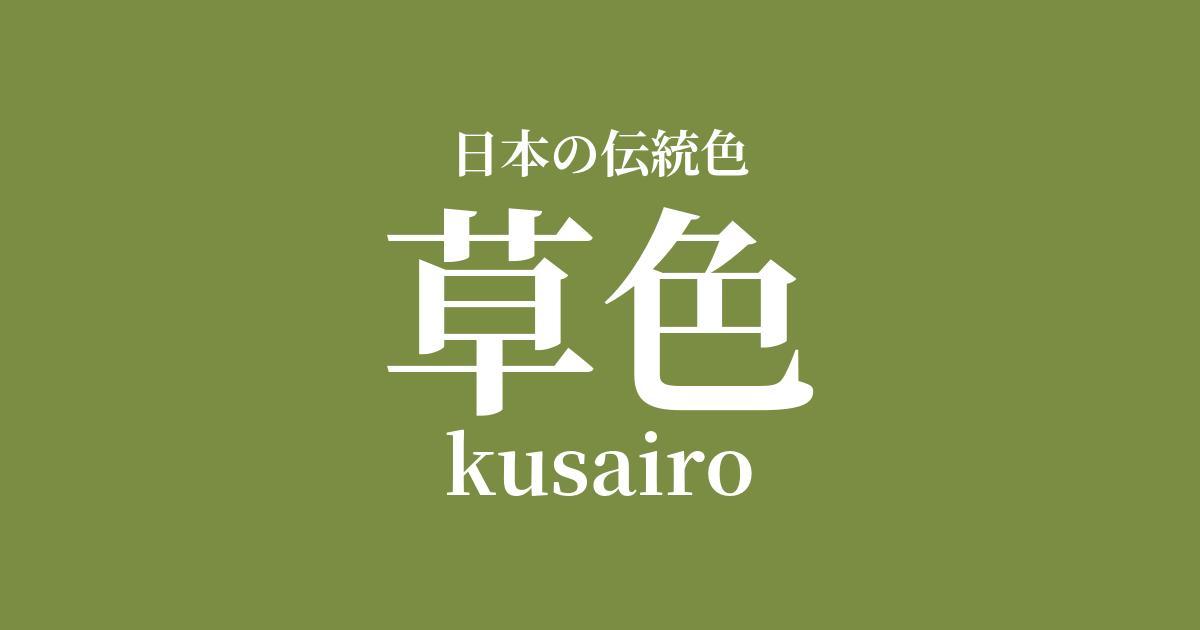
| Japanese color name | grass color |
|---|---|
| reading | kusairo |
| HEX | #7B8D42 |
| RGB | 123, 141, 66 |
What does "grass green" mean? Origin and etymology.
Kusai-iro (grass green), as its name suggests, derives from the color of grass leaves that grow abundantly in the fields from spring to summer. Rather than referring to a specific plant, it is a general color name that refers to a natural and simple yellowish-green color, like that dyed with the juice of common grasses. It is considered one of the most basic colors in the "plant dyeing" techniques that have been practiced since ancient times, and as a color created from the blessings of nature close at hand, it has become deeply rooted in people's lives. As a color that symbolizes vitality and youthfulness, it has been loved throughout the ages.
The historical background of the grass green color
The color name "Kusa-iro" (grass green) is an ancient color, appearing in Heian period literature. The Engishiki, a compilation of laws and regulations, describes dyeing materials and procedures, and includes descriptions of colors dyed with grass, such as "Kusa," "Fukakusa," and "Asakusa." This indicates that grass was widely used as a dye at that time, and that different shades of color were given different names.
During the Edo period, with the spread of cotton, plant dyeing became more accessible to ordinary people, and it is said that grass greens came to be used in various everyday items such as kimonos and hand towels.
Related literature, waka poetry, and seasonal words
The vibrant green of grass has been used in many literary works to depict spring and summer scenes. In classical literature such as "The Tale of Genji," shades of green frequently appear as the colors of the characters' clothing, symbolizing the beauty of nature and the changing seasons. In the world of haiku, "sprouting grass" and "young grass" are used as seasonal words for spring, strongly associated with the image of life and hope that the green of grass evokes.
These expressions reflect the rich sensibility that the Japanese have cultivated, drawing inspiration from the colors of nature.
As the grass sprouts, the roots of the pine trees on the embankment become visible.
Color scheme preview
This is to check the readability of the text when this color is used as the background.
Grass green color scheme proposal
Kutsuha color (#917347)
The color of withered leaves, when combined with grass green, can express the transition from early summer to autumn. The combination of earth tones creates a natural and calming harmony, providing a sense of security. It is suitable for creating a tranquil atmosphere in interior design and fashion.
Fuko Eiro (#FFD900)
Dandelion yellow is a vibrant yellow that evokes images of dandelions and young grass blooming in a spring field. When combined with grass green, it creates a bright, cheerful impression full of vitality. It is effective when used in the color scheme of a child's room or in areas of web design where you want to draw attention.
Wisteria color (#BBAADD)
Wisteria purple is a pale purple color reminiscent of wisteria flowers that bloom in early summer. When combined with grass green, the colors are close to complementary colors found in nature, yet they elegantly enhance each other. This color scheme creates a graceful and refined atmosphere in Japanese clothing and designs.
Practical Scenes
In the world of traditional Japanese clothing, grass green is used in kimonos, obi sashes, and accessories such as obiage (sash ties), and is particularly valued for expressing the feeling of spring and early summer. Its natural hue harmonizes easily with other colors and can add a youthful and refreshing touch to an outfit.
In interior design, incorporating grass green into accent walls, cushions, and curtains brings a natural sense of tranquility and calm to a room. It pairs particularly well with wooden furniture, making it a useful color for creating a natural and comfortable space.
In the fields of web design and graphic design, grass green, as an earth tone, is expected to have the effect of conveying a sense of trust and security. It is ideal as the image color for organic products and natural brands, and when combined with white or beige, it can create a clean and sophisticated impression.