
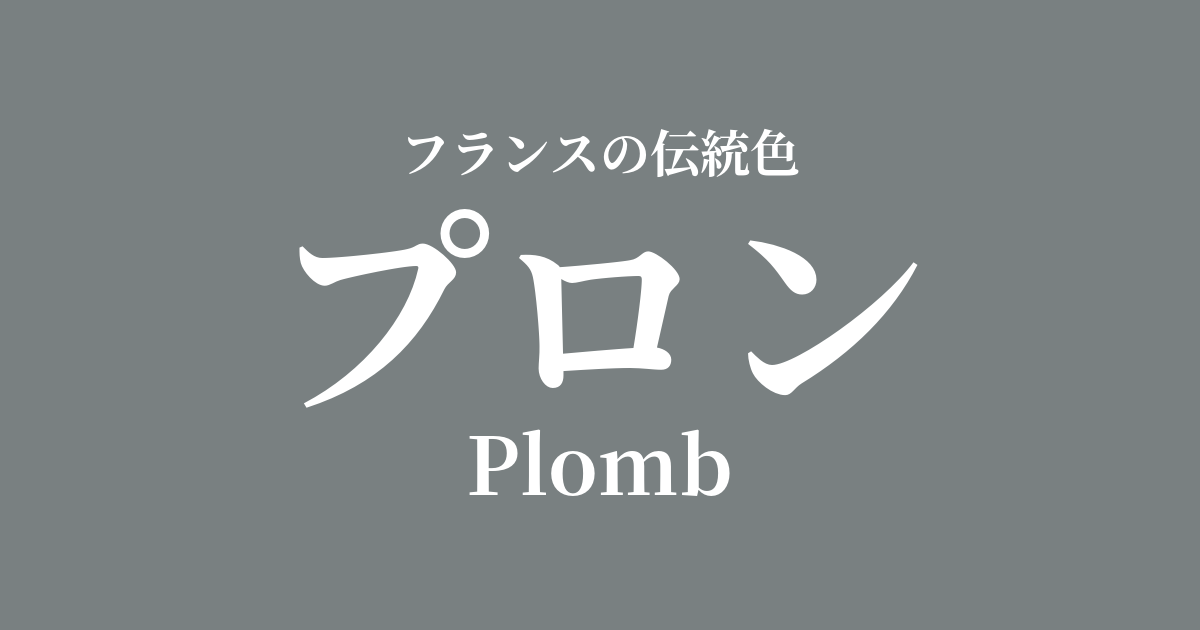
| French | Plomb |
|---|---|
| Katakana | Pron |
| HEX | #798081 |
| RGB | 121, 128, 129 |
What is "pron"? Origin and etymology
Plomb is a French word meaning "lead," the metal. As the name suggests, it refers to a slightly bluish, sophisticated dark gray that expresses the dull luster and heavy color of lead.
Since the time of ancient Rome, lead has been deeply involved in people's lives due to its ease of processing and weight, being used in water pipes, building materials, and even as a tool for writing. The color of this familiar yet heavy metal became established as a color name.
The color "prawn" reflects the image of "weight," "solidity," and "stability" inherent in lead itself, and is recognized as a color that conveys calmness and reliability.
Historical background of Pron
The color of lead has deep ties to historical French architecture. In particular, in medieval Gothic cathedrals, lead was essential for the "came" (the trim used to join stained glass panes) and as a material for magnificent roofs. The roof of Notre Dame Cathedral in Paris is also known to have been covered with lead. Therefore, this color evokes a sense of historical weight and majestic architectural beauty.
Furthermore, with the development of movable type printing technology in the 15th century, lead alloys came to be used as the primary material for typefaces. Because of this, plohn also has an aspect as a color that symbolizes intellectual pursuits such as knowledge, learning, and record-keeping.
From the Industrial Revolution of the 19th century onward, lead became even more important as a material supporting industrial products and urban infrastructure. Blon, with its color resonating with the modernizing streets of Paris and the slightly melancholic, overcast sky, took on an urban and modern nuance.
Pron in the world of art and fashion
In the world of art, the color of pencil lead, similar to blon, is one of the most important colors that forms the basis of drawing and sketching. Artists used this color to capture light and shadow and build the structure of their works. In oil painting, this neutral gray was frequently used to reduce saturation when mixed with other colors or to depict deep shadows. Realist painters of the 19th century, in particular, effectively utilized muted tones like blon to depict reality as it is.
In the world of fashion, bronze has long been cherished as a sophisticated color, especially in menswear. Since the 19th century, as men's clothing has shifted from ornate ornamentation to practical and understated styles, this color, along with charcoal gray, has become established as a symbol of intelligence and dignity. When incorporated into suits and coats, it gives an honest and urban impression without being as heavy as black.
The low, heavy sky looms like a lid.
Color scheme preview
This is to check the readability of the text when this color is used as the background.
Pron's color scheme proposal
Rose Pompadour (#EDADC7)
By adding the elegant rose pink, a color beloved by Madame de Pompadour, to the dignified and sophisticated bronzes, the rigid impression is softened, creating a refined and mature elegance. It is perfect for creating a modern and feminine space.
Blue Roi (#005999)
The vibrant and noble blue of "King's Blue" combined with the intellectual prawn creates a color scheme that conveys trustworthiness and a modern sensibility. It is recommended for business settings and web design.
Celadon (#89B6A9)
By combining a calming prawn with a muted, celadon-like green, a color scheme is created that evokes a sense of gentle, natural tranquility. It brings a pleasant harmony to the interior.
Practical Scenes
In interior design, prong brings a sense of calm and gravitas to a space. An accent wall painted in this color tightens the overall look of the room and highlights displayed art and furniture. It pairs particularly well with modern, industrial, and minimalist styles, creating a sophisticated atmosphere.
In fashion, bronze is an extremely versatile color that is easy to wear. Incorporating it into classic items such as suits, jackets, and coats gives an intelligent and trustworthy impression. Softer than black and more urban than navy, it harmonizes with a variety of colors, making it a great foundation for your wardrobe.
In web and graphic design, using prawn as a background or text color enhances content readability while giving the entire site a professional and calm tone. It is particularly effective in situations where credibility is required, such as corporate websites and portfolios.