
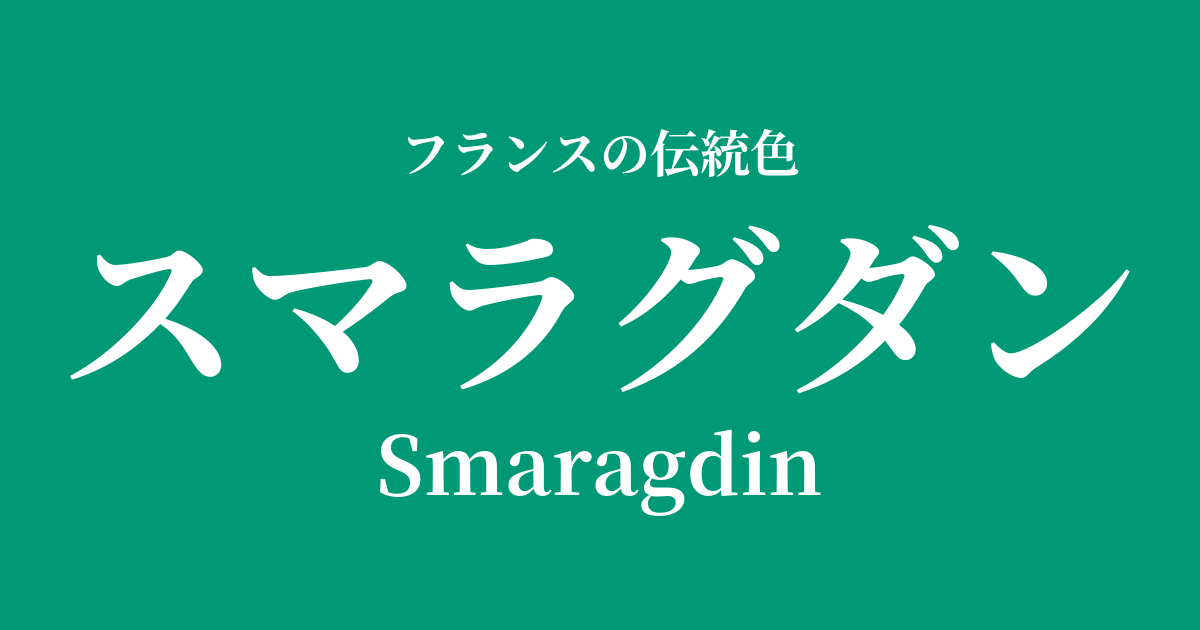
| French | Smaragdin |
|---|---|
| Katakana | Smaragdan |
| HEX | #009975 |
| RGB | 0, 153, 117 |
What is Smaragdan? Origin and Etymology
The name "Smaragdin" originates from the Latin word "smaragdus," meaning emerald. This word has a rich history, tracing back even further to the ancient Greek word "σμάραγδος (smaragdos)," meaning "green gemstone."
As its name suggests, Smaragdán is characterized by a dignified and vibrant hue reminiscent of the deep, vivid green of an emerald. In French, the word also functions as an adjective meaning "emerald green," and it has become a familiar and well-established name for a beautiful color.
Historical background of Smaragdan
Smaragdán, or emerald green, has been considered a precious gemstone color since ancient times, symbolizing power and wealth. In French history, particularly from the Rococo period of the 18th century through the 19th century, this vibrant green became an important color that adorned court culture.
It is said that royalty and nobility, including Marie Antoinette, all incorporated this color into their lavish dresses and interior decorations, competing to show off their extravagance.
In the 19th century, with the Industrial Revolution, chemical dye technology advanced dramatically, making it easier to create vibrant greens. However, some of these dyes, such as "Scheele green" and "Paris green," contained arsenic and were toxic, meaning that danger lurked behind their beauty. Smaragdant is a color that has enriched French color culture, encompassing both people's aspirations, scientific progress, and sometimes even its darker side.
Smaragdan in the world of art and fashion
In the art world, somaragdán was a color particularly beloved by 19th-century artists. Impressionist master Claude Monet effectively used this vibrant shade of green to depict the light reflected on the leaves of trees and on the surface of water in his paintings of sun-drenched natural landscapes.
Furthermore, during the Art Nouveau era, which swept across Europe from the late 19th to the early 20th century, organic motifs from nature, such as plants and insects, were favored. This vibrant green color was skillfully incorporated into the glasswork of Émile Gallé and the jewelry of René Lalique, giving the works a mystical charm.
In the world of fashion, Smaragd has been considered a timeless symbol of elegance and sophistication. Especially in evening dresses and accessories, its deep and striking hues continue to captivate many people as a special color that enhances the wearer's individuality.
Green is the color of spring, and the color of hope.
Color scheme preview
This is to check the readability of the text when this color is used as the background.
Smaragdan color scheme proposal
Rose Pompadour (#EDADC7)
The vibrant color of Smaragdun is enhanced by the sweet and gentle pink of Rose Pompadour, creating a glamorous yet sophisticated impression. It's an elegant and artistic combination reminiscent of Rococo art.
Blanc Cassé (#DEDACD)
The strong vitality of Smaragdun is softened by the gentle, warm white of Blanc Cassé, creating a clean and peaceful space. This color scheme is ideal for natural and modern interiors and fashion.
Blue Roi (#2B60DE)
The combination of vibrant green and deep blue, adjacent colors, enhances each other, creating an intelligent and dignified atmosphere. This color scheme conveys calmness and authority, making it suitable for formal occasions.
Practical Scenes
In interior design, Smaragdan adds a dramatic accent to any space. Incorporating it into accent walls in the living room, or into velvet sofas, cushions, and curtains, instantly creates a luxurious and vibrant atmosphere. It pairs particularly well with metallic materials such as gold and brass, giving a classic yet modern impression.
In fashion, smaragdan exudes a leading role presence. Dresses and blouses made from lustrous materials like silk and satin are perfect for special occasions. Furthermore, even incorporating just one accessory, such as a bag, shoes, or scarf, can elevate an entire outfit and create a sophisticated impression.
In web and graphic design, it's effective when you want to convey images of reliability, growth, and nature. When used as an accent color for buttons and headings, it attracts the user's attention and adds depth and innovation to the design.