
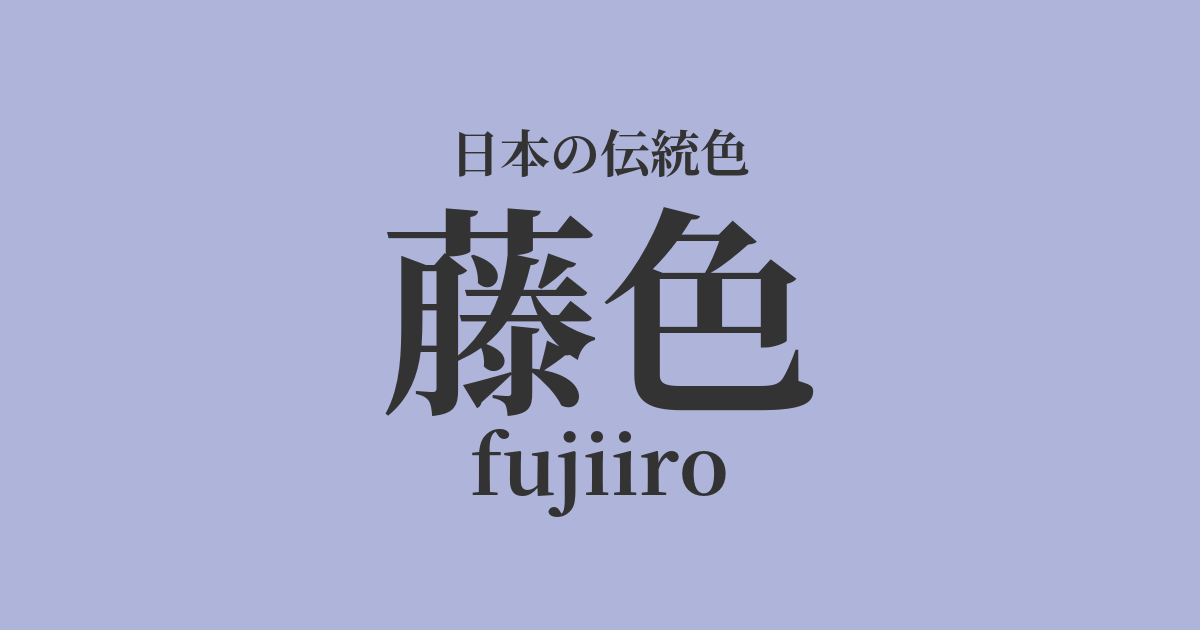
| Japanese color name | mauve |
|---|---|
| reading | fujiiro |
| HEX | #AFB4DB |
| RGB | 175, 180, 219 |
What is wisteria color? Origin and etymology
Wisteria purple is a pale, bluish-purple color derived from the wisteria flower, a climbing plant of the legume family native to Japan. Wisteria has been cherished in Japan since ancient times, and its strong vitality has made it a symbol of longevity and prosperity of descendants. The color name is taken directly from the color of the elegant pale purple flower clusters that bloom from late spring to early summer, and it is one of the traditional colors that strongly reflects Japan's view of nature and aesthetic sense. Its soft hue evokes a sense of dignity and elegance, and it has been loved by many people.
The historical background of the color wisteria
Wisteria purple is known as a color that was particularly favored among the aristocracy during the Heian period. It is said that the Fujiwara clan, who wielded great power at the time, had "wisteria" in their family name, and therefore the color was revered as a symbol of the family. For this reason, wisteria purple became a color that symbolized noble status and elegant culture, and the combination of "wisteria" can be seen in the "kasane no irome" (layered color combinations) of aristocratic women's attire.
During the Edo period, it became popular among common people as a color for yukata (summer kimono) and tenugui (hand towel), and it became a more familiar and beloved color.
Related literature, waka poetry, and seasonal words
Wisteria flowers and the color wisteria have long been the subject of many literary works and waka poems. The Manyoshu and Kokin Wakashu contain numerous poems about wisteria. Particularly famous is the Tale of Genji, where wisteria is used effectively as a motif symbolizing nobility, beauty, and a somewhat ephemeral emotion, such as in the name of Fujitsubo no Miya, the stepmother of the protagonist Hikaru Genji and depicted as the ideal woman.
Furthermore, in the world of haiku, "wisteria" and "wisteria blossoms" are established as seasonal words for late spring, and are important elements that represent the changing of the seasons.
The deep red petal of the wisteria in my garden—will it even touch the sleeves of those who behold it?
Color scheme preview
This is to check the readability of the text when this color is used as the background.
A color scheme proposal in wisteria purple.
White training (#FEFFDFD)
This color scheme maximizes the elegance of wisteria purple, creating a clean and refined impression. It produces a beautiful contrast, like light and shadow, and adds a sophisticated touch to traditional Japanese clothing and elegant designs.
Light green (#A8D878)
This color scheme evokes the natural beauty and vitality of wisteria blossoms and young leaves. It combines the freshness and tranquility of spring's arrival, with each color vividly complementing the others, creating a bright and pleasant impression.
Blue Nezumi (#6C7C92)
The soft impression of wisteria purple is toned down by the bluish-gray color, indigo gray, creating an intelligent, sophisticated, and modern atmosphere. This understated color scheme is suitable for contemporary interiors and fashion.
Practical Scenes
In the world of traditional Japanese clothing, wisteria purple is widely used in everything from formal visiting kimonos and casual kimonos to accessories such as obi sashes and obi ties. It is especially popular for spring attire and gives the wearer an elegant and refined impression. Its graceful hue makes it versatile enough to be worn in both formal and casual settings.
In interior design, incorporating wisteria purple into fabrics such as wallpaper, curtains, and cushions brings a calm and relaxing atmosphere to a space. When combined with white, beige, or light wood-grain furniture, it can create a bright, sophisticated, and modern Japanese space.
In web and graphic design, wisteria purple is effective when you want to express gentleness, elegance, and tradition. Using it as an accent color for products and services aimed at women, or for brands that want to project a sense of luxury, can give users a feeling of reassurance and trust.