
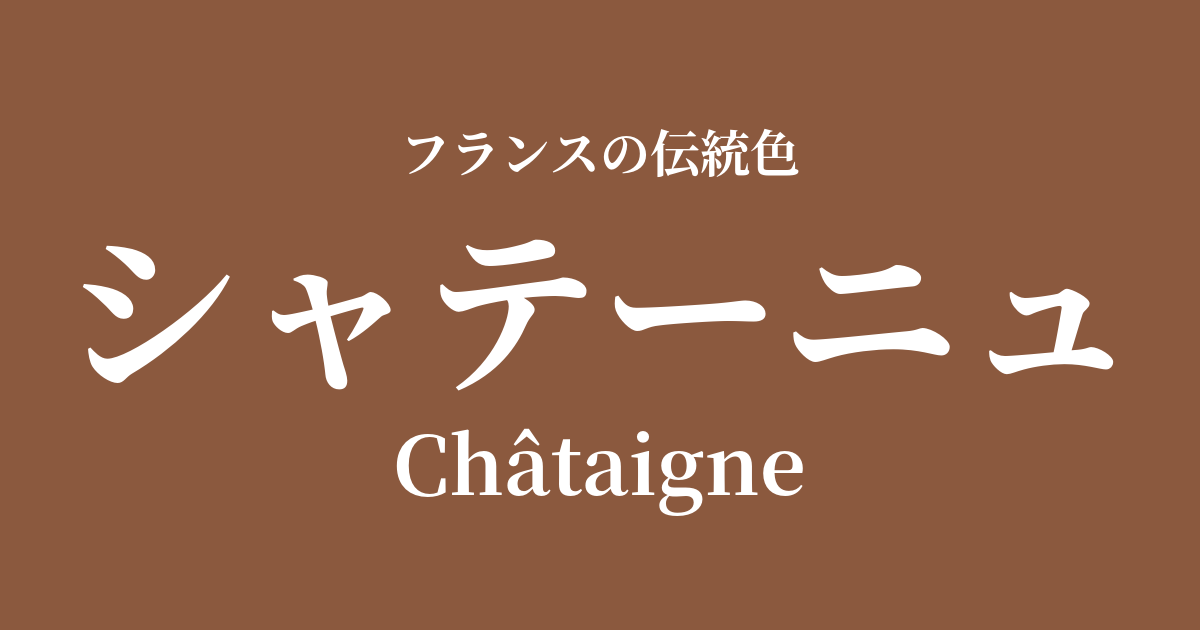
| French | Châtaigne |
|---|---|
| Katakana | Châtaigne |
| HEX | #8B593E |
| RGB | 139, 89, 62 |
What is Châtaigne? Origin and Etymology
Châtaigne is a French word meaning "chestnut." As the name suggests, this color is derived from the warm, deep brown of chestnuts that ripen abundantly in the autumn forests of France.
In France, especially in the mountainous regions and southern rural areas, chestnuts have long been an important food source, and were even called "the breadfruit tree" (l'arbre à pain) to save people during times of famine. The color name Châtaigne embodies not only the beauty of the color itself, but also the food culture rooted in the land of France, gratitude for nature's bounty, and memories of the simple lives of its people. It is a color that evokes images of warmth, abundance, and stability, and is deeply connected to the earth.
The historical background of Châtaigne
Châtaigne is not so much a color favored by royalty and nobility, but rather a color deeply intertwined with the history of ordinary French people. From the Middle Ages to the modern era, in regions like Limousin and Ardèche, where chestnuts were a staple food, this color was a very common, everyday color.
The color of Châtaigne could be seen in every aspect of life, from farmers' clothing and household items to building materials such as beams and pillars. This was partly due to the fact that chestnut trees were used as timber, and their bark and shells were used as dyes. For people who could not afford expensive dyes, this color, obtained from readily available nature, was practical and familiar.
Since the 19th century, as industrialization progressed, châtaigne has also come to be recognized as a color that evokes the good old countryside and nostalgic feelings. It is a color with special meaning, linked to the primal landscapes in the hearts of the French people.
Châtaigne in the world of art and fashion
In the art world, earth tones like châtaigne were particularly beloved by 19th-century Realist and Barbizon School painters. This color was essential for depicting nature as it is, and the people who work there, as seen in Jean-François Millet's "The Gleaners," with its depiction of the earth and the peasants' clothing. They used this warm brown to express the strength and dignity of life rooted in the earth.
In fashion, châtaigne has established itself as a classic staple color, especially for the autumn/winter season. It pairs exceptionally well with warm materials such as tweed, wool, and corduroy, as well as high-quality leather products. Incorporating it into coats, jackets, or accessories like shoes, bags, and belts adds a sense of calm and intellectual depth to any outfit.
Color scheme preview
This is to check the readability of the text when this color is used as the background.
Châtaigne's color scheme proposal
Ecru (#F5F3E6)
When combined with ecru, an off-white color, it creates a very calm and natural atmosphere. The warmth of each color complements the others, giving a comfortable and sophisticated impression.
Rouge de Bordeaux (#722730)
When paired with a deep wine red, it creates a rich and classic color scheme reminiscent of a bountiful autumn harvest. This combination exudes a sense of gravitas and elegance, making it ideal for expressing a sophisticated and refined style.
Blue Nuit (#0F2540)
The combination with a deep navy blue reminiscent of the night sky exudes a calm yet intellectually sharp aura. This color scheme perfectly balances trustworthiness with a modern impression, making it ideal for business settings.
Practical Scenes
In interior design, châtaigne is an ideal color for creating a warm and cozy space. Incorporating it into flooring, wooden furniture, and leather sofas brings a sense of stability and calm to the entire room. It is also effective when used as an accent color in fabrics such as cushions and rugs.
In fashion, this color is a key element in autumn and winter outfits. Châtaigne coats and knitwear instantly create a seasonal feel and are versatile enough to be paired with any color. Choosing this color for leather goods (boots, bags, gloves) in particular will allow them to develop a richer character with use, making them long-lasting favorites.
In web and graphic design, it's effective when you want to convey reliability, tradition, and an organic image. When used as a background color, it creates a calm atmosphere, and when used as an accent color for buttons or headings, it gently attracts the user's attention.