
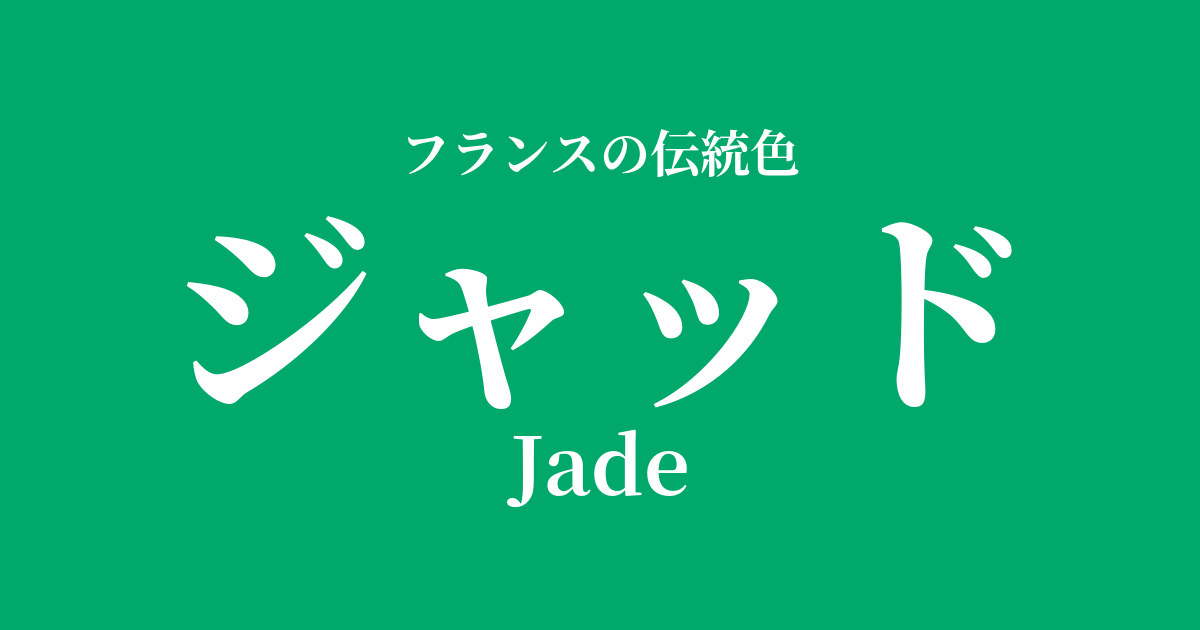
| French | Jade |
|---|---|
| Katakana | Judd |
| HEX | #00a86b |
| RGB | 0, 168, 107 |
What is Judd? Origin and etymology
Jade, as its name suggests, is a deep, mysterious green color derived from the gemstone "jade." This color name is said to originate from a green stone discovered in Central and South America by Spanish explorers in the 16th century. They believed this stone had the power to heal kidney diseases and called it "piedra de hijada" (waist stone). This was then introduced to France, where the word "jade" was born.
Furthermore, the image associated with the color of jade is strongly linked to jadeite, which has been treated as sacred in Eastern cultures, particularly in China, since ancient times. For Europeans, this color came to be seen as a symbol of longing for distant lands and the mystique of the Orient, and thus acquired special value.
Judd's historical background
Jade gained particular attention in France from the late 19th to the early 20th century. During this period, Orientalism, such as Japonisme and Chinoiserie, was in vogue, and cultures and arts with an exotic flair were highly valued.
Judd's popularity reached its peak, particularly during the Art Deco era of the 1920s and 1930s. High-end jewelry houses such as Cartier and Van Cleef & Arpels successively released innovative and sophisticated jewelry combining jade with platinum and diamonds. Judd's colors were widely loved in the fields of fashion, architecture, and interior design, as they added vitality and luxury to the linear and geometric Art Deco style.
Judd in the world of art and fashion
Judd's colors inspired artists from the Art Nouveau to the Art Deco era. Glass artists like Émile Gallé and the Daum brothers incorporated a deep, jade-like green into their works featuring plant and insect motifs.
In the world of fashion, designer Paul Poiret used a vibrant green like Judd in dresses with oriental silhouettes, proposing a new style that liberated women from corsets. Furthermore, the color was effectively used as an accent in the backgrounds and costumes of Tamara de Lempicka, a leading Art Deco painter, depicting modern and powerful female figures. Thus, Judd has adorned many works of art as an iconic color reflecting the aesthetic sensibilities of its time.
Color scheme preview
This is to check the readability of the text when this color is used as the background.
Judd's color scheme proposal
Blanc Cassé (#F8F2E4)
The vibrant color of Judd is complemented by the soft off-white of Blanc Cassé, creating an elegant and calm impression. This combination is perfect for creating a sophisticated, classic space reminiscent of Art Deco interiors.
Framboise (#E0218A)
The vibrant green and pink complement each other, creating an exotic and lively impression. It's effective when you want to add a bold accent to fashion or design, and it allows you to express a modern take on the Chinoiserie aesthetic.
Gris de Payne (#40404F)
Combining deep judd with the cool, bluish-gray Gris de Payne creates a sophisticated and modern urban impression. This color scheme conveys intelligence and composure, making it suitable for web design and men's fashion.
Practical Scenes
In interior design, judd is an ideal accent color that brings a sense of luxury and tranquility to a space. Simply incorporating it into cushions, curtains, or armchairs will give the entire room a refined and sophisticated feel. It pairs particularly well with metallic materials such as gold and brass.
In fashion, the mystical charm of judd is best brought out when used in dresses and blouses made from glossy materials such as silk and velvet. Furthermore, incorporating it into accessories such as bags, shoes, and jewelry can add glamour and individuality to an outfit.
In web and graphic design, this color can be used to convey trustworthiness and intelligence. When used as an accent color for buttons and icons in a minimalist design based on white or dark gray, it attracts the user's attention while creating an elegant and memorable design.