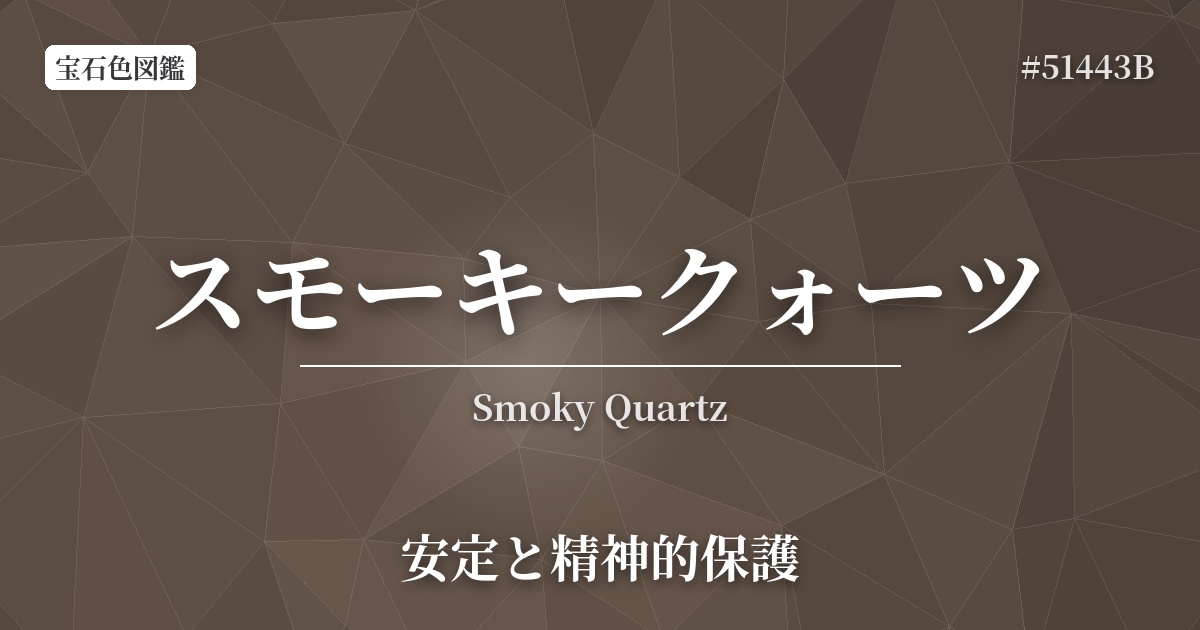
| English name | Smoky Quartz |
|---|---|
| Katakana | Smoky Quartz |
| HEX | #51443B |
| RGB | 81, 68, 59 |
| Mineralogy | Oxide minerals |
What is Smoky Quartz? Origin and Mineralogy
The name smoky quartz, as the name suggests, comes from its hazy brown to almost black color, as if it has trapped smoke inside. In Japanese, it is also called "kemuri suishō" (smoky crystal), and its mystical appearance has captivated people since ancient times.
This unique color is believed to be created when trace amounts of aluminum contained within the quartz crystal are exposed to natural radiation over a long period of time. The intensity of the color varies depending on the amount of radiation received and the aluminum content, resulting in a wide range of variations from light brown to almost black, which transmits very little light.
As a mineral, it is a type of quartz whose main component is silicon dioxide, and it has a Mohs hardness of 7, which is hard enough for everyday use. It is mainly found in various parts of the world, including Brazil, Switzerland, the United States, and Madagascar, and the quartz produced in the Swiss Alps, in particular, has been highly valued for its beauty.
The history and culture of smoky quartz
Smoky quartz has a long history of being used as an amulet and a ritualistic tool. In ancient Rome, it was believed to have the power to overcome grief. It is also said that the Druid priests of the Celtic people considered this stone sacred and used it in rituals to connect with the spiritual world.
In Scotland in particular, smoky quartz is known as "Cairngorm" and has been deeply cherished as a national gemstone. This name originates from the Cairngorm Mountains in Scotland. It has been used in various decorative items, such as pins to fasten traditional kilts and dagger handles, and is deeply rooted in Scottish culture and history.
In 19th-century Victorian England, it gained popularity as "mourning jewelry" to commemorate the deceased. Its subdued colors were considered appropriate for solemn occasions, and it was widely used along with other materials such as jet.
Smoky Quartz and Color Psychology
The grayish-brown color of smoky quartz evokes images of the earth and trees, giving viewers a sense of stability, solidity, and warmth. While not flashy, its calming hue is said to soothe the mind and encourage grounded thinking.
This gemstone is considered a symbol of "stability and mental protection" and has long been cherished as a protective amulet. It is believed to have a strong "grounding" power, absorbing negative emotions such as anxiety, fear, and impatience, and helping to maintain mental balance. It is a color that provides mental support for making realistic and calm judgments when faced with difficult situations.
Color scheme preview
This is to check the readability of the text when this color is used as the background.
Smoky Quartz Color Scheme Proposals
Cream (#FFFDD0)
The deep hues of smoky quartz, combined with the soft brightness of cream, create a warm and inviting atmosphere. This color scheme is recommended for those who want to create a natural and relaxed ambiance.
Slate Gray (#708090)
When combined with a calm slate gray, it creates an intelligent and modern impression. This combination is perfect for expressing a minimalist and sophisticated style, and for creating an urban atmosphere.
Moss Green (#8A9A5B)
The moss green, reminiscent of a deep forest, pairs perfectly with smoky quartz, the color of the earth. This color scheme evokes a sense of natural tranquility and vitality, creating an organic and calming impression.
Practical Scenes
In jewelry design, the hues of smoky quartz evoke a sense of mature composure and sophistication. Paired with gold, it creates a warm and luxurious feel, while with silver, it gives a cool and modern impression. It's particularly popular for large rings and pendants, and also as men's jewelry.
In interior design, it's ideal as an accent color in spaces where you want to relax, such as living rooms, studies, and bedrooms. Incorporating it into cushions, rugs, or artwork brings a sense of depth and stability to the space. It pairs particularly well with wooden furniture and houseplants.
In the fields of fashion and web design, its sophisticated color is highly valued. In fashion, incorporating it into coats, jackets, and leather accessories creates an elegant and refined look. In web design, using it as a background color or footer color to tie the entire site together can convey a sense of reliability and luxury.