
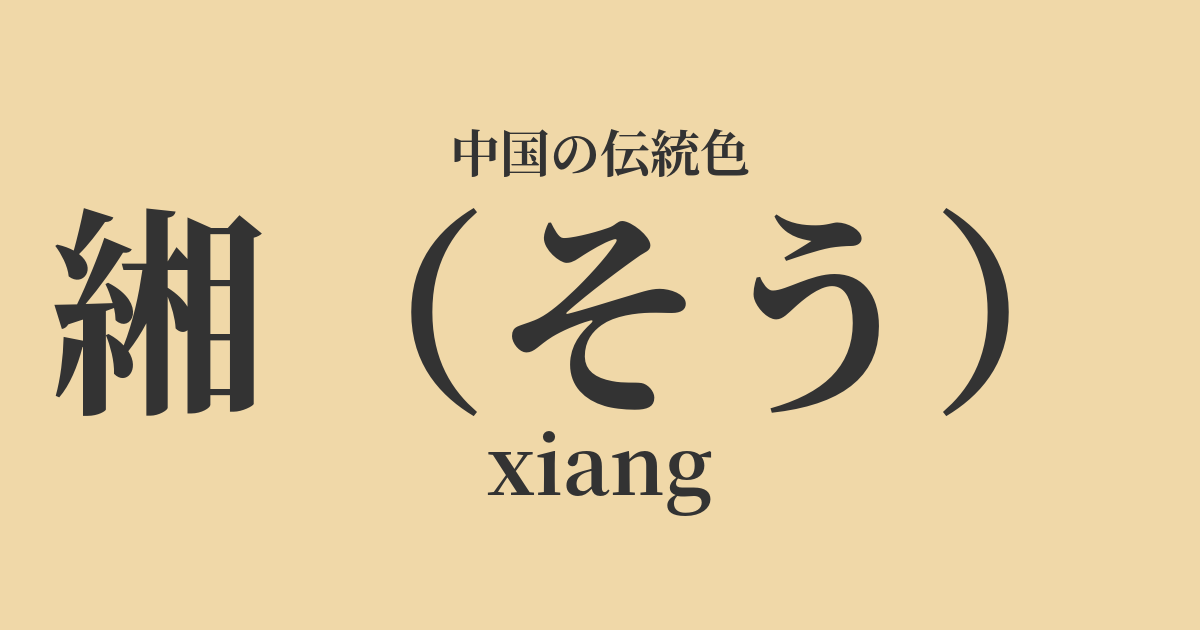
| Color name | 緗 |
|---|---|
| reading | yes |
| pinyin | xiang |
| HEX | #F0D8A8 |
| RGB | 240, 216, 168 |
What is "缃"? Origin and etymology
"Sō" is a very old color name that refers to a pale, light yellow silk fabric. This kanji can also be written as "緗," and as the "糸" radical suggests, it originally derives from dyed silk threads or silk cloth.
The ancient Chinese dictionary "Shuowen Jiezi" states that "緗 is a light yellow color of silk," and as the name suggests, it is characterized by a gentle and elegant hue, combined with the natural luster of silk.
It is said that the dyes mainly used were mulberry bark and gardenia fruit. The gentle, deep colors unique to natural dyes captured people's hearts.
Furthermore, the color "zhuan" (缃) has a deep connection to books. In the past, valuable books and scriptures were bound in zhuan-colored silk cloth for protection. From this, the words "zhuan chie" (缃帙), meaning book cover, and "zhuan bian" (缃編), meaning the book itself, were born, and zhuan came to be recognized as an intellectual color symbolizing learning and knowledge.
Historical background of the
The history of the color 缃 is long, with its name already appearing in the Han Dynasty. Initially, it was mainly recognized as a color for silk fabrics, but as time went on, its uses expanded.
Particularly during the Tang and Song dynasties, when culture was at its peak, this color was highly favored among literati and the aristocracy. They used it to decorate their studies and to bind their important books, creating an intellectual and sophisticated atmosphere.
Furthermore, the color of the jean was also beloved as a color for women's clothing. In Tang Dynasty poetry, the elegant figure of a woman wearing a jean-colored skirt is often depicted. Distinct from the majestic "yellow" used by the emperor, the modest and refined jean was a color that blended seamlessly into everyday life, adding color to people's lives.
In Chinese art and crafts
The color of the brocade fabric showcases an elegant side in Chinese clothing culture, particularly in Hanfu. As evidenced by the appearance of the word "soukun" (緗裙) in a poem by the Tang Dynasty poet Li Shangyin, it was a popular color for women's skirts. The pale yellow likely had the effect of making the skin look beautiful and enhancing the wearer's elegance. Brocade dyed onto supple silk fabric creates delicate shadows depending on the light, exuding a refined beauty.
In the field of art, its connection to books is most evident. Silk of the color *kutsu* was used to wrap scriptures and valuable books, as well as to cover scrolls. This served not only as protection but also as a sign of respect for the books. Therefore, *kutsu* is associated with scholarship and Buddhist art, and is sometimes considered a pure and intellectual symbolic color.
Hachiji Shrine eyebrow offering yellow forehead, 煗裩 incomprehensible Rora 裳.
Color scheme preview
This is to check the readability of the text when this color is used as the background.
Color scheme proposals for the woven fabric
Moon White (#DDE7EB)
Combining it with a pale blue reminiscent of moonlight, "Tsukishiro," creates a quiet and intellectual atmosphere. This color scheme, which gives a clear and serene impression, is recommended for interiors in studies or other calm spaces.
Beni Kaido (#F0A1A8)
Combining it with soft red hues like those of the crabapple blossom adds a feminine and elegant touch. The color scheme is graceful and romantic, reminiscent of the clothing worn by women in classical Chinese poetry.
Matsuka Midori (#B0C9A8)
The addition of a soft green reminiscent of pine pollen evokes the plants from which the dye originated. This color scheme creates a natural and harmonious balance, resulting in a calming and natural space.
Practical Scenes
In interior design, woven fabric brings warmth and tranquility to a space. Incorporating it into wallpaper, curtains, cushions, and other fabrics in living rooms, bedrooms, and studies can create a calm and intellectual atmosphere. It pairs particularly well with solid wood furniture and Japanese-style decor.
In fashion, it gives an elegant and gentle impression. When incorporated into items such as blouses, dresses, and scarves, it brightens the face while exuding understated grace. In traditional Japanese clothing, it is one of the best colors to express refined beauty when used in kimonos and obi sashes.
In web and graphic design, using this color as a background color is pleasing to the eye and enhances the content. When used as the brand color for websites dealing with traditional crafts, books, or organic products, it can convey a sense of trustworthiness and quality.