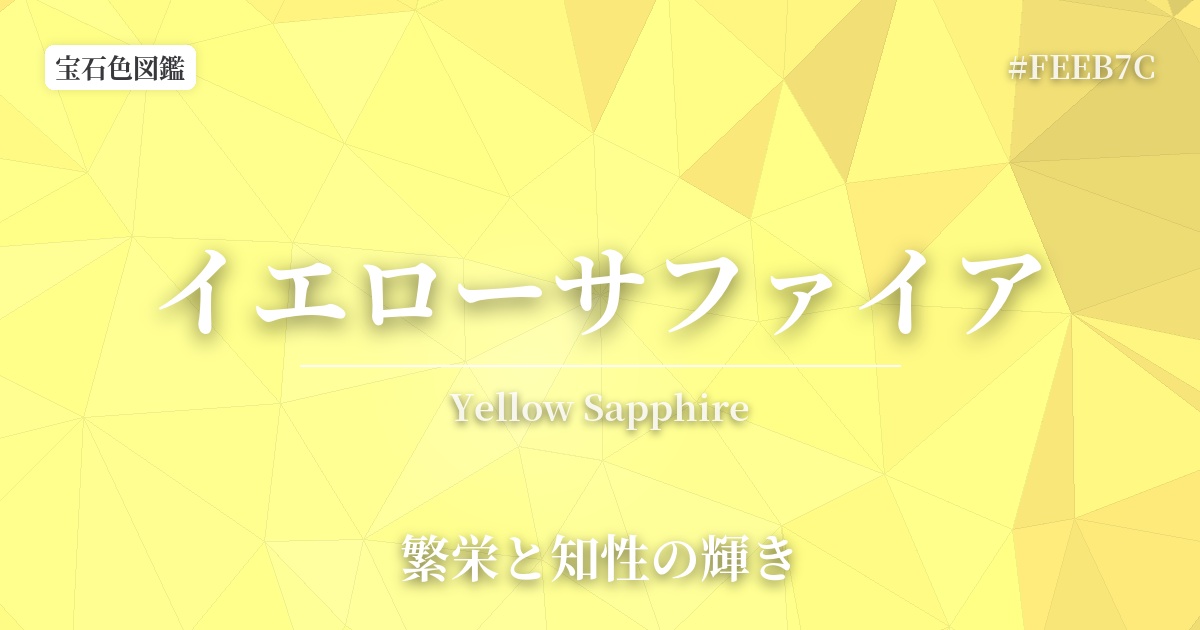
| English name | Yellow Sapphire |
|---|---|
| Katakana | Yellow sapphire |
| HEX | #FEEB7C |
| RGB | 254, 235, 124 |
| Mineralogy | Oxide minerals |
What is a yellow sapphire? Origin and mineralogy
Yellow sapphires are a type of mineral called "corundum," the same mineral as rubies. Within the corundum family, those that are red are called rubies, and those of other colors are called sapphires. As the name suggests, yellow sapphires are sapphires that exhibit a beautiful yellow color.
This vibrant yellow color is produced when some of the aluminum atoms that make up the crystal are replaced by trace amounts of iron ions. The intensity of the color varies depending on the iron content, resulting in a wide range of variations from a pale lemon yellow to a deep, golden hue.
As a mineral, it boasts a Mohs hardness of 9, second only to diamond, making it extremely durable and scratch-resistant. For this reason, it is very popular as jewelry for everyday wear.
The main producing regions include Sri Lanka, Madagascar, Tanzania, and Australia. Sri Lankan sapphires, in particular, have long been highly valued as "Ceylon sapphires," and are characterized by their bright, transparent color.
The history and culture of yellow sapphires
Yellow sapphires have long been considered important gemstones, especially in Indian culture. In Sanskrit, they are called "Pushparaga," and in Jyotish, the Hindu astrology based on the Vedas, they are treated as a stone symbolizing Jupiter (Guru or Brihaspati).
Jupiter is considered the planet of knowledge, wisdom, good fortune, and prosperity, and it has been believed that wearing a yellow sapphire brings its blessings, wealth, fame, and spiritual richness to the wearer. For this reason, it has historically been particularly favored by scholars, teachers, and those seeking business success.
While not as prominent as blue sapphires in Western history, they are occasionally found in the collections of royalty and nobility. Their bright, sun-like brilliance is said to have made them highly valued as symbols of authority and sanctity, as well as as amulets to attract wealth and happiness.
Yellow sapphire and color psychology
The bright yellow of yellow sapphire is considered in color psychology to evoke positive emotions such as joy, hope, and optimism. Its brilliance, reminiscent of sunlight, is said to energize the mind and stimulate creativity and intellectual curiosity.
This gemstone is also known as the "stone of intellect" and is believed to help clarify thoughts and enhance concentration and judgment. It will be a powerful ally for those striving to achieve their goals or learning new knowledge. Furthermore, its brilliance is said to boost confidence and self-esteem, promote sociability, and help build smooth interpersonal relationships.
Color scheme preview
This is to check the readability of the text when this color is used as the background.
Yellow sapphire color scheme proposal
Midnight Blue (#003366)
The deep blue, reminiscent of the night sky, accentuates the brilliance of the yellow sapphire, creating a sophisticated and noble impression. This color scheme is recommended for those who want to create a classic and intellectual atmosphere.
Ivory (#FFFFF0)
When combined with a gentle, warm ivory, the brightness of the yellow sapphire is highlighted, creating an elegant and natural impression. It exudes a soft and graceful atmosphere.
Sage Green (#B2AC88)
The calming sage green adds a touch of tranquility and natural serenity to the vibrant impression of yellow sapphire. This color scheme creates a comfortable space that is both intellectual and relaxed.
Practical Scenes
In jewelry design, yellow sapphires are popular as engagement ring stones due to their hardness and brilliance. They are chosen as an alternative to diamonds or as a unique center stone, and when paired with gold, they create a glamorous look, while when paired with platinum, they give a modern and cool impression.
In interior design, incorporating accent colors into cushion covers, artwork, and accessories brings brightness and vibrancy to the entire space. Adding them to rooms with muted tones such as gray or navy creates a sophisticated contrast.
In web and graphic design, its eye-catching nature makes it effective for guiding users' attention when used for important buttons and headings. It is also suitable for brand images in educational and financial services where intelligence and trustworthiness are desired.