
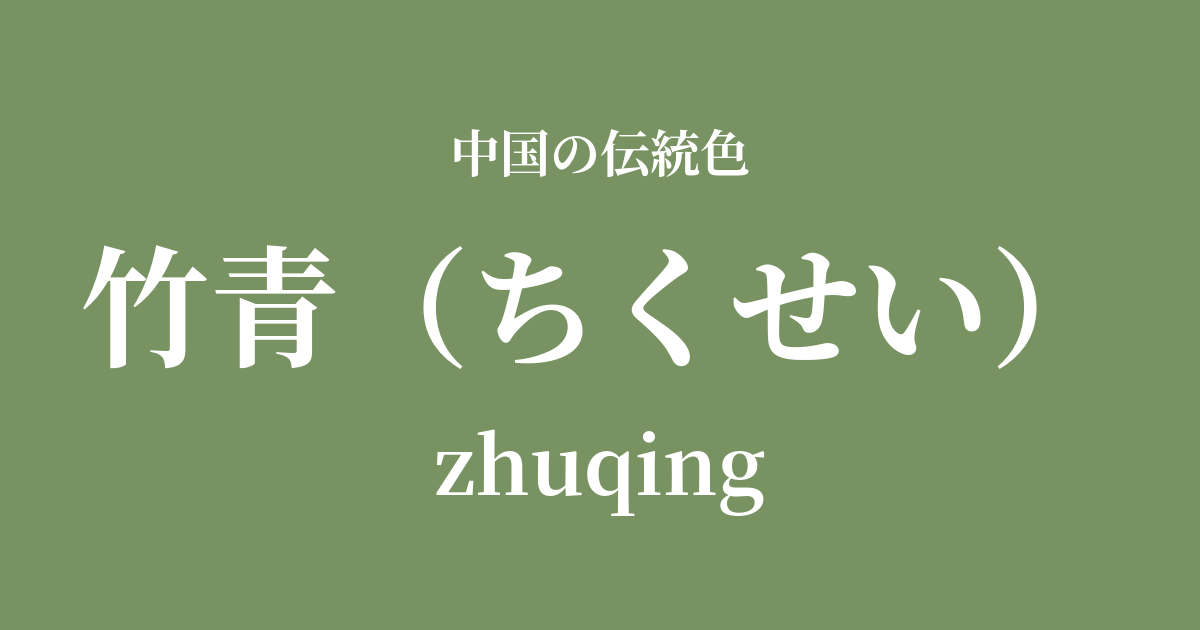
| Color name | bamboo blue |
|---|---|
| reading | Damn it |
| pinyin | zhuqing |
| HEX | #789262 |
| RGB | 120, 146, 98 |
What is Takeao? Origin and etymology
Chikusei, as its name suggests, is a deep, calming green color derived from the vibrant green of young bamboo stalks, full of life.
In ancient Chinese, the word "qing" (青) encompassed a broad range of colors, including not only the blue we understand today, but also green, indigo, and sometimes even colors close to black. Therefore, the vibrant green of bamboo was described as "zhuqing" (竹青), a color cherished for its ability to capture the very essence of nature.
The graceful growth of bamboo, which retains its leaves even in winter, is considered a symbol of strength and vitality that does not succumb to adversity, and this refreshing yet powerful image is also embodied in the color of bamboo green.
Historical background of bamboo green
In Chinese history, bamboo was not merely a plant, but a special symbol of spiritual culture. In particular, it was associated with the ideal of a "gentleman," a person of high virtue, and was deeply cherished by successive generations of writers and intellectuals.
Bamboo, one of the "Four Gentlemen" along with plum, orchid, and chrysanthemum, symbolizes "integrity" and "nobility" due to its straight, segmented growth. During the Wei-Jin and Southern and Northern Dynasties period, the legend of the "Seven Sages of the Bamboo Grove," who gathered in bamboo groves to engage in philosophical discussions away from the secular world, solidified the pure image of bamboo groves.
The color of bamboo green has quietly lived on in the world of poetry and painting as a spiritual sanctuary for these literary figures and a color that symbolizes their ideal state of mind.
Bamboo greenery in Chinese art and crafts
The color of bamboo green has been used in Chinese art and crafts, especially when depicting bamboo. In ink painting, the three-dimensionality and dynamism of bamboo are depicted using varying shades of ink, but in colored paintings such as meticulous brushwork, bamboo green is used to carefully capture the freshness of the bamboo leaves and trunks. The paintings of bamboo swaying in the wind by the Qing Dynasty painter Zheng Banqiao are known as a prime example of this technique.
In the world of ceramics, the deep, beautiful green glaze seen in the celadon of Longquan kilns resonates with the clear, pure image of bamboo. These celadon pieces, with their noble hue often compared to jade, were highly prized by the imperial court and literati.
In clothing culture, bamboo green is said to have been a favored color for Hanfu (traditional Chinese clothing) worn by men of the literati class, as it is a calm color derived from nature. This shade reflected a spirit that disliked ostentation and valued inner richness.
Dokza Yukari, Dankin Fuku Nagaku.
Color scheme preview
This is to check the readability of the text when this color is used as the background.
Bamboo green color scheme proposal
Tsukihaku (#EAF4FC)
This pure and clear color scheme evokes the image of moonlight illuminating a quiet bamboo grove. It calms the mind and gives an intelligent, sophisticated, and elegant impression.
Pilestone (#9C382F)
The combination of bamboo and red earth creates a natural and powerful contrast. The harmonious blend of earth tones provides a sense of stability and warmth, resulting in a beautiful color scheme.
Fujio (#FFB61E)
This bright and hopeful color scheme evokes the image of vibrant sunlight shining through the green of young bamboo. It conveys a sense of vitality and cheerfulness, uplifting the viewer's spirits.
Practical Scenes
In interior design, bamboo green creates a calming and peaceful atmosphere. Incorporating it into wallpaper, curtains, cushions, and other fabrics creates a tranquil ambiance, as if you were in a bamboo forest. It is especially suitable for places where you want to spend time quietly, such as studies, bedrooms, and Japanese-style rooms.
In fashion, it creates a natural and elegant style. Incorporating it into cotton or linen shirts and dresses gives a natural and sophisticated impression. It also pairs well with earth tones in general, making it easy to coordinate, which is another attractive feature.
In web design and graphic design, it is effective in situations where you want to convey a sense of trust and security. When used on brand websites for organic products, or when dealing with healing or environmental themes, it can convey an honest and peaceful worldview.