
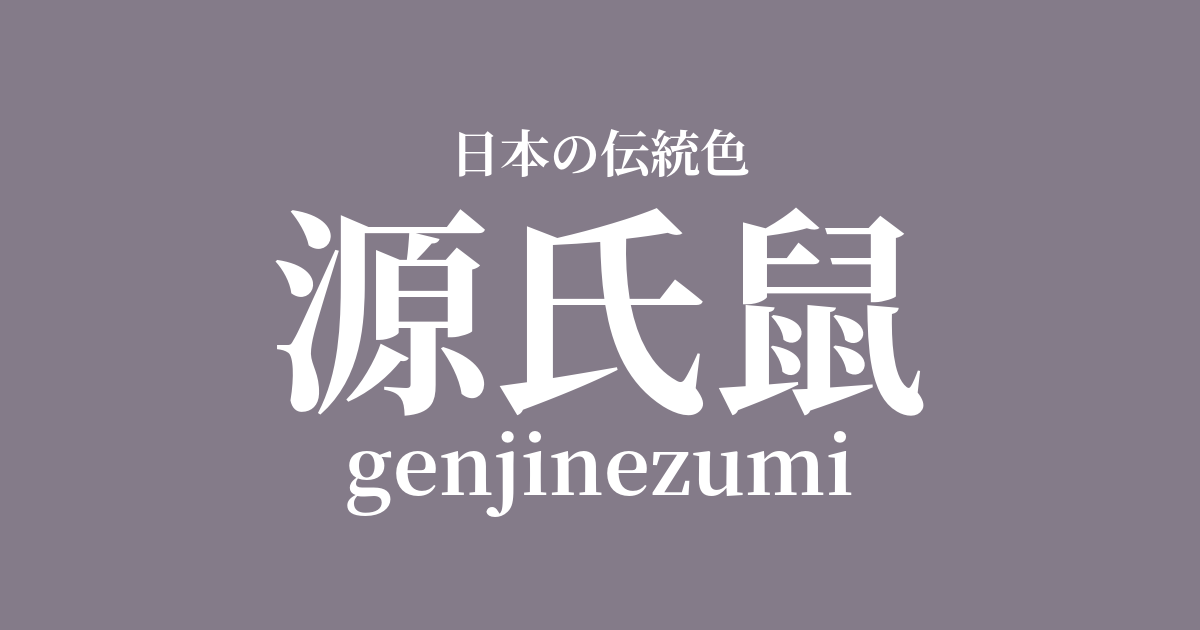
| Japanese color name | Genji Mouse |
|---|---|
| reading | genjinezumi |
| HEX | #847B89 |
| RGB | 132, 123, 137 |
What is a Genji mouse? Origin and etymology
Genji-nezumi is one of the many shades of brown and gray known as "Shijūhacchahyaku-nezumi" (48 shades of brown and 100 shades of gray) that were popular in the mid-Edo period. The name "Genji" is said to originate from the Heian period literary work "The Tale of Genji." It is said that the name was given because of its elegant, purplish hue that evokes the noble characters and refined worldview of the story.
Specifically, this color is created by adding a small amount of ink to purple dye made from the root of the gromwell plant (shikon), thereby reducing its saturation. Rather than directly using the expensive and precious purple dye, this color reflects the refined aesthetic sense of the Edo townspeople who sought to express its elegance within a grayish color.
Historical background of Genji mice
During the Edo period, the shogunate frequently issued sumptuary laws, restricting commoners from wearing silk fabrics, gold and silver threads, and brightly colored clothing such as purple and crimson. Purple, in particular, was strictly controlled as it had long been a color symbolizing high social status.
Within these constraints, people developed a unique culture of finding enjoyment in subtle differences in shades within the permitted color palette, such as brown and gray. This led to the popularity of "48 shades of brown and 100 shades of gray," giving rise to a multitude of delicate intermediate colors.
Genji-nezumi (Genji Mouse) is one such example, a color that cleverly expresses the longing for the forbidden color purple by adding a purple nuance to a mouse gray. It can be said to be a sophisticated color born from the playful spirit and aesthetic sense of Edoites who turned the shogunate's restrictions to their advantage.
Related literature, waka poetry, and seasonal words
While no specific classical literary work directly features the color name "Genji-nezumi," the name is clearly inspired by "The Tale of Genji." It is believed that the elegant and refined worldview of the story's protagonist, Hikaru Genji, and the women surrounding him, underlies this color.
Purple, in particular, plays an important role in "The Tale of Genji" as the color symbolizing Murasaki no Ue, the woman deeply loved by Hikaru Genji. Genji-nezumi, a gray color with the elegance of purple, conveys the refined atmosphere of the story to the present day. It is not designated as a seasonal word.
Color scheme preview
This is to check the readability of the text when this color is used as the background.
Genji-nezumi (Genji Mouse) color scheme proposal
Mauve (#BBACC9)
The purplish nuances of Genji-nezumi (Genji Mouse) and the pale purple of wisteria harmonize to create an elegant and graceful impression. The refined and subdued color scheme evokes the aristocratic culture of the Heian period.
White training (#EDEAE1)
When combined with pure white, the refined shade of Genji-nezumi (a type of gray) stands out. It's a sophisticated color scheme that is clean and modern, yet also evokes a sense of Japanese aesthetics.
Aphrodisiac tea (#715C1F)
This combination with "Kobicha," one of the "Forty-Eight Teas and One Hundred Grays" that were popular during the Edo period, creates a sophisticated and profound impression despite the contrast between the two subdued colors, resulting in a striking contrast between purple and yellowish-brown tones.
Practical Scenes
In the world of traditional Japanese clothing, Genji-nezumi (a shade of gray) is used in patterns such as komon (small-patterned kimono), iromuji (solid-colored kimono), and obi (sashes), creating an understated yet elegant look. Because its appearance changes depending on the other colors it's combined with, there's a pleasure in adding accents with accessories such as obi-jime (kimono sash cords) and obi-age (kimono sash ties).
In interior design, using it for wallpaper, curtains, or sofa upholstery can create a calm and luxurious atmosphere. It blends easily with both modern and traditional Japanese designs, exuding a refined ambiance.
In web and graphic design, it can be used as a background or accent color. While not overly assertive, its depth and elegance make it suitable for websites dealing with luxury brands or traditional themes.