
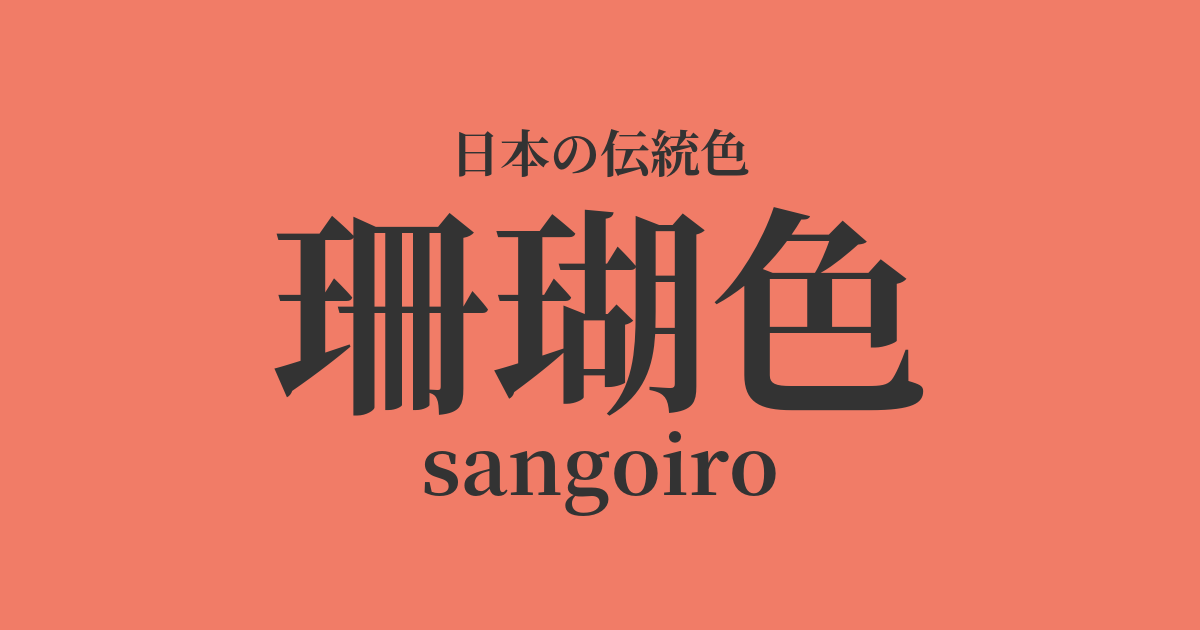
| Japanese color name | Coral color |
|---|---|
| reading | sangoiro |
| HEX | #F17C67 |
| RGB | 241, 124, 103 |
What is coral color? Origin and etymology
Coral red is a bright, yellowish-red color, reminiscent of the powdered gemstone coral. As the name suggests, the color is named after the coral that inhabits warm, beautiful seas. There are several theories about the origin of the word "coral," including that it comes from the Persian word "sanga," meaning stone, or from ancient Chinese. In Japan, coral has long been treated as a precious treasure, and its beautiful color has captivated many people, leading to its reproduction as a dye color.
The historical background of coral-colored
Coral itself has been in Japan since ancient times, as evidenced by its presence in the Shōsōin Treasure House. However, it is believed that the color name "coral" only became widely known after the mid-Edo period. At that time, among the wealthy merchant class, accessories such as hairpins and obi clasps made of coral became extremely popular. This trend increased the demand for dyed fabrics that imitated the color of coral, which led to the establishment of the color name "coral color."
Even into the Meiji era, the popularity of coral yellow never waned. Its bright and vibrant hue resonated with the spirit of the new era of modernization, and it was widely used in kimonos, Japanese clothing accessories, and even cosmetics such as lipstick. Even today, its gentle and warm tone continues to be loved in many design fields, both Japanese and Western.
Related literature, waka poetry, and seasonal words
Edo period literature and ukiyo-e prints frequently depict women wearing coral-colored clothing or adorning their hair with coral hairpins. For example, in Ihara Saikaku's "The Life of an Amorous Man," coral appears as an expensive imported item from a foreign land, suggesting that it was an object of admiration for people at the time. Although the color name is rarely mentioned directly, these works strongly reflect the culture of an era when coral was fashionable.
Color scheme preview
This is to check the readability of the text when this color is used as the background.
Coral-colored color scheme proposal
Asatan (#84B9CB)
This color scheme creates a beautiful contrast between the warm coral color and the cool light blue. The colors vividly complement each other, giving a refreshing and sophisticated impression. It's a natural combination reminiscent of the sea and coral reefs, and a harmonious color scheme often seen in accessories for traditional Japanese clothing.
White training (#FFFFFF)
When paired with pure white, the brightness and splendor of the coral color are brought out to their fullest. A sense of cleanliness and nobility is added, creating a cheerful impression suitable for celebratory occasions. This color combination, such as the matching of the kimono's base color and the obiage (sash tie), is a traditional choice favored in formal settings.
Blue iron (#243A47)
The deep, calming indigo iron tones the vibrant coral color, creating a modern and intellectual impression. A sense of gravitas is born within the elegance, resulting in a sophisticated, grown-up atmosphere that avoids being overly sweet. This color scheme is effective when incorporating a modern sensibility in areas such as web design and fashion.
Practical Scenes
In the world of traditional Japanese clothing, coral is a color particularly favored for women's kimonos, obi sashes, and accessories. Incorporating it into formal wear such as furisode or houmongi can brighten the face and give a youthful and lovely impression. Using it as an accent color in accessories such as obi sashes and han-eri collars is also effective in creating a more vibrant and stylish overall look.
In interior design, using it as an accent color brings warmth and vibrancy to a space. Incorporating it into cushion covers, rugs, or parts of wallpaper makes it a great accent color in natural spaces based on white, beige, or wood tones. It is a suitable color for creating a comfortable and inviting atmosphere.
In web design and graphic design, the brightness and positive impression of coral green are utilized. It is effective when used for buttons, icons, and headings that you want to attract attention. In particular, it is useful in expressing feelings of happiness and joy in designs for products and services aimed at women, and in food-related designs.