
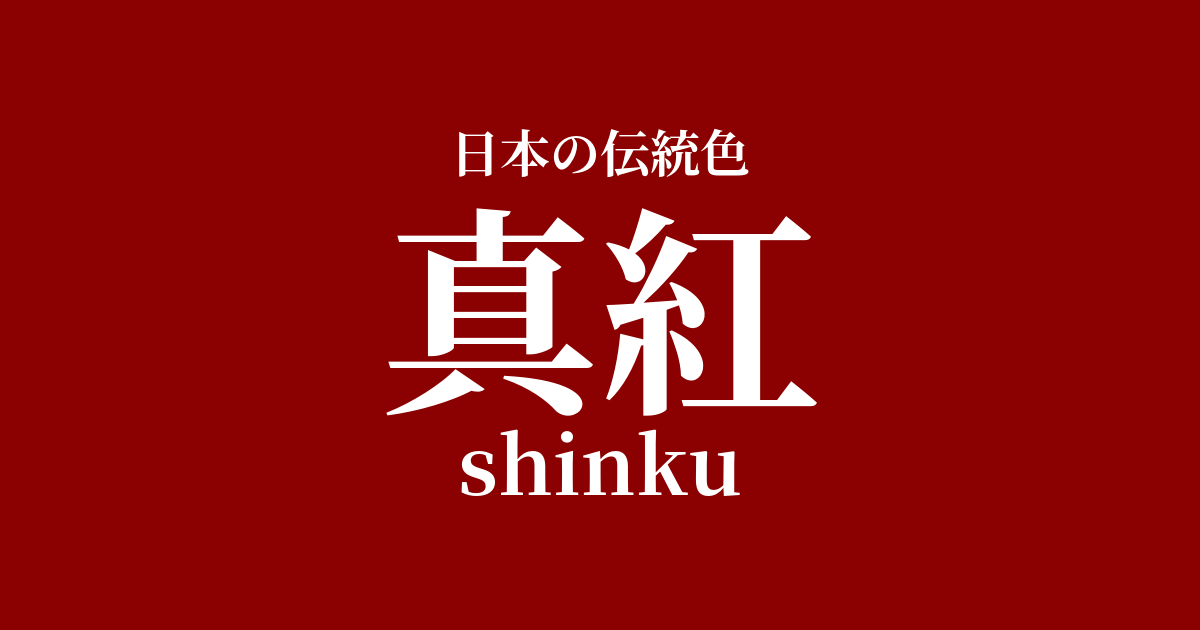
| Japanese color name | crimson |
|---|---|
| reading | shinku |
| HEX | #8B0000 |
| RGB | 139, 0, 0 |
What is crimson? Origin and etymology
"Shinku" means "true crimson," and as the name suggests, it refers to a pure, deep red color dyed using carthamin, a red pigment extracted from safflower petals. It is sometimes written as "shinku" (深紅), but traditionally "shinku" has been used to refer to the pure red of safflower dyeing. The dyeing process is very complex, and it takes many layers of dyeing to achieve this deep color, so it is known as a very expensive color with limited production.
The value of this color stems from the fact that the red pigment contained in safflower, the dye source, is only about 1%. By luxuriously using this precious pigment, which can only be extracted in small quantities from many petals, and dyeing it with time and effort, a unique color is created that is both vibrant and deep. Therefore, crimson has not only been a color name, but has also been treated as a symbol of wealth and power.
Crimson historical background
The technique of safflower dyeing is believed to have been introduced to Japan from China via the Silk Road during the Asuka period. Initially, it was introduced as medicine, but gradually its beautiful red color attracted attention as a dye. From the Nara period to the Heian period, crimson clothing was considered one of the "forbidden colors" that only the emperor, members of the imperial family, and some high-ranking nobles were permitted to wear, and it was positioned as an extremely noble color due to its rarity and beauty.
The Engishiki, a legal code from the Heian period, contains detailed regulations regarding the cultivation and dyeing of safflower, suggesting that it was strictly controlled by the state. In the Edo period, safflower cultivation was encouraged in Dewa Province (present-day Yamagata Prefecture) and other areas, leading to an increase in production. As a result, safflower became widespread among the common people as a cosmetic, but kimonos dyed crimson remained expensive and continued to be prized among wealthy merchants and the upper class.
Related literature, waka poetry, and seasonal words
In classical Japanese literature, particularly in works from the Heian period such as "The Tale of Genji" and "The Pillow Book," the color "crimson" appears frequently. Often depicted as the color of noble women's clothing, it was an important element symbolizing the characters' status, beauty, or hidden passions. Crimson refers to a particularly deep and vivid shade of crimson, and it is thought to have played a role in adding splendor and depth to the stories.
Crimson has also been used effectively in modern literature. For example, in Natsume Soseki's "The Poppy," it is used effectively as a color that symbolizes the character's personality and fate. In this way, due to its vivid hue, crimson has stimulated the creative drive of writers across generations and has been depicted in stories as a color that suggests passion, vitality, or tragedy.
Even in the age of the gods, such a thing has never been heard: the Tatsuta River is dyed crimson.
Color scheme preview
This is to check the readability of the text when this color is used as the background.
Crimson color scheme proposal
Black (#1C1C1C)
The vibrant crimson and the rich, deep black complement each other, creating a dignified and powerful impression. This combination, often seen in traditional armor and lacquerware, conveys a sense of luxury and stability.
Golden (#E6B422)
The combination of crimson and gold has long been known as a color scheme symbolizing nobility and celebration. It gives a magnificent and opulent impression and is frequently used in celebratory occasions such as folding screen paintings and kimono patterns.
White training (#FFFFFF)
When paired with pure white, the vibrant red of crimson stands out, conveying a sense of purity and elegance. Red and white are traditional celebratory colors in Japan and are a color combination that is easy to apply to modern designs.
Practical Scenes
In the world of kimono, crimson is used for special occasions such as weddings and coming-of-age ceremonies, such as for furisode (long-sleeved kimono) and uchikake (outer kimono). It is a symbol of youth and vitality, and has also been believed since ancient times to be a color that wards off evil, adding a touch of splendor to celebrations of new beginnings in life. Even using it only in obi (sash) or accessories can have the effect of tightening the overall impression.
In interior design, crimson is an effective accent color that adds passion and a sense of luxury to a space. Incorporating it into small items such as cushions, curtains, and art panels brings a dramatic atmosphere and warmth to the entire room. It's also possible to create a modern space with a bold use of crimson, such as painting just one wall crimson.
In web and graphic design, crimson is used as a color that strongly attracts the user's attention. Using it for purchase buttons, important headings, and logos can create a strong visual impact. Especially when paired with a black or dark gray background, the strength and sophistication of crimson are highlighted, which can enhance the brand image.