
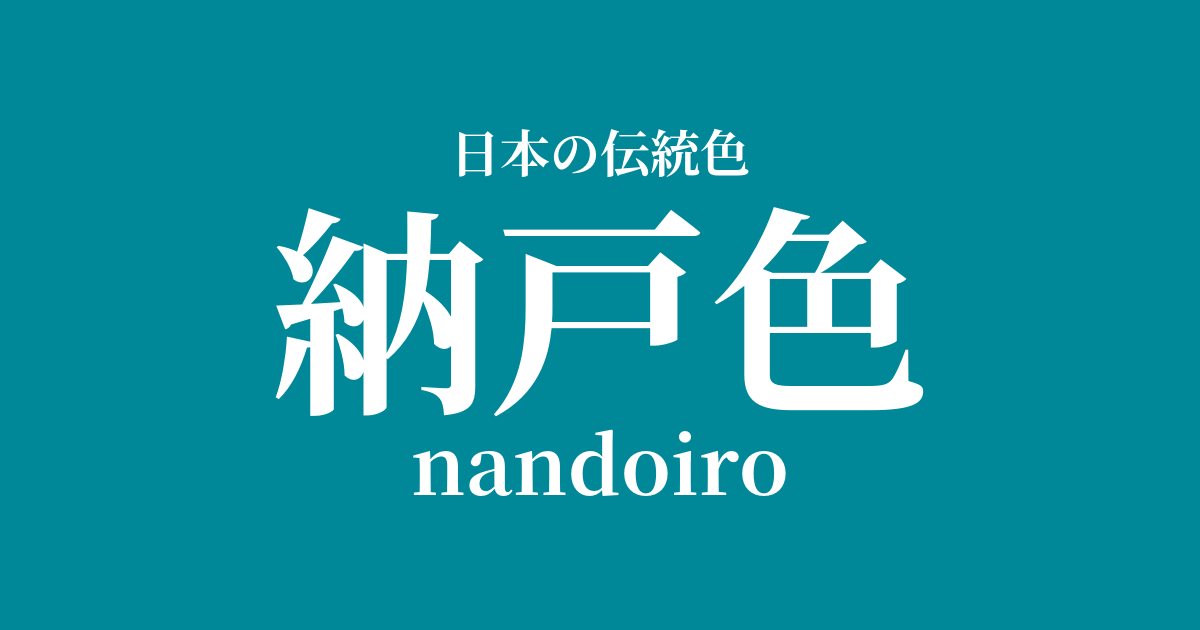
| Japanese color name | Storage room color |
|---|---|
| reading | nandoiro |
| HEX | #008899 |
| RGB | 0, 136, 153 |
- What is "nando-iro" (a type of color often associated with storage rooms)? Origin and etymology.
- The historical background of the color "nando" (storage room color)
- Related literature, waka poetry, and seasonal words
- Color scheme preview
- Color scheme proposal for storage rooms
- Practical Scenes
- FAQ
- Japanese colors similar to the color of a storage room
What is "nando-iro" (a type of color often associated with storage rooms)? Origin and etymology.
Nando-iro (南戸色) is a color name that, as the name suggests, originates from the "nando" (南戸) of a house. A nando is a storage room used for storing clothes, furnishings, and other items. In old Japanese houses, nandos often had no windows and were dimly lit spaces. It is said that the color came to be called "nando-iro" because it was a deep, greenish-blue color reminiscent of the darkness of such a nando. It is a color that combines calmness and depth, achieved by using indigo dye as a base and adding a touch of yellow.
The historical background of the color "nando" (storage room color)
The color "nando-iro" (a type of dark brown) became widely known during the Edo period. This was due to repeated sumptuary laws that restricted the colors of clothing worn by commoners. In this context, a culture emerged that appreciated subtle differences within subdued colors such as brown, gray, and indigo. Nando-iro was one such color, and it became particularly popular among townspeople as a stylish color from the mid-Edo period onward.
It was also frequently used in the costumes of Kabuki actors and became established as one of the colors symbolizing Edo culture.
Related literature, waka poetry, and seasonal words
The color nando-iro (a type of dark blue) can be found in Edo period literature and performing arts. In particular, it is often depicted as the color of the kimonos worn by characters in sharebon and ninjobon (humorous novels) from the Kasei period, when townspeople's culture flourished. This suggests that nando-iro was a fashionable color at the time and an important element in expressing "chic" or "stylish." Furthermore, kimonos in the cool and subdued color nando-iro frequently appear in portraits of beautiful women and actors drawn by ukiyo-e artists, conveying the atmosphere of summer in Edo.
The moon is rising from the storage room; is it Obon?
Color scheme preview
This is to check the readability of the text when this color is used as the background.
Color scheme proposal for storage rooms
White training (#FEFFDFD)
The combination of deep blue-green (like a traditional Japanese storage room color) and pure white accentuates a sense of cleanliness and coolness. This color scheme, also seen in traditional Japanese yukata and tenugui (hand towels), gives a refreshing summer impression. The contrast is clear, and the colors complement each other.
Dark brown (#664433)
The combination of dark blue and dark brown evokes the classic "chic" aesthetic of the Edo period. While both colors are subdued, the contrast between blue and brown enhances each other, creating an impression of depth and stability. It is well-suited for creating a modern Japanese-style space.
Yamabuki (#FFBF00)
The vibrant golden yellow acts as an accent against the subdued dark blue. The near-complementary relationship between blue and yellow creates visual appeal. This color scheme gives a modern and lively impression while remaining traditional, and is effective as an accent color for accessories and designs.
Practical Scenes
In the world of traditional Japanese clothing, dark blue is a popular color for yukata, summer kimonos, and obi sashes. Its cool and sophisticated appearance makes it particularly popular for men's traditional Japanese attire. Pairing it with white or gray creates a refined look, conveying the aesthetic sensibilities of the Edo period to the present day.
In interior design, using it as an accent color for wallpaper, sliding doors, or cushions adds a sense of calm and depth to the space. It pairs well with natural materials such as light-colored wood and bamboo, making it suitable for creating a modern Japanese interior style. It's also a good choice for spaces where you want to relax quietly, such as a study or bedroom.
In the fields of web and graphic design, the dark blue color is useful for conveying a sense of trust and traditional imagery. It is particularly effective for websites of established brands and websites showcasing Japanese culture. When combined with white or beige tones, it can create an elegant design while maintaining readability.