
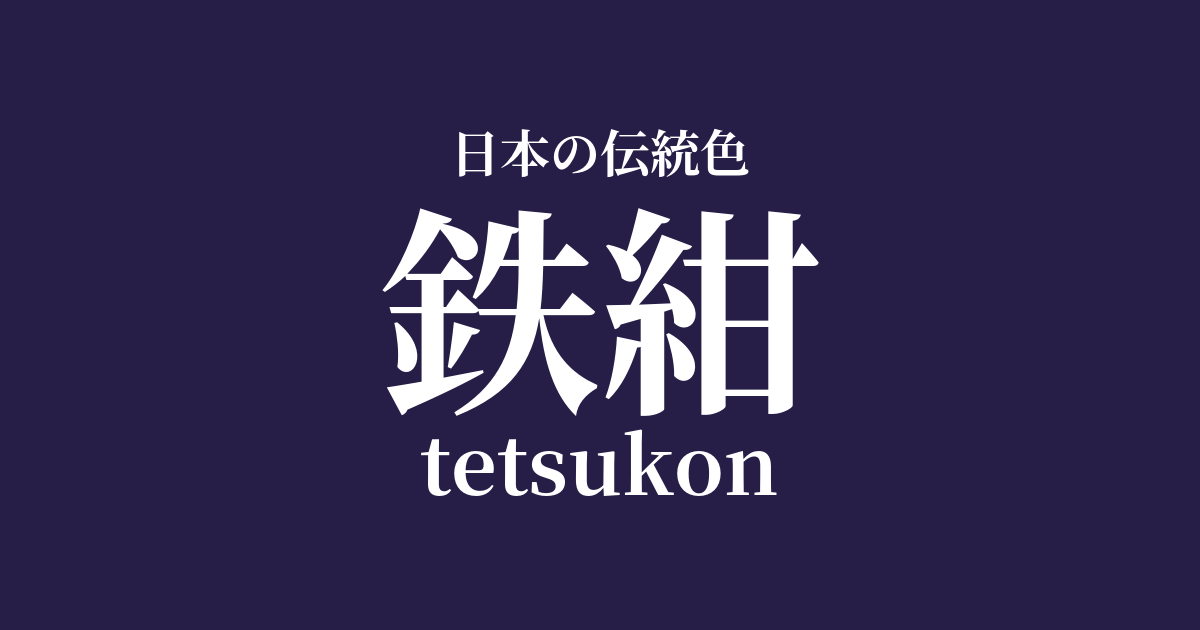
| Japanese color name | Iron navy |
|---|---|
| reading | tetsukon |
| HEX | #261E47 |
| RGB | 38, 30, 71 |
What is "Tetsukon" (iron navy blue)? Origin and etymology.
Tetsukon, as its name suggests, derives from "iron-tinged navy blue." It is said to have been named after the slightly bluish, dark color that hot iron shows when it cools, and the dull luster of the iron surface. The deep navy blue obtained by repeatedly dyeing with indigo, with a touch of green and black added, creates this unique depth and hard impression. It is thought to be one of the colors that emerged in the Edo period as dyeing techniques developed and a greater variety of colors were sought.
The historical background of the color "iron navy"
The color name "Tetsukon" (iron navy blue) is believed to have become commonly used from the mid-Edo period onward. During this time, subdued colors such as brown, gray, and indigo were considered "iki" (chic/stylish) among commoners and became extremely popular. Tetsukon was one of the colors that emerged during this trend, and it was particularly favored for men's kimonos, haori jackets, and hakama trousers. The restriction of flashy colors due to sumptuary laws also contributed to the development of these subdued and deep colors.
Related literature, waka poetry, and seasonal words
Because "Tetsukon" (iron navy blue) is a relatively new color name that became popular during the Edo period, it rarely appears directly in Heian period waka poetry or classical literature. However, many costumes using this color are depicted in Edo period kabuki and ukiyo-e prints. For example, the sophisticated style seen in the costumes of kabuki actors and the everyday wear of townspeople express the hard and refined atmosphere that Tetsukon possesses.
Although not designated as a seasonal word, this color is sometimes associated with winter scenes, as it evokes images of a clear winter night sky or a still water surface.
Color scheme preview
This is to check the readability of the text when this color is used as the background.
Iron navy blue color scheme proposal
White training (#F3F3F3)
The combination of the deep iron-navy blue and the pure white of the white base creates a strong contrast, enhancing each other's beauty. It expresses both cleanliness and elegance simultaneously, giving a modern and sophisticated impression. It is effective as an accent in kimono sashes and designs.
Silver mouse (#AFB1B4)
The iron-like image of navy blue and the metallic sheen of silver gray harmonize to create a sophisticated and cool urban impression. Since both are near-neutral, muted tones, the resulting color scheme is chic and cohesive. It's suitable for business settings and men's fashion.
Dark brown (#65382B)
The combination of the deep, cool tones of iron navy and the deep, warm tones of dark brown creates a dignified, calm, and stable color scheme. It exudes a traditional and refined atmosphere, making it suitable for creating a substantial and luxurious feel in interiors and traditional Japanese clothing.
Practical Scenes
In the world of traditional Japanese clothing, iron navy blue is a classic base color for men's kimonos, hakama, and haori jackets. Its calm and dignified hue is widely used in everything from formal wear to everyday attire, and it has long been cherished as a color symbolizing the spirit of the samurai and the refined taste of artisans. In women's kimonos, using it in obi sashes and accessories has the effect of tightening the overall impression.
In interior design, dark blue is used as an accent color to bring depth and tranquility to a space. Incorporating it into a wall, sofa, or curtains can create a modern and sophisticated atmosphere. Combining it with white or wood-grain materials enhances the color contrast, resulting in a high-quality space.
In web and graphic design, dark blue is often used to express reliability and expertise. It is effective as a corporate color for companies and as a background color for high-end product websites. It also pairs well with white and gray text, creating a sophisticated design while maintaining readability.