
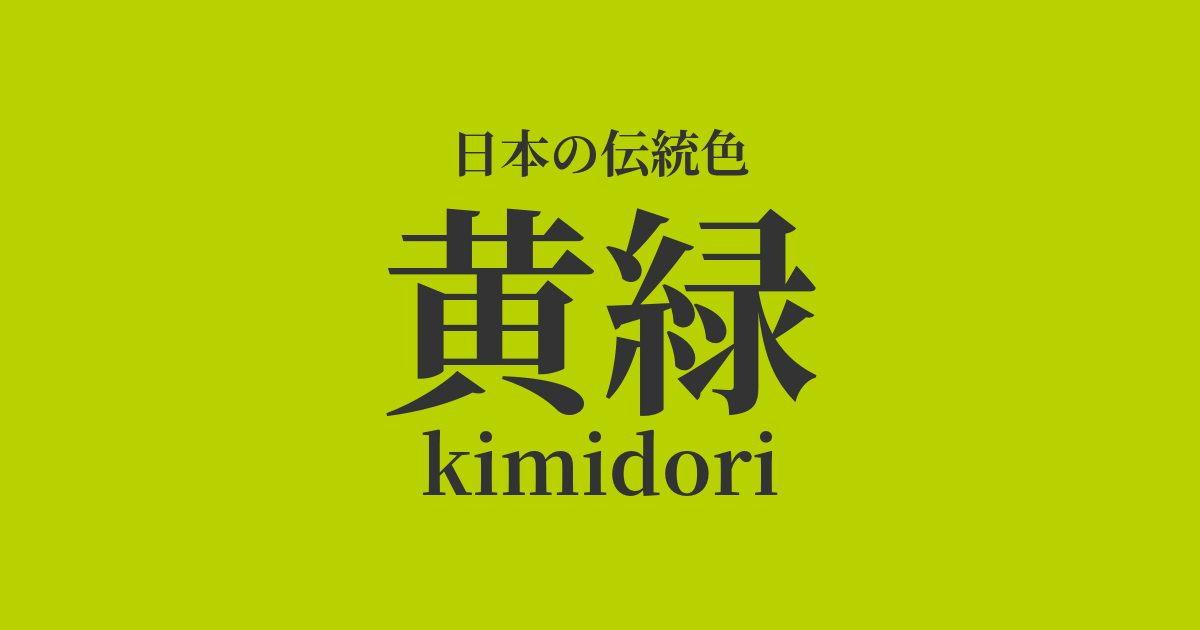
| Japanese color name | Yellow-green |
|---|---|
| reading | kimidori |
| HEX | #B8D200 |
| RGB | 184, 210, 0 |
What is yellow-green? Origin and etymology
Yellow-green, as its name suggests, is a color name referring to an intermediate color between yellow and green. It is characterized by a vibrant hue full of vitality, reminiscent of the colors of young leaves sprouting in spring and newly emerging plants. Unlike traditional color names derived from specific dyes or plants, it is considered a relatively modern color name that directly describes the appearance of the color. It is a color that exists universally in nature and has long been recognized as a familiar color in people's lives.
Yellow-green historical background
The color name "yellow-green" only appears in literature relatively recently. During the Heian period, "moegi" (a light greenish-yellow) was favored as the color of young spring leaves and was frequently used in literary works and clothing. Yellow-green refers to a brighter, more vivid shade than moegi, with an even stronger yellow tint. It is thought that in the Edo period, as dyeing techniques developed and a wide variety of colors were created, intermediate colors like yellow-green also came to be distinguished in finer detail.
After the Meiji era, with the introduction of inexpensive chemical dyes from the West, it became easy to dye fabrics with vibrant yellow-green colors that had previously been difficult to achieve. As a result, yellow-green became widely used in the daily lives of ordinary people, appearing in kimonos, accessories, and printed materials. As a color symbolizing the vitality of nature, it was particularly favored to express the feeling of spring and remains popular to this day.
Related literature, waka poetry, and seasonal words
While the color "yellow-green" doesn't appear directly in many classical literary works, there are numerous expressions that evoke this shade. In particular, "sprout green" and "young grass green" were used in descriptions of clothing and nature in works such as "The Tale of Genji" and "The Pillow Book" as colors symbolizing the youthfulness and vitality of spring. These colors were deeply cherished in aristocratic society as colors of hope that heralded the arrival of a new season.
In the world of haiku, yellow-green plays an important role as a color that represents spring. Seasonal words such as "young grass," "willow buds," and "spring mountain" all evoke in the poet the vibrant yellow-green color emitted by nature as it awakens from its winter slumber. Through these words, poets have skillfully expressed the breath of life and the changing seasons, adding color and depth to their works.
Those who break off the willow branches, their buds budding in a light green, must be thinking of this moment as the arrival of spring.
Color scheme preview
This is to check the readability of the text when this color is used as the background.
Yellow-green color scheme proposal
Plum blossom color (#F2A0A1)
This vibrant color scheme evokes the fresh leaves and plum blossoms of spring. The freshness of the light green and the loveliness of the reddish-purple color complement each other, creating a bright and cheerful impression. It is suitable for Japanese clothing and spring event designs, and is a combination that evokes hope and joy in the viewer.
Rapeseed yellow (#F7D943)
This bright and cheerful color scheme evokes images of a field of rape blossoms in full bloom in spring. The use of similar colors creates a sense of unity, bringing a feeling of spaciousness and warmth to the space. It's effective for creating a friendly and positive atmosphere in interior design, website backgrounds, and other applications.
Dark brown (#65382B)
A natural and calming color scheme reminiscent of young leaves, the earth, and tree trunks. The vibrant yellow-green is toned down by the dark brown, creating a sense of stability and elegance. In fashion and product design, it can give a modern yet warm impression.
Practical Scenes
In traditional Japanese clothing, light green is used as a color that symbolizes youthfulness and the arrival of spring. It is often incorporated as part of the patterns of furisode (long-sleeved kimono) and houmongi (formal visiting kimono), adding vibrancy and a sense of life to the outfit. Furthermore, using it in accessories such as obiage (sash tie) and obijime (sash cord) can add a light and stylish accent to the overall coordination.
In interior design, using lime green as an accent color brings brightness and freshness to a space. Incorporating it into cushions, curtains, or art panels will instantly refresh the atmosphere of a room. It pairs particularly well with natural and Scandinavian-style interiors and harmonizes with the colors of houseplants to create a comfortable space.
In web design and graphic design, lime green is frequently used due to its high visibility and positive impression. It's suitable as the main color for websites themed around ecology, health, and nature, and is also effective as a color for call-to-action buttons. Combining it with white or light gray creates a clean and modern design.