
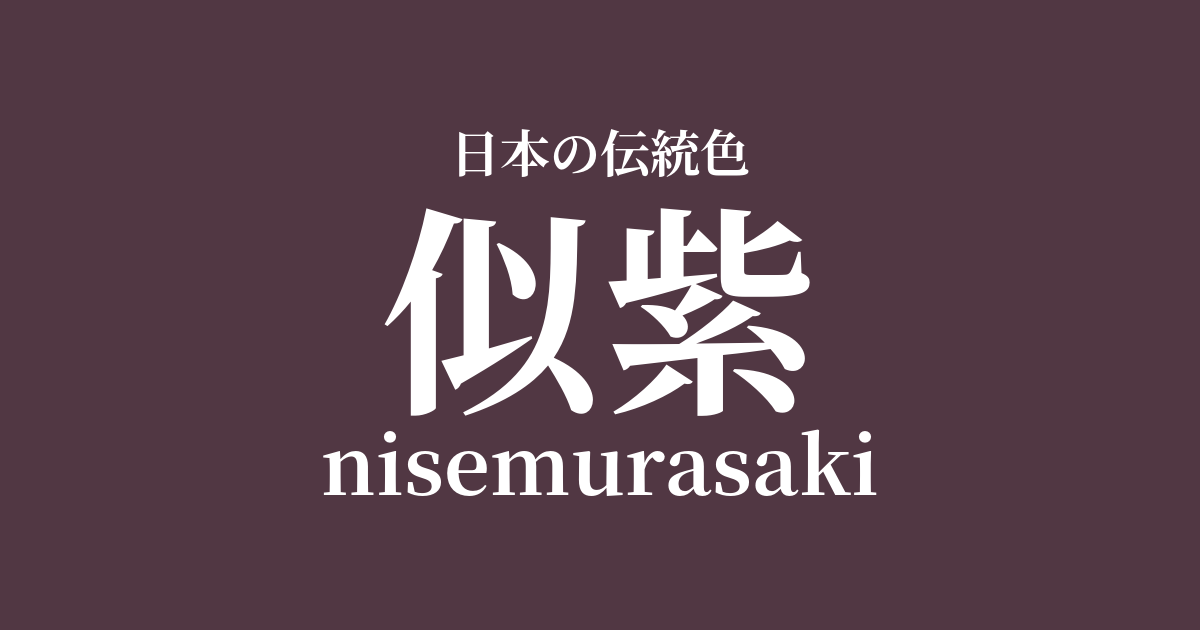
| Japanese color name | Similar purple |
|---|---|
| reading | nisemurasaki |
| HEX | #513743 |
| RGB | 81, 55, 67 |
What is "Nishimurasaki"? Origin and etymology
Nisemurasaki, as the name suggests, is a traditional Japanese color meaning "a color that resembles purple." Originally, purple was dyed using shikon, the root of the gromwell plant, but shikon was extremely expensive and was once a forbidden color that only people of high status could use. Therefore, common people tried to recreate a color close to purple by combining dyes other than shikon. Nisemurasaki was born from this ingenuity.
It is believed that the dyes used to create the pseudo-purple were mainly indigo and sappanwood. First, the cloth was pre-dyed with indigo, and then sappanwood, a red dye, was applied on top to create a reddish, dark purple similar to true purple. It can be said that this color has a story behind it, born from the strong desire for the expensive color purple and the ingenuity of people who could not afford it.
Historical background of the color purple
Purple was a symbol of authority and nobility, historically being the highest-ranking color in the Twelve Levels of Court Rank established by Prince Shōtoku. During the Heian period, it became a forbidden color, permitted only to the emperor and those of equivalent status, making it extremely rare and valuable. The cultivation of gromwell root and dyeing techniques were strictly controlled, and it was strictly forbidden for ordinary people to wear purple clothing.
As time progressed and the Edo period began, popular culture flourished, but sumptuary laws restricted the use of bright colors. However, people found subtle differences in subdued colors such as brown and gray, creating an aesthetic known as "Forty-Eight Browns and One Hundred Grays" to express individuality. Similar purple, with its subdued and calm hue distinct from true purple, was considered "chic" and is thought to have been one of the colors beloved by the townspeople of Edo.
Related literature, waka poetry, and seasonal words
While there aren't many literary works that directly mention the color "Nishimurasaki" (literally "like purple"), the longing for true purple is depicted in many classical works. In "The Tale of Genji," purple is effectively used as a color symbolizing the beauty and nobility of the protagonist, Hikaru Genji. Also, in the "Kokin Wakashū" (Collection of Ancient and Modern Japanese Poems), there is a poem that expresses affection for a single purple flower: "Because of a single purple flower, I look upon all the grasses of Musashino with pity."
The special feelings towards purple seen in these works are thought to have been the driving force behind the creation of imitation purple for those who could not obtain genuine purple. Imitation purple is a color that exists at the intersection of a longing for the elegant world depicted in literature and the everyday life of ordinary people in the Edo period, and its cultural background is very profound.
Color scheme preview
This is to check the readability of the text when this color is used as the background.
Color scheme suggestion for similar shades of purple
Shironeri (#FFFFFF)
The combination of pure white and a dark, subdued purple creates a very high contrast, making each color stand out. This color scheme conveys a sense of cleanliness and elegance, giving a modern and sophisticated impression.
Turmeric yellow (#FABE22)
The reddish hue of the purple-like color and the vibrant yellow of the turmeric are close to complementary colors, creating a powerful and vibrant impression. This combination is both classic and eye-catching, making it an effective accent in design.
Aikobicha (#555647)
The greenish-dark brown color, Aibicha, like Nifumisaki, was a popular subdued color during the Edo period. Combining colors with similar saturation and brightness creates a sophisticated and refined atmosphere that appeals to connoisseurs.
Practical Scenes
In the world of traditional Japanese clothing, the subdued and deep shade of purple is used for adult kimonos, obi sashes, and haori jackets. While not flashy, this is precisely what makes it considered "chic," and pairing it with brighter accessories allows for a refined look. It is particularly well-suited to the understated, Edo-period style of coordination.
In interior design, using it on large areas such as wallpaper and curtains can create a dignified and elegant space. Additionally, incorporating it as an accent in cushions, rugs, and accessories can bring a sense of calm and a Japanese aesthetic to the entire room. It also pairs well with natural materials such as wood and Japanese paper.
In web and graphic design, using dark colors as background or theme colors can convey a sense of luxury, reliability, and tradition. However, because it is a dark color, readability must be considered, such as by combining it with white or light gray text.