
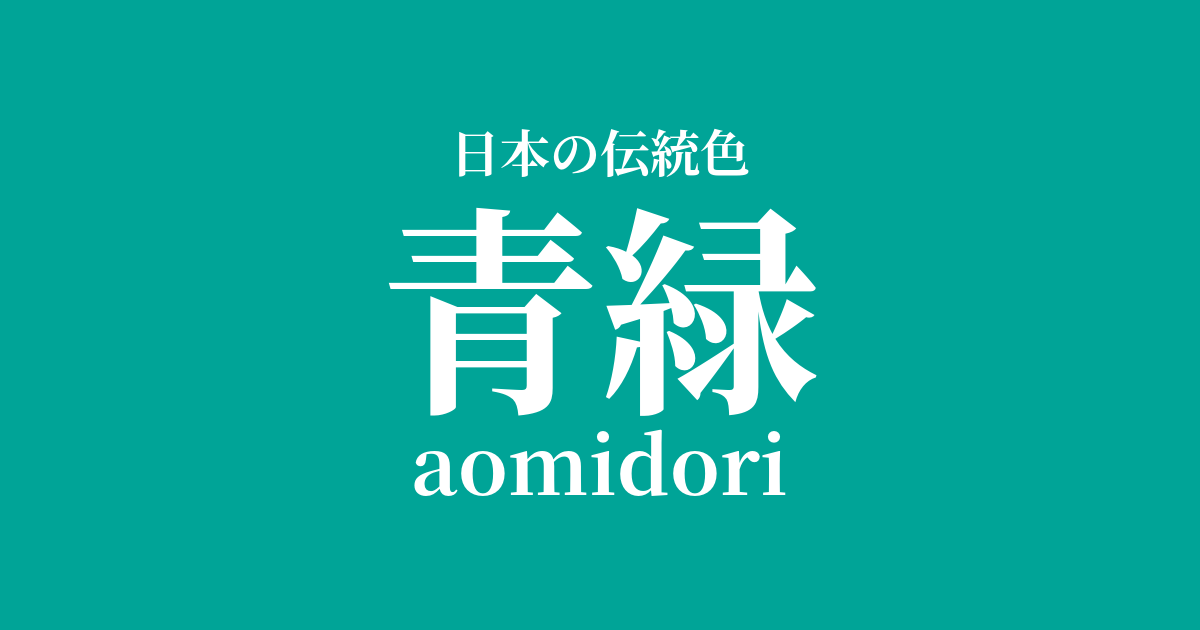
| Japanese color name | Blue-green |
|---|---|
| reading | aomidori |
| HEX | #00A497 |
| RGB | 0, 164, 151 |
What is blue-green? Origin and etymology
Blue-green, as the name suggests, is a direct and easy-to-understand color name referring to a shade that is intermediate between "blue" and "green." In ancient Japan, the word "ao" referred to a wide range of colors, including green, so it is believed that "midori" (green) only became established as an independent color name after the Heian period. Therefore, "blue-green" is thought to be a color name that arose from a mixture of the old color sense that viewed green as a type of blue and the new sense that distinguished between the two.
The origin of this color can be found in Japan's rich natural environment, such as the color of the deep, clear sea, the feathers of a kingfisher, or the leaves of evergreen trees like pine and cedar. Rather than being derived from a specific dye or pigment, it can be said that this color has been cherished since ancient times as a general term for the beautiful bluish-green color that people have seen in nature.
The historical background of blue-green
The word "aomidori" (blue-green) itself can be found in literary works from the Heian period, but at that time it was more often used as a color expression in landscape descriptions rather than as a proper noun referring to a specific dye color. For example, the color of the water in a deep, stagnant pool or the color of the leaves of lush, overgrown trees were described as "aomidori."
With the advent of the Edo period, advancements in dyeing and weaving techniques and pigments led to the enjoyment of a wide variety of colors. In particular, in the world of ukiyo-e prints, artists such as Katsushika Hokusai and Utagawa Hiroshige effectively used this blue-green color in their depictions of the sea, mountains, and rivers. As a result, blue-green became widely recognized as a concrete color among ordinary people.
Since the Meiji era, the introduction of inexpensive and stable chemical dyes from the West has made it easier to reproduce a more vibrant blue-green color. As a result, this color has been used in a wider range of fields, including not only kimonos and crafts, but also paintings and printed materials, and it remains one of the most popular colors to this day.
Related literature, waka poetry, and seasonal words
Because its hue evokes evergreen trees, the color blue-green is sometimes used to describe pine and cedar trees that retain their leaves even in winter. For this reason, it is deeply associated with "tokiwagi" (evergreen tree), a seasonal word for winter, and "matsu" (pine tree), a symbol of eternal youth and longevity. In literary works, it is often depicted as a symbol of eternity and vitality.
It is also used to describe the deep, tranquil color of water, creating a mystical atmosphere. In classical literature, rather than appearing as a direct color name, it has been effectively used as a description to add depth and serenity to a scene, such as "a blue-green surface of water." Its subdued hue also plays a role in suggesting stillness and contemplation.
Color scheme preview
This is to check the readability of the text when this color is used as the background.
Blue-green color scheme proposal
Coral color (#F88379)
The calm and intellectual impression of blue-green is complemented by the warm and soft red of coral, creating a vibrant color scheme where each color enhances the others. It evokes a sense of vitality and energy, making it suitable for decorative designs and festive occasions.
White training (#FFFFFF)
When combined with pure white, the refreshing and cool feeling of blue-green is maximized. Because it gives a clean, sophisticated, and modern impression, it is effective when you want to make a space appear larger in interior design or web design.
Golden (#E6B422)
Combining a deep blue-green with a shimmering golden hue creates a luxurious and dignified impression. The calmness of the blue-green and the splendor of the golden hue create a refined contrast, making this combination ideal when you want to convey a sense of luxury and exclusivity.
Practical Scenes
In the world of kimono, blue-green is a popular color regardless of the season. Its refreshing feel is especially appreciated in summer kimono made of ro or sha fabrics, as well as yukata. It is also used in formal wear such as visiting kimono and furisode, and incorporating it into accessories such as obi and obiage can add a sophisticated accent to the entire outfit.
In interior design, using this color on large areas such as wallpaper, curtains, and sofas brings a sense of calm and depth to the space. It pairs well with wooden furniture and spaces based on white tones, creating a modern and sophisticated atmosphere regardless of whether the style is Japanese or Western. It is a particularly suitable color for places where you want to relax, such as a study or bedroom.
In web and graphic design, blue-green is used as a color that symbolizes trust, stability, and intelligence. It is often adopted as a corporate color for companies and as a key color for technology-related services. Because of its high visibility, it is effective when used for important elements such as buttons and links.