
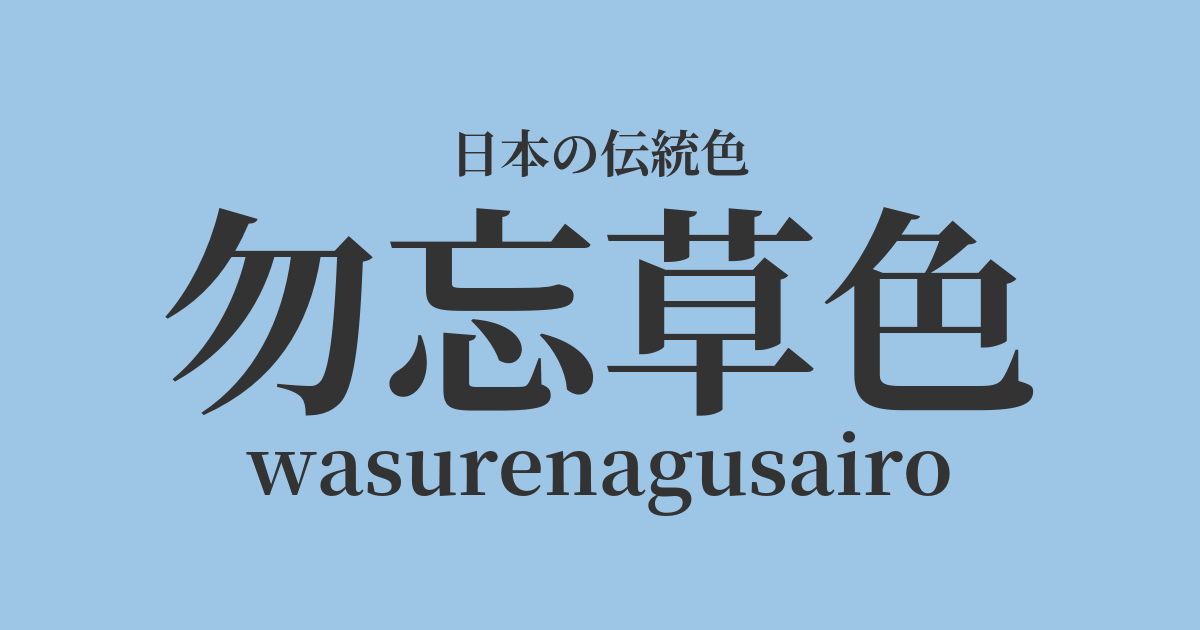
| Japanese color name | Forget-me-not color |
|---|---|
| reading | wasurenagusairo |
| HEX | #9CC5E6 |
| RGB | 156, 197, 230 |
What is the color "forget-me-not"? Origin and etymology.
The color forget-me-not is, as its name suggests, derived from the delicate color of the forget-me-not flower, a plant belonging to the Boraginaceae family. Forget-me-nots are native to Europe and were introduced to Japan as an ornamental plant during the Meiji era. The Japanese name "Wasurenagusa," which is the origin of the color name, is a direct translation of the phrase "Vergiss-mein-nicht" (Don't forget me), which appears in a German tragic love legend.
This legend is said to originate from the words a knight cried out as he threw flowers at his lover before falling into the river, and it gives the color name a romantic and poignant story.
The historical background of the forget-me-not color
The forget-me-not plant was introduced to Japan during the Meiji era, and the color name "forget-me-not color" only became established as a traditional Japanese color in the modern era. Therefore, unlike the classical colors found in the Heian period's "The Tale of Genji" or the dyeing culture of the Edo period, it can be said to be a relatively new color that arose under the influence of Western culture.
It is said that, due to its romantic name and gentle colors, it became popular in girls' magazines, lyrical paintings, and literary works from the Taisho to the early Showa period, and became widely known to the general public.
Related literature, waka poetry, and seasonal words
Because it is a color name that originated in modern times, "forget-me-not blue" is not directly mentioned in classical Japanese poetry or haikai. However, the forget-me-not flower, which is the motif of the color, frequently appears in modern literature and tanka poetry. For example, it is mentioned in a poem by Akiko Yosano, where its lovely appearance is described. As a seasonal word, it is classified as "spring" and is treated as one of the flowers that heralds the arrival of spring.
Due to the origin of its name, it is often used in the world of literature in association with the image of its flower meanings, such as "sincere love," "friendship," and "memories."
The soil in the pot where I sowed the forget-me-not seeds has dried out day by day and turned white.
Color scheme preview
This is to check the readability of the text when this color is used as the background.
Forget-me-not color scheme proposal
Cherry blossom pink (#FEEAFA)
A combination of flowers that represent spring. The clear blue of forget-me-nots and the pale pink of cherry blossoms harmonize to create a gentle, calm color scheme that evokes the arrival of spring. It gives a light and feminine impression.
White porcelain (#F8FBF8)
The bright blue of the forget-me-not color is enhanced by the pure white porcelain color. This color scheme exudes cleanliness and transparency, creating a refreshing impression. It is suitable for both Western-style designs and modern Japanese spaces.
Silver mouse (#AFB4B7)
Combining a bright forget-me-not yellow with a calm silver-gray creates a sophisticated and elegant impression. While possessing an intellectual and cool atmosphere, the gentleness of the forget-me-not yellow adds to the balanced color scheme.
Practical Scenes
In the world of kimono and fashion, the gentle, bright color of forget-me-not yellow is favored for spring attire. It is particularly used in komon and furisode kimonos for young women, as well as in traditional Japanese accessories such as obiage and obijime, adding a charming touch. In Western clothing, incorporating it into blouses, skirts, and dresses creates a fresh and feminine look.
In interior design, using it as an accent color for wallpaper, curtains, cushions, etc., brings a bright and open atmosphere to the entire room. It goes particularly well with white and natural wood-grain furniture, and harmonizes well with spaces in Scandinavian or French country styles.
In web and graphic design, it is effective when you want to create a clean and gentle impression. It is often used as the main color or accent color for websites related to baby products, cosmetics, and weddings. It can make users feel safe and comfortable.