
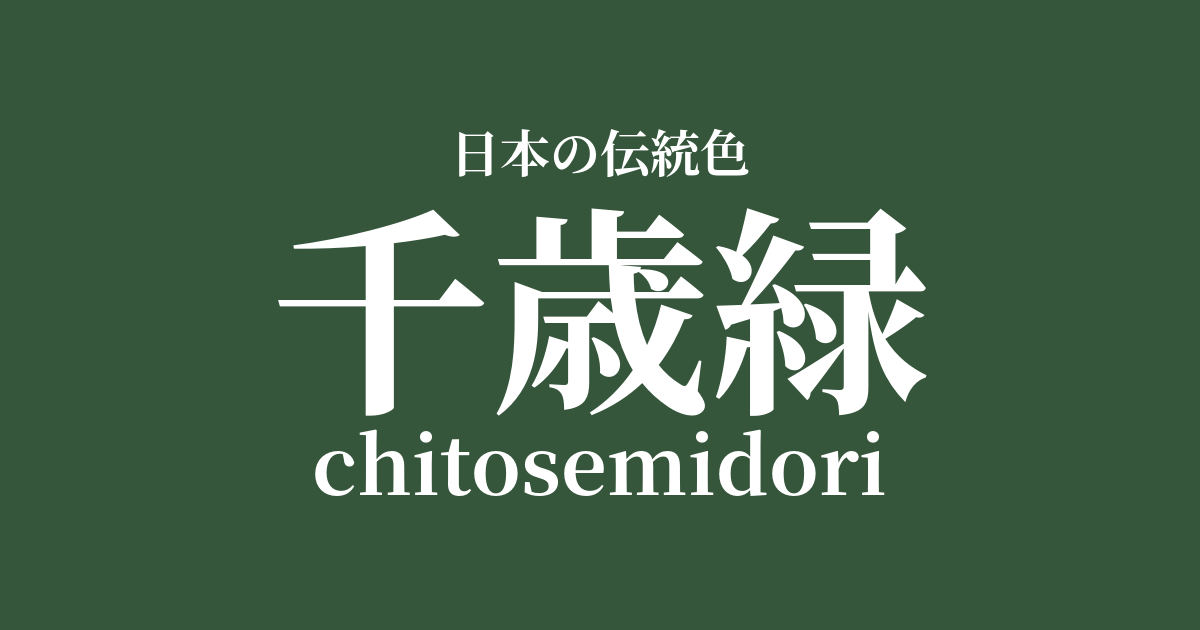
| Japanese color name | Chitose Midori |
|---|---|
| reading | chitosemidori |
| HEX | #36563C |
| RGB | 54, 86, 60 |
What is Chitose Midori? Origin and etymology
Chitose Midori, as its name suggests ("Chitose" meaning "a thousand years"), is a deep green color that symbolizes eternal youth, longevity, and perpetuity. The origin of the color is said to be the color of evergreen trees, especially pine trees, which keep their leaves lush and green throughout the year. Pine trees have been considered a symbol of vitality since ancient times, and the name "Chitose" was given to it, imbuing its unchanging green color with a wish for eternity. This color name can be said to be a color name that strongly reflects the Japanese aesthetic sense, blending reverence for nature with a wish for longevity.
Historical background of Chitose Midori
The color name "Chitose-midori" (meaning "evergreen") is considered relatively recent, dating back to the mid-Edo period or later. However, the culture of valuing the green of evergreen trees has existed since ancient times, and similar color names symbolizing permanence, such as "Tokiwa-iro" (meaning "evergreen color"), were seen during the Heian period. These colors are said to have been highly valued in aristocratic society as symbols of vitality and longevity.
During the Edo period, Chitose-midori (a type of green) came to play an important role in the world of traditional performing arts such as Noh and Kabuki. In particular, it was favored for the costumes of old men, who were considered sacred beings and symbols of longevity. Furthermore, in samurai society, its auspicious meaning led to its adoption as a color for family crests, furnishings, and clothing, and it became widely accepted as a color that represented dignity and prosperity.
Related literature, waka poetry, and seasonal words
While the direct expression "Chitose Midori" (meaning "everlasting green") is not common in the world of literature, the green of the pine tree, from which this color originates, has long been a subject of waka and haiku poetry. In the Manyoshu and Kokin Wakashu anthologies, pine trees are referred to as "Tokiwagi" (everlasting trees), and many poems depict them as symbols of unchanging love and longevity. In these works, the deep green of the pine tree was an important motif that expressed the unchanging value that does not fade with time.
As a seasonal word, "the green of the pine trees" is used as a seasonal word for the New Year, and it carries the meaning of wishing for prosperity and longevity in the coming year.
Even the green of the pine trees, which have stood for thousands of years, becomes even more vibrant in color when spring arrives.
Color scheme preview
This is to check the readability of the text when this color is used as the background.
Chitose Midori color scheme proposal
Golden (#E6B422)
Pine and gold are a traditional and dignified combination, often seen in the pine-patterned backdrops of Noh stages. Their complementary colors create a luxurious and auspicious impression, making them suitable for celebratory occasions and elegant, traditional Japanese designs.
White tea (#BC9F7C)
By combining the deep green of Chitose Midori with the off-white tea reminiscent of tree trunks and soil, a sense of calm and warmth, like a natural landscape, is created. This harmonious color scheme of earth tones creates a relaxing space in interior design and fashion.
Blue and white (#EBF4F3)
Combining the deep, rich Chitose green with a very pale, bluish-white azure creates a clean and sophisticated impression. The contrast is not too strong, and it exudes an elegant and modern atmosphere, making it ideal for web design and contemporary Japanese aesthetics.
Practical Scenes
In the world of traditional Japanese clothing, Chitose-midori is a highly dignified color used in formal kimonos such as tomesode, houmongi, and obi. Especially when combined with auspicious motifs like pine, bamboo, plum blossoms, cranes, and turtles, it creates a sense of gravitas and elegance suitable for celebratory occasions. Its subdued hue enhances the wearer's refined character.
In interior design, incorporating Chitose Midori (a type of cypress) into accent walls or fabrics brings depth and tranquility to a space. It pairs exceptionally well with natural materials such as natural wood, Japanese paper, and bamboo, making it ideal for spaces seeking a quiet and contemplative atmosphere, such as Japanese modern spaces or studies.
In the fields of web design and graphic design, Chitose green is used as a color that symbolizes reliability, tradition, and stability. By using it in the logos and websites of established brands, or in the packaging of products that convey a sense of luxury, it can give users a sense of security and a refined impression.