
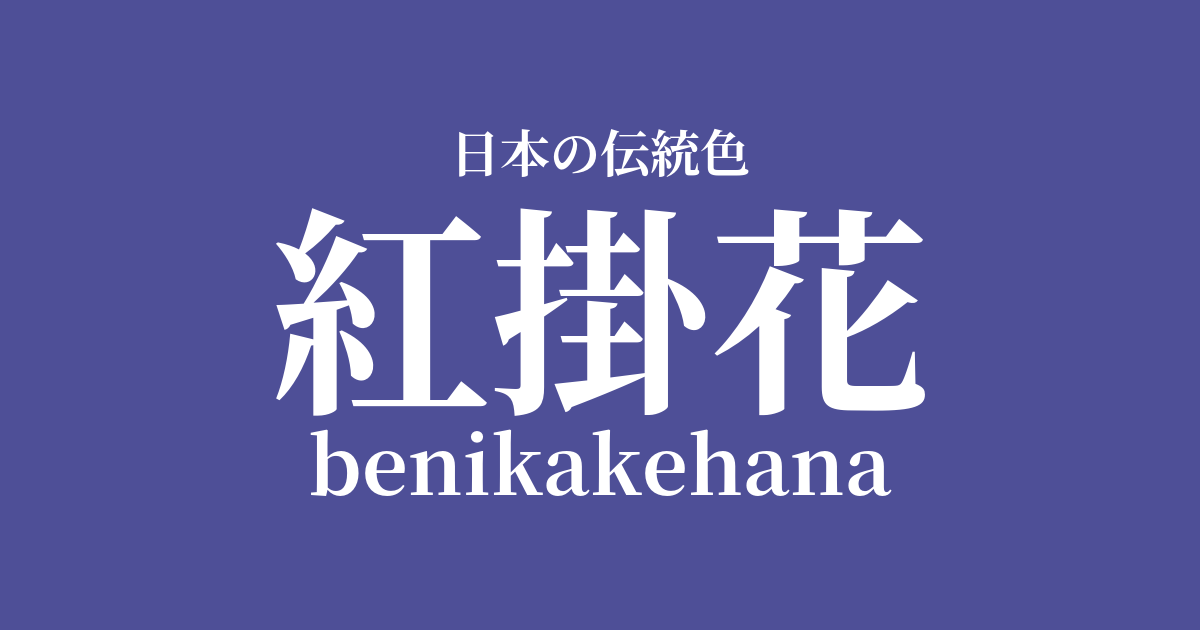
| Japanese color name | Benikake flower |
|---|---|
| reading | benikakehana |
| HEX | #4E4F97 |
| RGB | 78, 79, 151 |
What is Benikakebana? Origin and Etymology
Benikakehana, as its name suggests, is a dyeing technique that involves applying safflower dye over a type of indigo dye called "hanada-iro." Hanada-iro is a word derived from "hanada," another name for the ancient name for the dayflower, Tsukikusa, and refers to a slightly pale blue color. By layering beni, a reddish dye, on top of this blue, a complex and deep hue is created, resulting in a bluish-reddish-purple or reddish-bluish-purple color.
This is a uniquely Japanese naming convention where the dyeing process itself becomes the color name.
The word "kakeru" in dyeing techniques refers to the process of dyeing a fabric with one color and then layering another color on top. Benikakebana is thought to be a color that originated from an attempt to express a noble purple by combining relatively readily available indigo with expensive crimson. The unique nuance created by the blending of the two colors conveys to us the refined sense of color of people from the Edo period.
Historical background of Benikakebana
Crimson is considered one of the colors that was popular during the Edo period. From the mid-Edo period onward, dyeing techniques developed significantly, and a wide variety of colors became available to ordinary people. In particular, with the shogunate's sumptuary laws restricting flashy colors, people created a culture like "Forty-eight Browns and One Hundred Grays," where they found subtle differences in subdued colors such as brown and gray.
Complex intermediate colors like Benikakebana were among the colors favored within that refined sense of color. It is said to have been incorporated into the costumes of Kabuki actors and the kimonos of wealthy townswomen, gaining popularity as a stylish and elegant color. As a color reflecting the fashion of the time, it can also be seen in ukiyo-e prints.
Related literature, waka poetry, and seasonal words
It is difficult to pinpoint any famous waka poems or literary works that directly feature the color name "beni-kakebana." However, purple has long played an important role in many literary works as a color symbolizing nobility, mystery, or romantic feelings. In Heian literature, including "The Tale of Genji," the deep purple dyed with gromwell is depicted as a symbol of noble status and profound love.
The reddish-purple color, reminiscent of the red-kakebana flower, evokes feelings of passion and allure, and it's possible it was used effectively to suggest the emotions and scenes of the characters in the story. Although not a specific seasonal word, it evokes images of purple flowers that adorn the seasons, such as wisteria in spring, irises in early summer, and bellflowers in autumn, and is a color that lends itself to poetic imagery.
Color scheme preview
This is to check the readability of the text when this color is used as the background.
Color scheme proposal for red-covered flowers
White training (#F3F3F3)
When combined with the pure, lustrous white of shiro-neri, the elegance and depth of the beni-kakebana flower are highlighted. A contrast is created, giving a refined and noble impression. This color scheme is also effective for layering kimonos and as a background color in web design.
Blue gold (#FABE29)
The purple of the red-covered flower and the vibrant yellow of the turmeric flower are close to complementary colors, enhancing each other's beauty. This creates a gorgeous and elegant atmosphere, making it suitable for eye-catching designs and decorative elements. It gives a traditional yet modern impression.
Indigo (#165E83)
By combining it with the indigo-based colors from which the Benikakebana dye is derived, a unified and calm color scheme is achieved. The varying shades of color create depth, giving an intelligent and chic impression. It is suitable for men's traditional Japanese accessories and for sophisticated interior design.
Practical Scenes
In the world of traditional Japanese clothing, red-flowered kimono is used as the color of kimono fabrics such as formal visiting kimonos, casual kimonos, and silk pongee kimonos. Furthermore, incorporating this color into accessories such as obi sashes, obiage (sash ties), and obijime (sash cords) adds an elegant accent and depth to the overall outfit. Because it possesses both composure and splendor, it is widely loved by people of all ages.
In interior design, using it in accent walls, cushions, curtains, and other fabrics brings a calm, modern Japanese atmosphere to a space. Adding red kakebana to a space based on white or wood tones creates a sophisticated, adult atmosphere.
In web and graphic design, using it as a main color can convey a sense of trustworthiness and intelligence. Combining it with white or light gray tones helps ensure readability while creating an elegant and sophisticated design.