
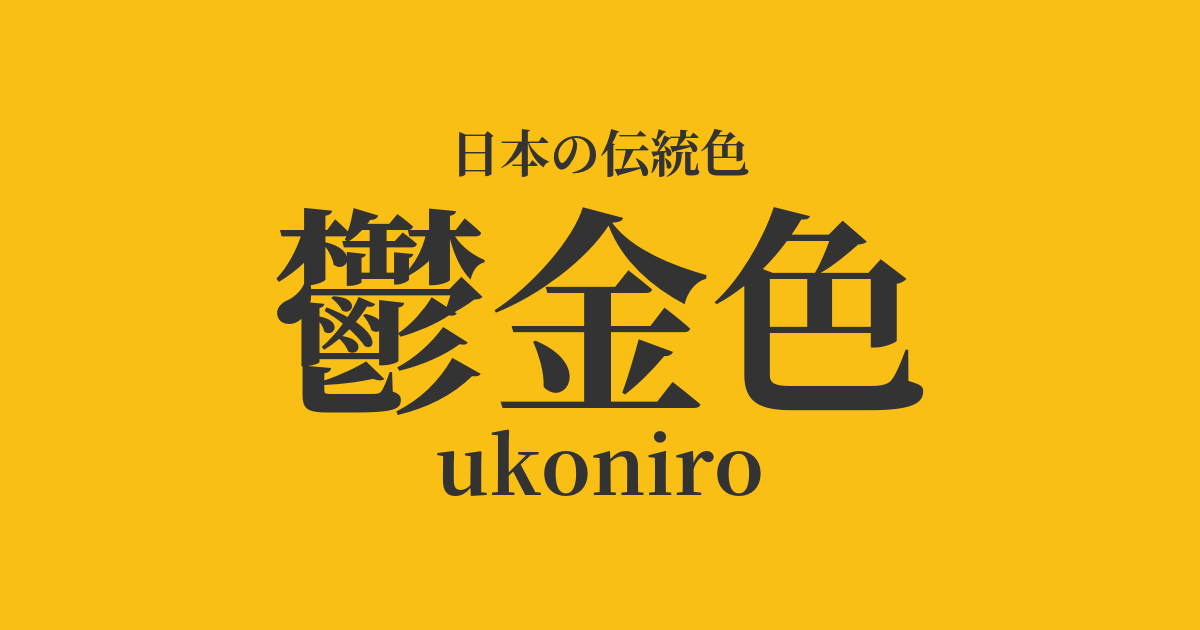
| Japanese color name | gloomy gold |
|---|---|
| reading | ukoniro |
| HEX | #FABF14 |
| RGB | 250, 191, 20 |
What is turmeric color? Origin and etymology
Turmeric yellow refers to a vibrant, slightly reddish-yellow color dyed using the rhizome of the turmeric plant, a perennial herb belonging to the ginger family. Turmeric is known worldwide as the spice used in curry, and in Japan, it has been used since ancient times not only as a dye but also for medicinal purposes and as a food coloring agent. The color name is directly derived from the turmeric plant, the raw material for the dye.
It is said that the kanji characters for "Ukon" (鬱金) originate from the belief that its fragrance improves the flow of energy and has the effect of lifting a gloomy mood.
Turmeric dyeing is done by drying and powdering the rhizome of the turmeric plant and extracting the pigment with water or lukewarm water. By using alum as a mordant, a vibrant yellow color can be achieved. The yellow pigment component called curcumin contained in turmeric is the source of this color, but this component is sensitive to light and tends to fade when exposed to sunlight. Therefore, although it was once a valuable dye, ingenuity was required to maintain its color for a long time.
The historical background of turmeric
Turmeric is believed to be native to India and was introduced to Japan during the Nara period via China. Among the treasures of the Shōsōin, there are fabrics that are thought to have been dyed with turmeric. During the Heian period, it was highly valued in aristocratic society for its medicinal and dyeing properties, and the Engishiki (a historical document) contains descriptions of dyeing methods using turmeric. During this period, turmeric was treated as a noble color and there are records of it being used as the color of the robes worn by the emperor.
Although it continued to be used for samurai attire from the Kamakura period onward, with the spread of cotton in the Edo period, turmeric dyeing became popular among commoners. It became a familiar color used to decorate everyday items such as hand towels, furoshiki (wrapping cloths), and children's clothing. Furthermore, due to the antibacterial and insect-repellent properties of turmeric, it is said to have been used to dye cloths used to wrap important books and scriptures, and it also developed a belief in turmeric as a color that wards off evil and misfortune.
Related literature, waka poetry, and seasonal words
The color turmeric can also be found in literary works from the Heian period. In Sei Shonagon's "The Pillow Book," "turmeric-dyed jackets" are mentioned in the section on "refined things," suggesting that it was recognized as a sophisticated and beautiful color in the aristocratic society of the time. Furthermore, in narrative literature such as "The Tale of Genji," it is described as the color of the characters' clothing, playing a role in symbolizing the splendor of the scene and the social status of the characters.
In the world of waka and haiku poetry, there aren't many works that directly mention "turmeric color," but "turmeric," the source of the dye, is sometimes treated as a seasonal word for autumn. This is because turmeric flowers bloom in autumn. Matsuo Basho, a haiku poet of the Edo period, left behind the haiku, "Turmeric flowers bloom in the garden in front of the pharmacy," describing the scene of turmeric flowers blooming, which were cultivated as a medicinal herb. From this haiku, we can see that turmeric was a familiar part of people's lives at that time.
Turmeric flowers are blooming in the garden in front of the pharmacy.
Color scheme preview
This is to check the readability of the text when this color is used as the background.
Turmeric color scheme proposal
Indigo (#243A6A)
The vibrant yellow and deep indigo are close to complementary colors, creating a powerful contrast that enhances each other's beauty. This classic and stylish combination, seen in Edo period kimonos and ukiyo-e prints, is highly visible and can be applied to modern designs.
Crimson (#B7282E)
The combination of warm colors evokes a rich and warm impression reminiscent of autumn foliage. The brightness of turmeric and the depth of crimson harmonize to create a vibrant yet calm atmosphere. This color scheme is often seen in traditional Japanese clothing and crafts.
Tokiwa (#007B43)
The vibrant turmeric yellow and the deep evergreen green create a color scheme that evokes the vitality of nature. Evergreen green is the color of evergreen leaves, and when combined with turmeric yellow, it creates a fresh yet dignified impression. This is a traditional combination also seen in the "layered color scheme" of Heian period attire.
Practical Scenes
In the world of traditional Japanese clothing, kimonos, obi sashes, and accessories such as obiage (sash ties) dyed with turmeric add vibrancy and brightness to an outfit. It is especially favored for celebratory occasions and to express the seasonal feel of early spring. Because it can create a wide range of impressions, from sophisticated to cute, depending on how it's combined with other colors, it's a valuable color for adding an accent to an outfit.
In interior design, using turmeric as an accent color brings warmth and vibrancy to a space. Incorporating turmeric into cushion covers, curtains, or table runners will brighten the entire room. It pairs particularly well with natural materials such as wood and bamboo, making it suitable for creating a Japanese modern space.
In web and graphic design, turmeric is used as a color that attracts attention due to its brightness. It is effective when used in elements that you want to encourage user action, such as buttons and banners. When placed against a dark background, the vibrancy of turmeric stands out, creating a powerful and impressive design.