
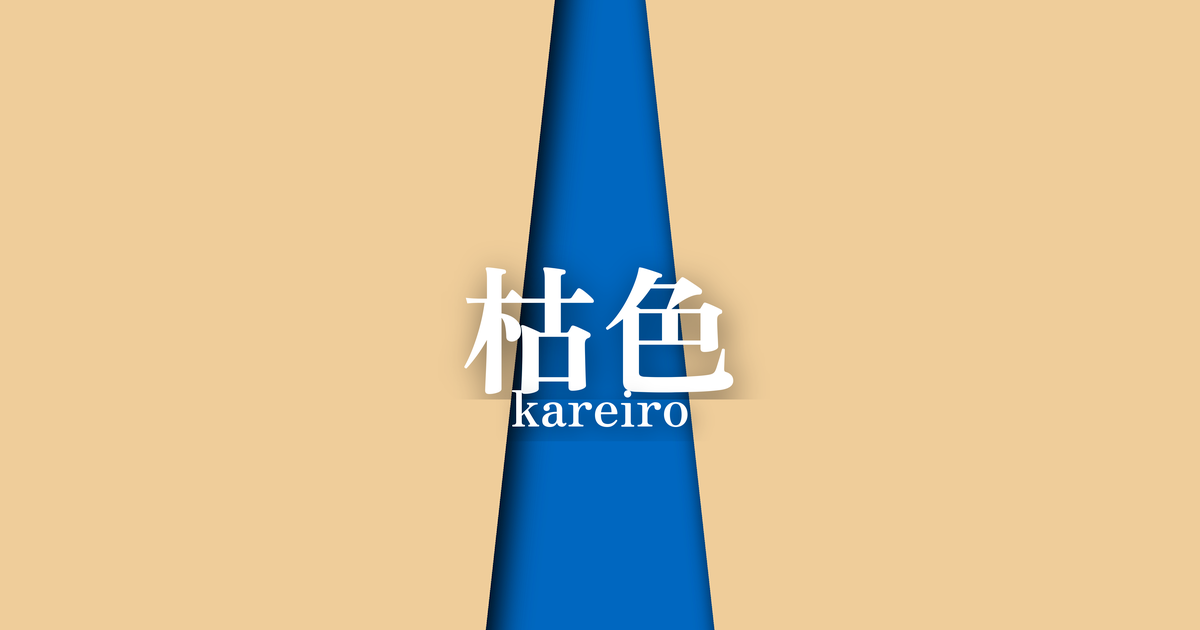
| Japanese color name | Withered color |
|---|---|
| reading | kareiro |
| season | 冬 |
| Color of the table | kouiro |
| Back color | blue (ao) |
What is "kareiro" (withered color)? Origin and etymology.
Karei-iro (枯色), as its name suggests, is a color combination for layered kimono that reflects the scenery of withered fields and mountains in winter. The outer layer, Ka-iro, is a pale yellowish-brown reminiscent of withered grass and fallen leaves, expressing the sense of desolation in winter when the activities of life quiet down. On the other hand, the inner layer, Ao (青), is said to symbolize the color of the clear winter sky, or the coldness of frost that has settled on withered grass. The combination of these two contrasting colors depicts a profound winter landscape in which one can feel a dignified beauty even amidst the silence.
Historical background of withered colors
During the Heian period, aristocrats considered "kasane no irome," the practice of expressing the changing seasons through the colors of clothing, to be an important part of their education. Withered colors were one of the representative colors of winter, and by incorporating the winter landscape into their attire, they skillfully expressed a sense of the season. It is presumed that these were worn as everyday attire in the imperial court and at events held during the winter season. The delicate aesthetic sensibilities of the people of that time, who sought to become one with nature, are strongly reflected in this color scheme.
Related literature, waka poetry, and seasonal words
While the color name "kareiro" (withered color) is not often directly mentioned in classical literature, the winter landscape that underlies it is depicted as an important motif in many waka poems and stories. In "The Pillow Book," the whiteness of the frost on a winter morning and the beauty of the clear air are praised, which resonates with the worldview symbolized by the blue lining of the withered color.
Furthermore, in Heian literature, including "The Tale of Genji," the colors of the characters' clothing played a role in suggesting the season and their emotions, and it is thought that muted colors were used to express the stillness and loneliness of winter scenes.
In the mountain village, winter brings even greater loneliness, for I think of both people and the grass withering away.
Season and scenery of withered colors
"Kareiro" is a color combination worn from late autumn, signaling the arrival of winter, to the height of winter. Specifically, it is considered appropriate for the period from the 10th to the 12th month of the lunar calendar. When the leaves fall from the trees and the fields and mountains are dyed the color of withered grass, this color scheme harmonizes beautifully with the surrounding nature. The incense color on the outside represents the winter-bare fields, and the blue on the inside represents the frost-covered ground and the freezing winter sky, evoking in the viewer a quiet and dignified winter scene.
Color scheme proposal using muted tones
White training (#FFFFFF)
By pairing it with pure white shironeri, the image of snow and frost accumulating on a withered background is emphasized. This combination creates a clean and elegant impression, further enhancing the tranquil atmosphere of winter.
Black (#333333)
By combining the smoky color of barren earth with a deep, rich ink black, a powerful and modern impression is created. This color scheme expresses the harsh aspects of winter nature and brings depth and gravitas to the design.
Suou (#9E3D3F)
By adding a deep reddish hue, like that of madder red, to the muted colors, it's possible to express the vitality and warmth that remains even in the cold of winter. It evokes the colors of camellias and winter camellias, adding a vibrant accent to the otherwise subdued color scheme.
Practical Scenes
In terms of clothing, this color scheme is said to have been used in the layering of the uchiki (a type of kimono) worn by women during the Heian period. It was favored as everyday winter attire to delicately express the changing seasons. In modern Japanese clothing, muted colors are incorporated into kimonos, obi (sashes), and accessories such as obi-jime (sash cords), and are particularly appreciated as a stylish look for tea ceremonies and formal occasions during the winter season.
Beyond traditional Japanese clothing, this color scheme can be used in interior and textile design to create a calm, modern Japanese atmosphere. Because it conveys a quiet and intellectual impression, it can also be applied to website and print design.