
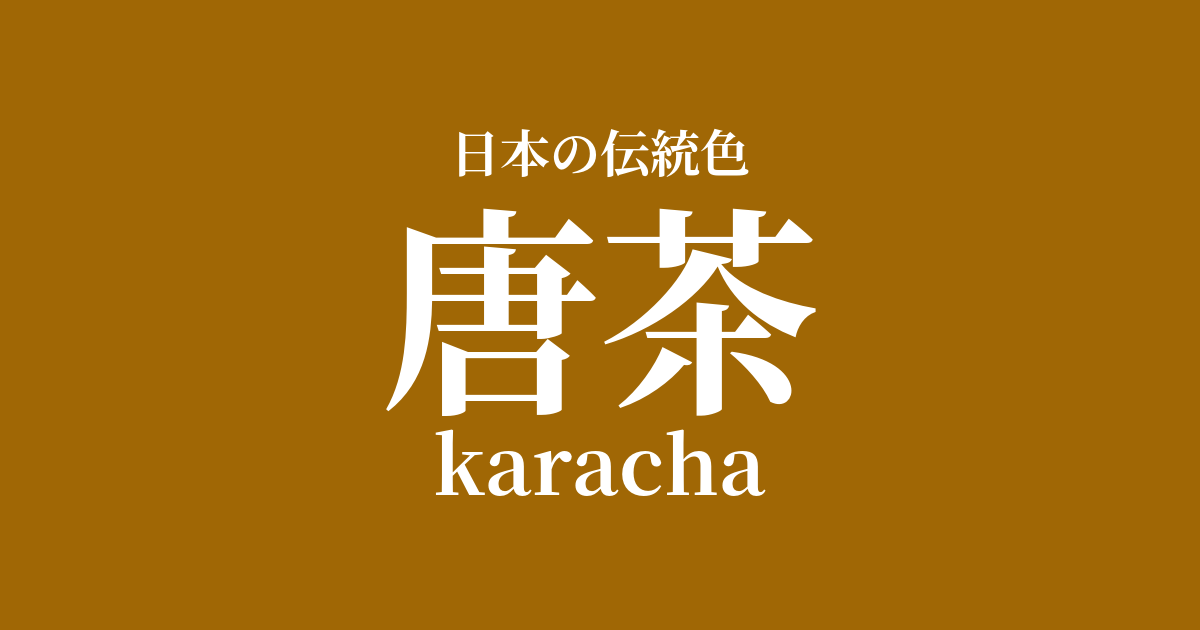
| Japanese color name | Tang tea |
|---|---|
| reading | karacha |
| HEX | #A06705 |
| RGB | 160, 103, 5 |
What is Tang Tea? Origin and Etymology
Karacha is a traditional Japanese color referring to a deep, reddish-brown. The "Kara" in its name does not directly refer to the Tang Dynasty of China, but rather, in Japan at the time, it was used as a prefix meaning "imported," "foreign," or "excellent." It is thought that the name was not intended to refer to a specific plant dye, but rather to convey a novel and refined brown color reminiscent of rare textiles or crafts introduced from foreign lands.
It is one of the many shades of brown that emerged during the Edo period, and its exotic-sounding tone captured the aesthetic sensibilities of people at the time.
The origin of the term "Tang tea" is said to come from its exotic color. During the Edo period, when brown and gray were popular among common people, people appreciated subtle differences in color as a sign of sophistication. Tang tea was a different color from conventional tea dyes, with a strong reddish tint and a sense of vibrancy, so the character "Tang" was added to express its novelty.
It is said that the historical context of the time, when foreign dyes such as betel nut began to be used, was one of the reasons why these foreign-sounding color names came into existence.
Historical background of Tang tea
The popularity of "Tang-style brown" is said to have begun in the mid-Edo period, particularly after the Genroku era (1688-1704). Due to the sumptuary laws imposed by the shogunate, commoners were restricted from openly wearing flashy colors such as gold and silver threads, or vibrant reds and purples. As a reaction to this, a culture flourished that found endless variations in seemingly subdued browns and grays. This trend is known as "Forty-Eight Browns and One Hundred Grays."
Amidst this trend, Tang-style tea, along with "Rokō-cha" and "Kobi-cha," became a popular and stylish color. In particular, the exotic feel of its name was a major draw in Edo's townspeople culture, which was characterized by a yearning for foreign lands and a desire for novelty. It was primarily used as a color for kimonos and is thought to have been popularized by fashion-forward individuals such as Kabuki actors and courtesans.
Related literature, waka poetry, and seasonal words
Famous waka and haiku poems that directly mention the color "karacha" (a shade of brown) are difficult to find in existing historical documents. However, many Edo period literary works and ukiyo-e prints depict people wearing brown-toned clothing that reflected the fashion of the time. For example, Ihara Saikaku's ukiyo-zoshi vividly portrays the lives of townspeople with refined aesthetic sensibilities, suggesting that a subtle sense of color like karacha was at the root of their culture.
Although this color is not associated with a specific seasonal word, its deep, calm hue evokes the bountiful autumn and the tranquility of winter. In literary depictions of scenes, its use as the color of a character's clothing effectively conveys their refined character and calm, mature demeanor. Even in contemporary creative works, it plays an important role as a color that expresses the worldview of the Edo period.
Color scheme preview
This is to check the readability of the text when this color is used as the background.
A proposed color scheme for Tang tea.
Aphrodisiac tea (#6A5D4A)
This color scheme features a reddish hue in the Tang-style brown, complemented by a subdued, greenish-brown. A combination of browns that was popular during the Edo period, it creates a calm, deep, and sophisticated impression, appealing to connoisseurs. It's suitable for designs that emphasize a Japanese aesthetic.
White tea (#BC9F7C)
Combining deep tang tea with light white tea creates an elegant and warm contrast. The colors complement each other, creating a gentle and calming atmosphere. This color scheme can be used in a wide range of fields, including interior design and fashion.
Indigo tea (#555647)
By combining a reddish-brown tea with a dark, greenish-blue tea, a modern color scheme is created that enhances the beauty of each other. It gives a sense of gravitas while also conveying an intelligent and sophisticated impression, adding depth and individuality to the design.
Practical Scenes
In the world of traditional Japanese clothing, Karacha (a shade of brown) is used for kimonos, obi sashes, and haori jackets, creating a sophisticated and calm adult atmosphere. It is especially well-suited to the autumn season, and when combined with other shades of brown, green, or off-white, it creates a refined look. It is also a popular color for men's kimonos.
In interior design, incorporating it into fabrics such as wallpaper, curtains, and cushions can add warmth and a sense of depth to a space. It pairs well with wooden furniture and natural colors such as white and beige, making it suitable for creating spaces in styles such as Japanese modern, classic, and vintage.
In web and graphic design, using this color as a background or accent color can convey a sense of luxury, tradition, and trustworthiness. It is an effective color for creating a calm and sophisticated atmosphere on websites of established brands, or on e-commerce sites dealing with crafts, food products, and other similar items.