
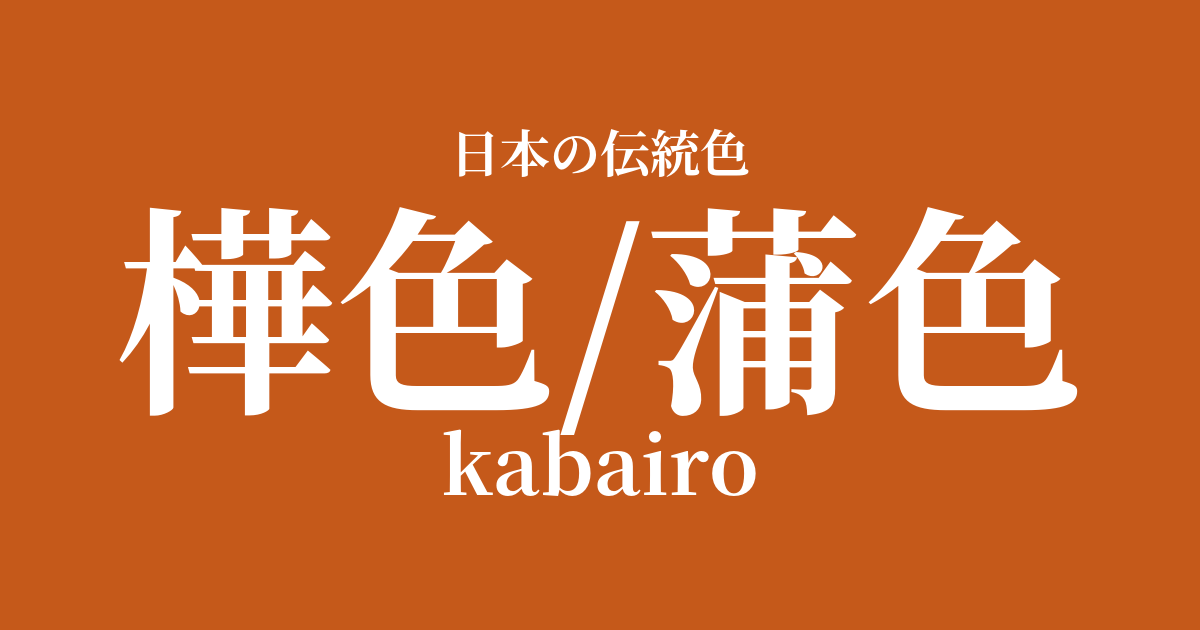
| Japanese color name | Birch/Blue color |
|---|---|
| reading | kabairo |
| HEX | #C5591A |
| RGB | 197, 89, 26 |
What is "kaba-iro" (birch color)? Origin and etymology.
Kaba-iro refers to a reddish-brown color dyed using the bark of the Japanese mountain cherry (Prunus jamasakura). The name "kaba" has long been a word meaning cherry tree bark, and it originates from the fact that the dye was obtained by boiling this bark. In contrast to the vibrant image of cherry blossoms, the color derived from the bark possesses both sophistication and warmth.
The kanji characters "蒲色" are sometimes used to represent the color, and one theory suggests this is because it resembles the color of the cattail (gama) plant's spikes.
Birch color is derived from materials found in nature and reflects Japan's rich appreciation for nature. While cherry blossoms are often the focus of attention, the beauty of the bark covering the trunk and branches is also found in the Japanese sensibility, which has incorporated it into daily life. In addition to being used as a dye, birch bark is also used in crafts such as "kabazaiku" (birch bark crafts), making it one of the color names that demonstrates the deep connection between the Japanese and cherry blossoms.
Historical background of the color "kaba-iro" (brownish-brown)
The history of the color "kaba-iro" (birch color) is long, and it is said that its name appeared in the Heian period, but it became particularly widely known during the Edo period. In the mid-Edo period, when Kabuki became immensely popular among the common people, the first Ichikawa Danjuro favored this color for his stage costumes, which led to its explosive popularity. As a result, kaba-iro also came to be known by the alternative name "Danjuro-cha" (Danjuro brown), and it became established as one of the colors that symbolized Edo townspeople culture.
The shogunate at the time frequently issued sumptuary laws to curb the extravagance of the common people and restricted the use of bright colors. As a result, people began to find and enjoy subtle differences in shades of muted colors such as brown and gray. In the fashion known as "Forty-eight Browns and One Hundred Grays," reddish-brown became particularly popular among men due to its sophisticated and stylish hue.
Related literature, waka poetry, and seasonal words
The color "kaba-iro" (birch brown) frequently appears in Edo period literature and ukiyo-e prints. In particular, people wearing kimonos in this color can be seen in actor portraits depicting Kabuki actors and genre paintings depicting the lives of Edo townspeople. This indicates that kaba-iro was a fashionable color at the time and symbolized the vibrant culture of Edo. Ihara Saikaku's ukiyo-zoshi (popular fiction of the Edo period) also depicts the popularity of brown-based colors as fashion at the time.
In the world of Japanese poetry, most poems about cherry blossoms praise the beauty of the flowers, and it is rare for the color of the bark, the reddish-brown, to be directly mentioned. However, its subdued hue is said to resonate with the spirit of wabi-sabi and was favored in the world of tea ceremony and other traditions. Although it is not designated as a seasonal word, the cherry bark evokes the image of spring, and its deep hue is also seen as a color that harmonizes with autumn scenes.
Color scheme preview
This is to check the readability of the text when this color is used as the background.
Color scheme proposal: Birch-colored
Soot bamboo color (#6E5545)
The combination of sooty bamboo brown, a naturally derived brown similar to birch brown, brings a sense of unity and calmness to the overall look. The color scheme gains depth and richness, creating a strong sense of traditional Japanese aesthetics. The two colors complement each other, giving a gentle and refined impression.
Nightingale (#959449)
By combining the color of birch bark, reminiscent of tree bark, with the color of the nightingale's feathers, which heralds the arrival of spring, a color scheme reminiscent of Japan's natural landscapes is created. The combination of earth tones is easy on the eyes and creates a harmonious blend of calm and reassuring qualities.
Indigo (#274A78)
The reddish-brown color of birch and the deep blue of indigo are close to complementary colors, and they vividly enhance each other's beauty. This "chic" combination was also favored in the Edo period, and it is a color scheme that gives a traditional yet modern and powerful impression.
Practical Scenes
In the world of traditional Japanese clothing, birch brown is a popular color used for kimonos, obi sashes, and haori jackets. It is especially often incorporated into men's kimonos and autumn attire, creating a calm and mature style. It is also known as the color of the costume worn by the protagonist in the Kabuki play "Sukeroku," and remains a beloved color symbolizing the refined elegance of Edo.
In interior design, using birch brown as an accent color can add warmth and depth to a space. It is particularly effective when incorporated into parts of wallpaper, cushions, or rugs. It pairs well with natural materials such as wooden furniture and washi paper lighting, making it suitable for creating Japanese modern or natural-style spaces.
In web and graphic design, birch brown is an effective color for expressing themes such as trust, tradition, and history. Using it as a main or accent color in earth-toned designs can create a sense of calm and sophistication. It also has relatively high readability, making it easy to use as a background color.