
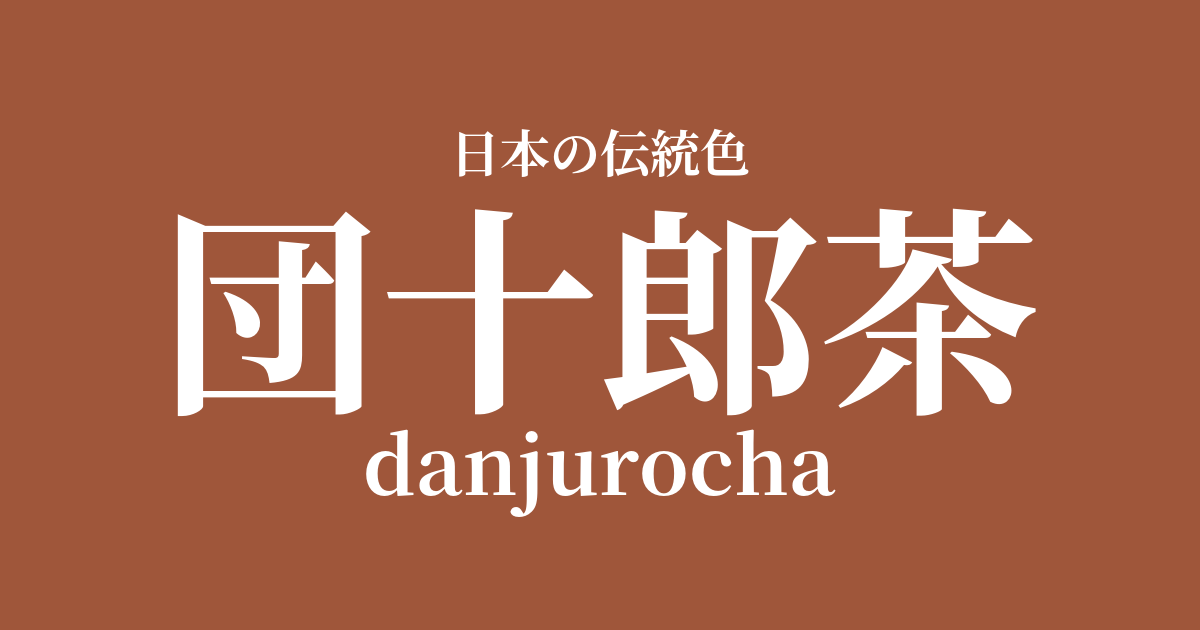
| Japanese color name | Danjuro Tea |
|---|---|
| reading | danjurocha |
| HEX | #9F563A |
| RGB | 159, 86, 58 |
What is Danjuro Tea? Origin and Etymology
Danjuro-cha (Danjuro Tea) is a color favored by Ichikawa Danjuro I, a kabuki actor who was active during the Genroku period of the Edo era. Danjuro is known as a great actor who established the "aragoto" style of kabuki, which is his family's style of acting. The reddish-brown color he favored for his stage costumes became very popular among the common people and came to be called "Danjuro-cha."
This color is similar to "kakishibu-iro," a reddish-brown color dyed with persimmon tannin, and is said to have become popular as a representative "actor's color" along with "roko-cha," a fashionable color at the time.
Historical background of Danjuro tea
During the mid-Edo period, particularly around the time when Genroku culture flourished, Kabuki actors were the source of trends among the common people. This color, used on stage by the first Ichikawa Danjuro, combined with his powerful and heroic acting style, became popular as a color symbolizing the refined aesthetic sense of Edoites. People at the time eagerly imitated the colors worn by their favorite actors, calling them "actor colors," and Danjuro tea was one of them, incorporated into everyday clothing and accessories.
This trend reflects the maturation of popular culture and the Edo spirit of valuing individuality.
Related literature, waka poetry, and seasonal words
While Danjuro-cha (a shade of brown) is rarely the direct subject of waka or haiku poetry, its popularity can be seen in literary works and ukiyo-e prints depicting Edo period customs. For example, in illustrated storybooks and actor portraits depicting theatrical performances of the time, figures wearing what appears to be Danjuro-cha clothing are sometimes depicted. Although not established as a seasonal word, it is a color that evokes the autumn scenery of Edo and the season when persimmons ripen, adding depth to literary depictions of scenes.
Color scheme preview
This is to check the readability of the text when this color is used as the background.
Danjuro Tea Color Scheme Proposal
Uguischa (#715C1F)
The reddish hue of Danjuro tea and the subdued green of Uguisu tea complement each other, creating a natural and calming color scheme. The combination of earth tones evokes a sense of Japanese aesthetics, adding depth and stability to interiors and fashion.
Blue gold (#FABE29)
The vibrant yellow of the turmeric adds splendor and brightness to the dignified feel of Danjuro tea. This creates a stylish and eye-catching combination, reminiscent of those seen in Kabuki costumes, making it ideal as a design accent.
Indigo (#274052)
The warm tones of Danjuro tea and the cool tones of indigo contrast yet harmonize, creating a sophisticated impression. While each color stands out, the overall color scheme is refined, modern, and intellectual.
Practical Scenes
Danjuro-cha, due to its name, is often used in traditional Japanese clothing, particularly in Kabuki costumes, men's kimonos, and obi sashes. Its reddish-brown color conveys strength and sophistication, and it is cherished as a color that conveys the aesthetic sensibilities of the Edo period to the present day.
In interior design, incorporating it into wallpaper, curtains, and furniture upholstery brings warmth and a sense of solidity to a space. It also pairs well with wooden furniture and houseplants, making it suitable for creating a calm, modern Japanese atmosphere.
In web and graphic design, it is effective when used as an accent color. By using a light off-white background color and Danjuro tea for headings and buttons, you can create a design that is both eye-catching and elegant.