
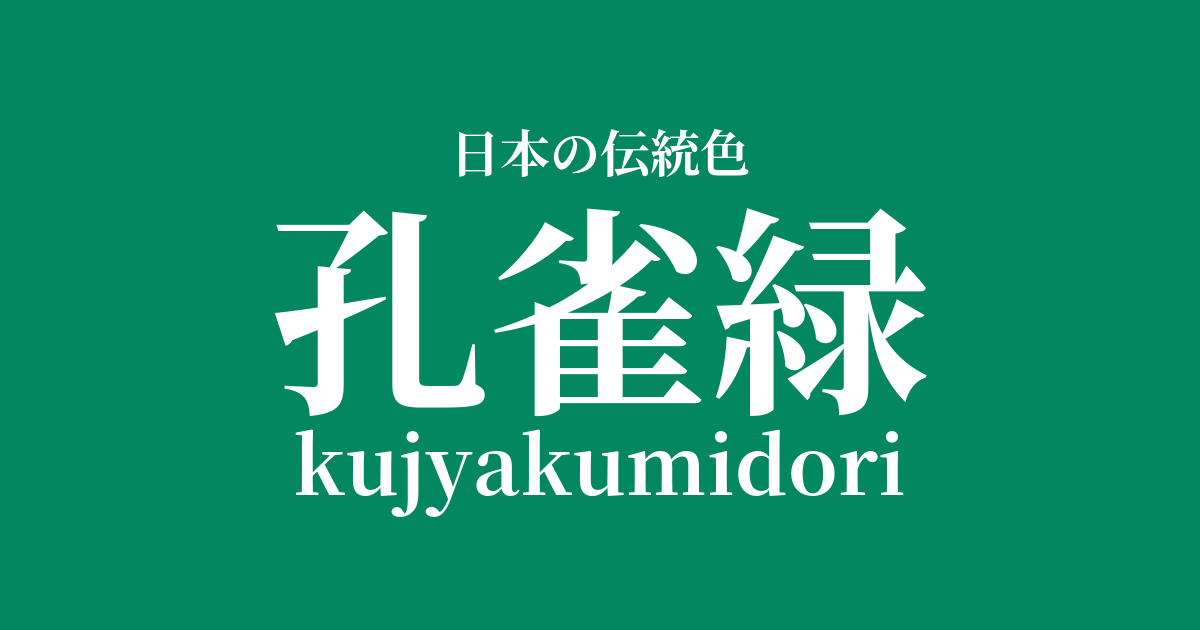
| Japanese color name | Peacock Green |
|---|---|
| reading | kujyakumidori |
| HEX | #028760 |
| RGB | 2, 135, 96 |
What is Peacock Green? Origin and Etymology
Peacock green, as its name suggests, derives from the beautiful ornamental feathers of the male peacock. In particular, it refers to the glossy, vibrant, and deep blue-green color seen from the neck to the chest. This color is known worldwide as "Peacock Green" in English. In Japan, peacocks have long been revered as auspicious birds, and their elegant and magnificent appearance has been favored as a design element in arts, crafts, and textiles.
The color name "peacock green" itself originated from an admiration for its beauty.
Historical background of peacock green
Peacocks themselves are believed to have been introduced to Japan in ancient times, and the Nihon Shoki (Chronicles of Japan) records that they were presented as a gift from Silla during the reign of Empress Suiko. Their beautiful appearance has been used as a design element in crafts since ancient times, as can be seen in the treasures of the Shosoin. However, the color name "peacock green" is said to have only become commonly used relatively recently, after the Meiji era.
Amidst the influx of various chemical dyes and color names from the West, it is believed that this name became established to refer to the vibrant green color of peacock feathers.
Related literature, waka poetry, and seasonal words
Due to their magnificent and exotic appearance, peacocks have been depicted as special beings in the world of literature and art. In Buddhism in particular, they are considered sacred as the mount of Kujaku Myoo, who is believed to devour venomous snakes and worldly desires, and have become objects of worship. In modern literature, their vibrant colors are sometimes used as a motif to symbolize exoticism and mysticism. However, the color name "peacock green" itself is rarely used in waka or haiku poetry, and it is not designated as a seasonal word.
This color has primarily been praised for its beauty in the fields of fine arts and crafts.
Color scheme preview
This is to check the readability of the text when this color is used as the background.
Peacock green color scheme proposal
Golden (#E6B422)
The combination of peacock green and gold, as seen in the patterns of peacock feathers, creates a luxurious, resplendent, and dignified impression. The depth of peacock green and the gleam of gold complement each other, making it suitable for creating a festive atmosphere and a sense of luxury. This is a traditional color scheme that has been used for centuries in Japanese clothing and crafts.
Wisteria color (#BBAADD)
Combining peacock green with wisteria purple, a bluish-purple color, emphasizes its mystical aspects. Because both colors contain blue tones, they harmonize easily, creating an elegant and calming impression. This color scheme is suitable for creating a refined and sophisticated atmosphere.
Vermilion (#EB6101)
Adding a vibrant vermilion as an accent further enhances the deep green of the peacock green, creating an exotic and lively impression. The near-complementary color relationship creates a visual contrast, making it suitable for bold and striking designs. It is also effective when creating an Asian atmosphere.
Practical Scenes
Peacock green, with its vibrant and deep hue, is often used as part of luxurious patterns in traditional Japanese clothing such as furisode, houmongi, and obi. It is especially striking when combined with gold or silver threads, creating a highly refined look. In accessories, incorporating it into obi ties and obi sashes adds a striking accent color that enhances the overall coordination.
In interior design, using it as an accent in wallpaper, curtains, or cushions brings a sense of luxury and tranquility to a space. It pairs particularly well with glossy materials like velvet and silk, further enhancing the depth of the color. Combining it with wooden furniture and gold accessories creates a classic yet modern atmosphere.
In web and graphic design, its strong presence makes it effective as a main or accent color. It is suitable for luxury brand websites and when you want to convey trustworthiness and expertise. When combined with white, black, or gold, it can create a highly visible and sophisticated design.