
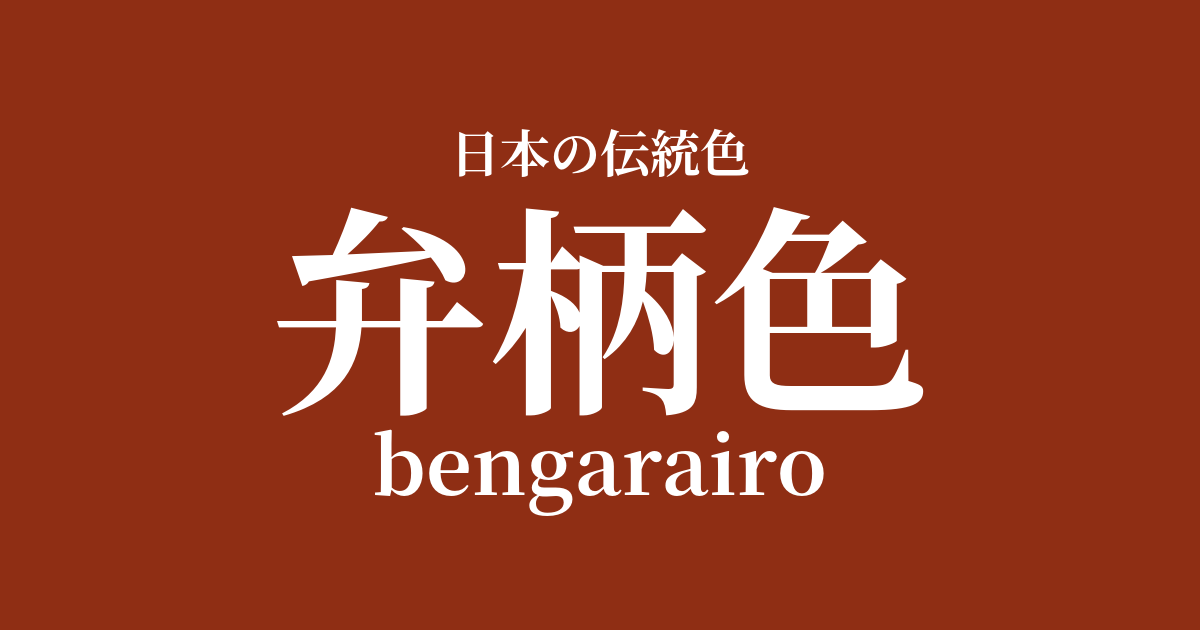
| Japanese color name | reddish-brown |
|---|---|
| reading | bengarairo |
| HEX | #8F2E14 |
| RGB | 143, 46, 20 |
What is Bengara-iro (red ochre)? Origin and etymology.
The color "bengara" originates from the reddish-brown pigment whose main component is ferric oxide (red iron oxide). It is said that the name was given after the Bengal region of India, where the pigment produced there was of high quality. In addition to "弁柄," it is also written as "紅柄" or "紅殻" in kanji. This pigment is made from naturally occurring red clay (ochre) and has been used all over the world since ancient times.
In Japan, the products from Fukiya in Bitchu, Okayama Prefecture, are particularly famous, and the region has a history of flourishing as the largest production center in the country from the Edo period to the Meiji era.
The main component of red iron oxide (bengara) is chemically stable and has excellent lightfastness and weather resistance. Furthermore, because it was inexpensive and readily available, it has been deeply ingrained in the lives of ordinary people since ancient times. Its color is a simple reddish-brown that evokes the warmth and strength of the earth, and it has been cherished as a color that blends well with the Japanese climate and landscape. Its unique texture is utilized in a wide range of fields, not only in architecture, but also in ceramics, lacquerware, and dyes.
Historical background of the color reddish-brown
The history of red ochre is very old, and in Japan, its use can be seen in Jomon period pottery and murals in burial mounds. In ancient times, it was called "soho" and is said to have been used in rituals as a color symbolizing protection against evil and sacred power. Because it was inexpensive and highly durable, it gradually became widespread in the lives of ordinary people as time went on.
During the Edo period, the antiseptic and insect-repellent properties of bengara (red iron oxide pigment) attracted attention, and it became widely used as an architectural paint. The "bengara goshi" (red iron oxide lattice) seen in Kyoto townhouses is a prime example, contributing to the beautiful scenery while also serving the practical purpose of protecting the wood from wind, rain, and insects. This custom spread throughout Japan, and bengara became one of the colors that symbolize traditional Japanese townscapes.
Furthermore, red iron oxide pigment has played an important role in the field of crafts. It is the main ingredient in the red enamel used for overglaze decoration on porcelain such as Arita ware (Imari ware) and Kutani ware, and its vibrant, deep red color has given rise to many masterpieces. It was also used as a pigment for lacquerware, and was highly valued for creating a calm reddish-brown color that was different from vermilion lacquer.
Related literature, waka poetry, and seasonal words
The reddish-brown color, with its simple and everyday hue, is effectively used in literary works to depict the lives of ordinary people and scenes of old townscapes. Although it doesn't often appear as a direct color name, the scenery it evokes in readers evokes a sense of nostalgia and warmth.
In the world of waka and haiku poetry, the word "bengara" itself is rarely used. However, its color is sometimes described using words like "akadsuchi" (red clay) or "soho" (ochre), or indirectly used as the color of autumn foliage or sunsets. In particular, it is often implied as an important color that constitutes the scenery in poems that feature historical buildings or picturesque townscapes.
Deep snow view through a crimson lattice.
Color scheme preview
This is to check the readability of the text when this color is used as the background.
Color scheme proposal in reddish-brown
Indigo (#274A78)
The reddish hue of vermilion and the blued hue of indigo are close to complementary colors, vividly enhancing each other's beauty. This color scheme is often seen in traditional Japanese architecture and crafts, giving an impression of gravitas, composure, and refined elegance.
Nightingale (#6C6A2D)
The earthy color of vermilion and the muted green of nightingale green are both earth tones found in nature. They complement each other very well, and when combined, they create a simple, warm, calm, and reassuring color scheme.
Off-white (#FBFBF4)
The strong reddish-brown of the vermilion color is complemented by the soft, bright off-white of the natural color. While contrasting, a warm harmony is maintained, creating a modern and sophisticated impression. It is also suitable for Japanese-style designs.
Practical Scenes
In the world of kimono, vermilion is often used for obi sashes, accessories, or everyday wear such as tsumugi silk. Its simple yet strong hue harmonizes well with other colors, creating a calm and mature look. It is considered a particularly suitable color for the autumn season.
In interior design, incorporating accent colors into wallpaper, furniture, or fixtures can add warmth and a sense of depth to a space. It is particularly well-suited to spaces that utilize natural materials, such as Japanese modern, traditional Japanese house, and country styles.
In web and graphic design, its indigenous and warm color palette makes it suitable for content themed around tradition, history, and nature. Using it as a background color or heading can create a sense of trust, stability, and approachability for the user.