
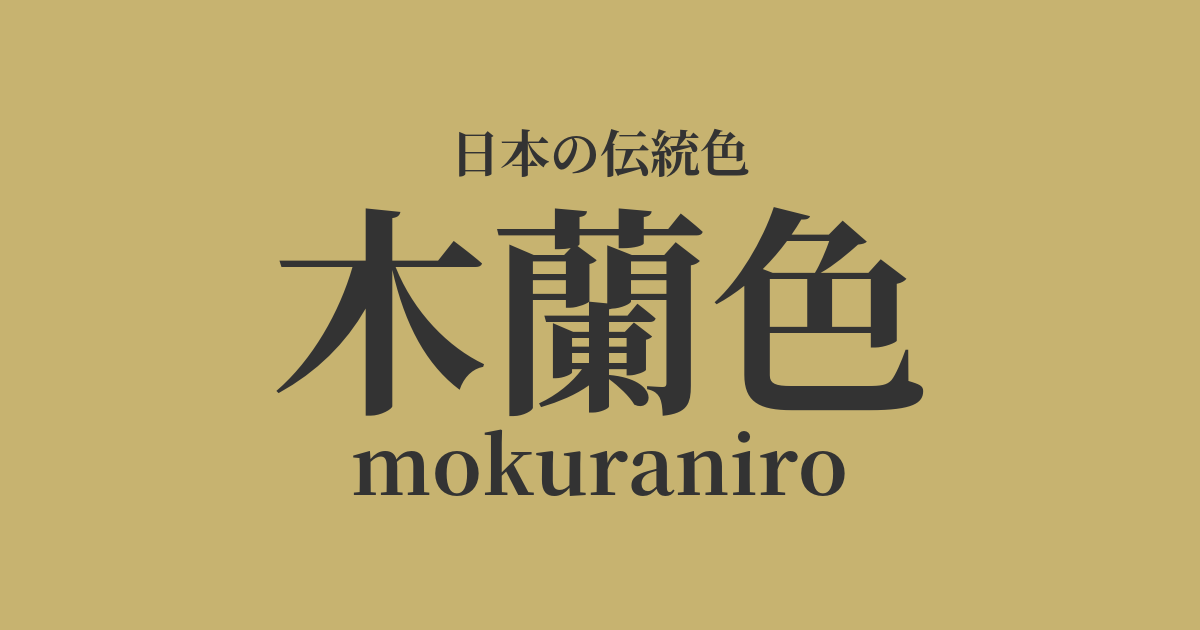
| Japanese color name | mulberry color |
|---|---|
| reading | mokuraniro |
| HEX | #C7B370 |
| RGB | 199, 179, 112 |
What is the color "Mokuran-iro"? Origin and etymology.
Magnolia yellow is a slightly reddish, muted yellow color dyed with a dye made from a decoction of the bark of the Phellodendron amurense tree. The name is said to originate from the legendary Chinese plant "Mulan," but it is not the actual dye. Phellodendron amurense is a deciduous tree belonging to the citrus family, and its inner bark has been highly valued since ancient times not only as a dye but also as a traditional Chinese medicine. It is thought that the name "Mulan," which has a more elegant and noble impression, was chosen over the original name "Kihada-iro" (Phellodendron amurense color).
The process of dyeing in the color of magnolia begins with finely crushing the bark of the yellow magnolia tree and boiling it in water to create a dye solution. The fabric is then immersed in this solution and dyed. The intensity of the color is adjusted by the concentration of the dye solution and the dyeing time. Lye is often used as a mordant, which fixes the color and creates a unique depth and calmness. Through this traditional technique, the magnolia color, which possesses both the warmth and elegance of nature, is expressed.
The historical background of the color Magnolia
The history of the magnolia color is long, and its name can be found in the Engishiki, a legal text from the Heian period. The section on the Imperial Sewing Bureau describes in detail the dyeing method using yellow bark, suggesting that it was already an established technique at that time. During this period, magnolia color was treated as a very noble color.
In particular, the color of magnolia was designated as the color of the robe worn by the Emperor outside of ceremonies, and also as the color of the Crown Prince's robe. This was one of the forbidden colors, a special color that only those of certain status, such as the Emperor and members of the Imperial family, were permitted to wear. For this reason, magnolia held an important position in court culture as a color symbolizing authority and prestige.
As time passed and the samurai class and the Edo period began, the system of forbidden colors gradually changed, and magnolia yellow came to be used by a wider range of social classes. However, due to its noble origins, it was favored by samurai and wealthy townspeople as an elegant and subdued color, and continued to be incorporated into kimonos and furnishings.
Related literature, waka poetry, and seasonal words
Magnolia yellow, due to its noble origins, also appears in Heian period literature. In classical literature such as "The Tale of Genji," it was used as the color of characters' clothing to express their social status and the atmosphere of the scene. However, it is more often described by dye names such as "yellowish-brown" or "yellow dye" rather than being directly written as "magnolia yellow."
In the world of Japanese poetry, there aren't many works that focus specifically on the color of magnolia (magnolia) itself, but the color is sometimes used to describe the yellow or withered leaves of autumn. For example, expressions reminiscent of magnolia are used when describing the faded color of kerria flowers or the scenery of autumn fields and mountains. This expresses the changing of the seasons and a sense of poignant beauty.
Although "Mokuran-iro" (magnolia color) is not a recognized seasonal word, it is understood as a color that symbolizes the autumn season. It is deeply associated with other autumn seasonal words such as "momiji" (yellow leaves) and "kuchiba" (decayed leaves), and as one of the colors that color Japan's rich sense of the four seasons, it stimulates literary imagination.
If my beloved goes to his country, do not speak of me even in a faint yellowish-brown color.
Color scheme preview
This is to check the readability of the text when this color is used as the background.
Magnolia-colored color scheme proposal
Dark color (#6B496A)
The yellowish-yellow of the magnolia color and the deep, rich purple are almost complementary colors, vividly enhancing each other's beauty. This classic and dignified color combination, also seen in the "layered color schemes" of the Heian period, creates an elegant atmosphere.
Moss color (#69821B)
The natural, bark-like hue of magnolia yellow harmonizes with the deep green of moss. The combination of earth tones evokes a sense of calm and tranquility, creating a gentle impression reminiscent of a natural landscape.
White training (#FFFFFF)
When combined with pure white, the gentle and elegant yellowish-brown of the magnolia color stands out, creating a sophisticated impression. While a contrast is created, the overall color scheme is bright and clean, making it suitable for modern designs.
Practical Scenes
In the world of traditional Japanese clothing, the color magnolia (mokuran) is used for kimonos, obi sashes, and accessories such as obiage (sash ties). It is particularly favored in autumn, creating an outfit that is both calm and dignified. It is easy to combine with other colors and is a highly versatile color that can be used in a wide range of situations, from formal to casual.
In interior design, incorporating the color magnolia (mokuran) into wallpaper, curtains, cushions, and other fabrics can create a warm and calming space. It pairs exceptionally well with wooden furniture and houseplants, contributing to a natural and relaxing atmosphere.
In web and graphic design, using these colors as background or accent colors can convey a sense of reliability, tradition, and organic appeal. They are particularly effective for websites dealing with historical themes or for branding products that utilize natural materials.