
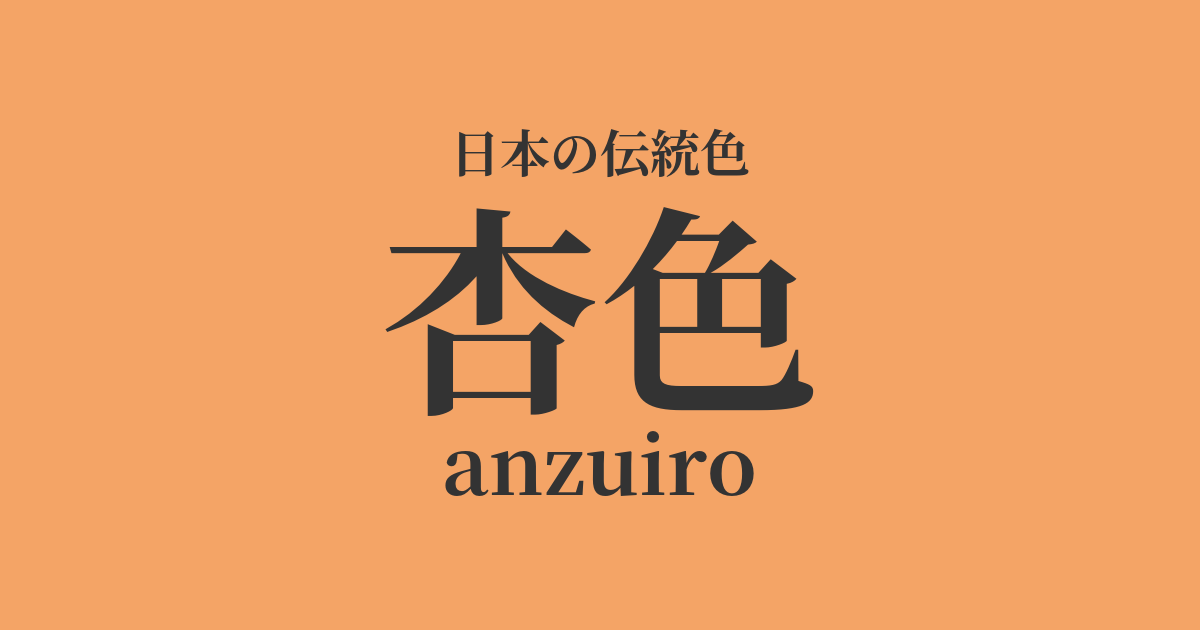
| Japanese color name | apricot color |
|---|---|
| reading | anzuiro |
| HEX | #F4A466 |
| RGB | 244, 164, 102 |
What is apricot color? Origin and etymology
Apricot color refers to a soft, reddish-yellow color, like that of a ripe apricot fruit. The apricot is a deciduous tree belonging to the genus Prunus in the rose family, and its origin is believed to be northern China. It is thought to have been introduced to Japan in ancient times, and initially, the kernel inside the seed, called "kyōnin," was valued more than the fruit pulp as a medicine for coughs and other ailments. It is believed that the color name "apricot color" became established after the Edo period, when the fruit itself became widely consumed by ordinary people.
Its warm and inviting colors have made it beloved by many people.
Apricots were formerly called "kara-momo" (唐桃), which means "Chinese peach." This name originates from the fact that the fruit resembles a peach, which was introduced from China (Tang Dynasty). This name suggests that apricots were recognized as an introduced plant. While "apricot color" is the common color name, this may be due to the bright and cheerful image associated with this rare, exotic fruit.
Even today, apricot yellow is widely used in design and fashion as a color that conveys a sense of gentleness and health.
Apricot-colored historical background
While apricot trees themselves are believed to have been introduced to Japan as medicinal plants before the Nara period, the color name "apricot color" only began to appear in historical documents relatively recently, from the mid-Edo period onward. Before that, apricots were mainly used as medicine, and the culture of tasting the fruit was not common. For this reason, it is thought that the color of the fruit did not become established as a specific color name.
During the Edo period, gardening became popular among common people, and apricots were widely cultivated for both ornamental and edible purposes. In this process, the beautiful orange color of ripe apricots attracted people's attention, and it is said that the name "apricot color" was born. In particular, during the Kasei period, when townspeople's culture flourished, this color was favored for use in women's kimonos, obi sashes, and accessories, and can be seen in ukiyo-e prints.
Related literature, waka poetry, and seasonal words
Apricot color is a relatively new color name, and therefore does not appear directly in classical literature such as the Heian period's "The Tale of Genji." However, in the world of haiku, "apricot blossoms" have been used as a spring seasonal word, and "apricot fruit" as a summer seasonal word. These poems do not directly refer to the color, but they richly convey the sense of the season and scenery associated with apricot color. For example, they evoke images of a peaceful rural landscape with apricot blossoms in full bloom, or the sight of apricots ripening in the early summer sun.
In modern Japanese literature, warm orange hues are often effectively used in the works of authors such as Natsume Soseki and Shimazaki Toson as part of their descriptive passages. The somewhat nostalgic and gentle atmosphere of apricot color plays a role in adding warmth and humanity to stories. Even without explicitly mentioning "apricot color," expressions that evoke this color have the power to conjure up gentle scenes in the reader's mind.
In a village where apricot blossoms fall, I boil beans.
Color scheme preview
This is to check the readability of the text when this color is used as the background.
Apricot color scheme proposal
Indigo (#274054)
The warm color apricot and the cool color indigo are close to complementary colors, vividly enhancing each other's beauty. The deep blue of the indigo accentuates the brightness of the apricot, creating an impression of calmness and elegance. This combination is also known as a traditional Japanese pairing and creates a refined atmosphere.
Light green (#A9D159)
Moegi-iro (light green) is a vibrant yellowish-green, reminiscent of young leaves. When combined with apricot, the color of ripe fruit, it creates a bright and fresh color scheme that evokes the natural scenery of spring and early summer. It is suitable for creating a friendly, calm, and healthy atmosphere.
White training (#FCFAF2)
Shironeri refers to a soft, slightly yellowish white, like refined silk. It gently complements the warmth of apricot, creating an overall bright and pure impression. It is a clean and elegant color scheme, perfect for expressing feminine grace and refinement.
Practical Scenes
In traditional Japanese clothing, apricot color, when incorporated into accessories such as obi sashes, obiage sashes, and nagajuban undergarments, adds vibrancy and warmth to the overall outfit. It is particularly suitable for springコーディネートs, and when combined with cherry blossom pink or light green, it can express a sense of the season. It goes well with a wide range of kimonos, such as houmongi and komon, and can be used to create looks ranging from youthful to sophisticated and mature.
In interior design, using apricot yellow as an accent color is highly effective. Incorporating it into fabrics such as cushion covers, curtains, and rugs will make the entire room a brighter and more inviting space. It pairs particularly well with wooden furniture and blends seamlessly with natural, warm Scandinavian or Japanese modern interior styles.
In web and graphic design, apricot yellow is suitable when you want to convey friendliness, a sense of security, and a healthy image. It tends to be favored on food-related, parenting, and lifestyle websites. When used in buttons and banners, it can attract the user's attention while maintaining a soft, non-aggressive impression.