
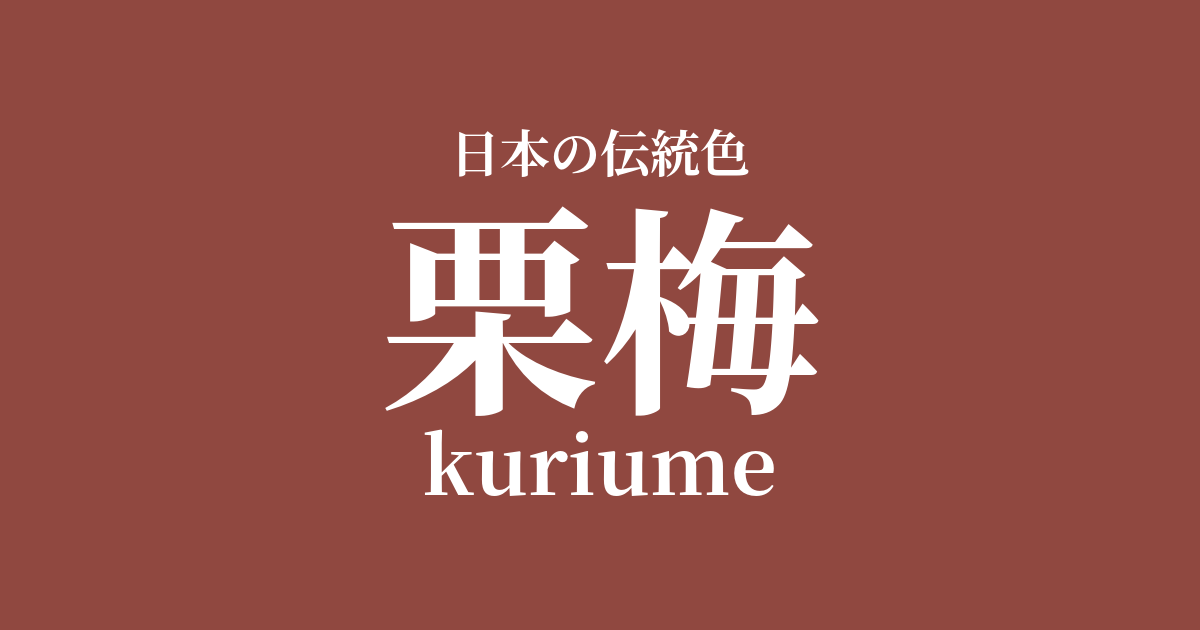
| Japanese color name | Chestnut plum |
|---|---|
| reading | kuriume |
| HEX | #904840 |
| RGB | 144, 72, 64 |
What is Kuriume? Origin and etymology
The name "Kuriume" (chestnut plum) is said to have been derived from its reddish-dark brown color, reminiscent of chestnut skin. Specifically, it is thought to be derived from a hue that combines the "chestnut color" obtained from the bark and husks of chestnut trees with the reddish tones of "Umezome" (plum dye), which is dyed using dyes extracted from the bark and roots of plum trees. It is one of the color names that symbolizes Japan's traditional sense of color, combining the colors of plants found in nature. Its deep and subdued hue evokes a sense of calm and dignity.
This color name originated during the Edo period amidst the popularity of diverse shades of brown. At the time, the shogunate's sumptuary laws restricted bright colors, so common people found subtle differences in shades of brown and gray, and a culture of enjoying these nuances flourished. Kuriume (chestnut plum) was one of these popular colors, known as "forty-eight shades of brown and one hundred shades of gray," and can be considered a sophisticated color name born from a keen observation of nature.
Historical background of chestnut plum
The color name "Kuriume" (chestnut plum) only began to appear in historical documents from the mid-Edo period onward. During this time, brown and gray were extremely popular among common people, resulting in countless variations, so much so that they were called "forty-eight shades of brown and one hundred shades of gray." Kuriume was one of the colors that emerged during this trend, and it became particularly popular as a color symbolizing the townspeople's culture of Edo.
In particular, a shade of brown known as "Danjuro-cha," used in the stage costumes of Kabuki actor Ichikawa Danjuro, became popular, and Kuriume (chestnut plum) is sometimes considered part of that group. Because of this background, Kuriume was not merely a plain color, but rather a refined color that reflected the aesthetic sensibilities of the people of the time, such as "chic" and "sophistication," and was highly cherished. It is said to have been widely used as a color for kimonos and haori jackets, by both men and women.
Related literature, waka poetry, and seasonal words
Because "Kuriume" (chestnut plum) is a relatively new color name that originated in the Edo period, it does not appear directly in classical literature such as the Manyoshu or The Tale of Genji. However, in late Edo period humorous novels, sentimental novels, and ukiyo-e prints, the customs of the people of that time are depicted in detail, and chestnut plum-colored browns are frequently seen as the color of their clothing. These works suggest that chestnut plum was an integral part of the daily lives of townspeople.
Although not a direct color name, a hue similar to chestnut plum is sometimes used to describe autumn scenes, such as the color of chestnuts or fallen leaves. While "chestnut plum" is not a recognized seasonal word, its hue is deeply associated with other autumn seasonal words like "chestnut" and "autumn leaves," evoking in the viewer a sense of the harvest season and the passage of time. Color descriptions in literary works are important clues to understanding the culture and aesthetic sensibilities of a particular era.
Color scheme preview
This is to check the readability of the text when this color is used as the background.
Chestnut and plum color scheme proposal
Color produced (#FBFBF4)
The rich, deep brown of the chestnut plum color and the soft, natural white of the off-white color create a beautiful contrast. This color scheme balances cleanliness and warmth, with each color complementing the others, resulting in a sophisticated Japanese atmosphere and a modern impression.
Soot bamboo color (#6E5545)
The reddish-brown of the chestnut plum and the yellowish-brown of the sooty bamboo are harmonious colors from the same color family. The slight differences in saturation and brightness create depth, giving a very calm and sophisticated impression. It is also a color scheme that evokes the nature of autumn.
鶸Meng Huang (#8F994A)
The reddish-brown chestnut plum and the bright yellowish-green yellowish-green are close to complementary colors, and have the effect of making each other's colors appear more vibrant. This color scheme evokes the contrast in nature, such as tree bark and young leaves, and gives a lively sense of life and a fresh impression.
Practical Scenes
In the world of traditional Japanese clothing, chestnut plum blossom (kuriume) is used in kimonos, obi sashes, and haori jackets, creating a sophisticated and refined adult atmosphere. It is particularly suitable for autumn attire and is highly valued as a color that expresses the feeling of the season. Combining it with other brown or green tones allows for a more profound and nuanced coordination.
In interior design, using it as an accent in wallpaper, curtains, and furniture brings a sense of depth and warmth to a space. When combined with light colors such as light wood or off-white, it can create a modern Japanese space that incorporates traditional elements.
In web and graphic design, chestnut plum is an effective color to convey a sense of luxury, reliability, and tradition when used as a background or key color. It is particularly well-suited to content themed around history, culture, and natural materials.