
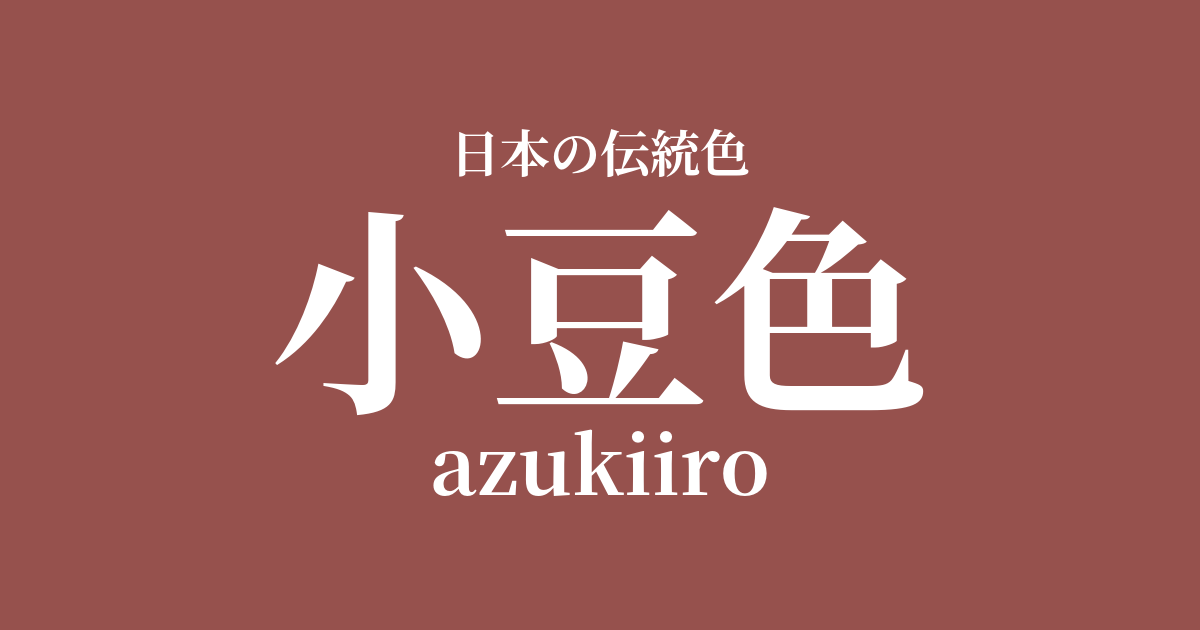
| Japanese color name | Azuki bean color |
|---|---|
| reading | azukiiro |
| HEX | 1TP5 T96514D |
| RGB | 150, 81, 77 |
What is the color "azuki bean"? Origin and etymology.
Azuki-iro (azuki bean color) is a dull reddish-brown color derived from the color of the seeds of the adzuki bean, a plant belonging to the legume family. Since ancient times, the red color of adzuki beans has been believed to have the power to ward off evil spirits, and it has been deeply rooted in Japanese life and culture, such as in red bean rice eaten at celebrations and festivals. Given this background, it is thought that this color, which is reminiscent of adzuki beans, has also become established as a familiar color name among people.
Its appearance as a color name in literature is relatively recent, and it is believed to have become common after the Edo period.
The historical background of the reddish-brown color
The name "azuki bean color" became commonly used during the Edo period. During this time, with the improvement of dyeing techniques, the development of townspeople's culture, and the influence of sumptuary laws, a variety of shades of brown and gray, exemplified by the "forty-eight shades of brown and one hundred shades of gray," became fashionable. Azuki bean color is considered one of the colors that emerged from the Edo aesthetic, which valued calmness and sophistication.
In particular, brownish-red colors, such as "Danjuro-cha" (a type of brown tea favored by Kabuki actor Ichikawa Danjuro), were very popular among the common people, and reddish-brown was also widely used for kimonos, obi sashes, and accessories.
Related literature, waka poetry, and seasonal words
The color "azuki-iro" (red bean color) became established during the Edo period, so there are no direct descriptions of it in classical Heian literature such as "The Tale of Genji" or "The Pillow Book." However, Edo-period humorous books and ukiyo-e prints depict townspeople in a reddish-brown color reminiscent of azuki-iro. Furthermore, "azuki" (red bean), from which the color is derived, is treated as a seasonal word for autumn. As the harvest season approaches, it has been featured in waka and haiku poetry as a word associated with the changing seasons and people's lives, such as azuki porridge and botamochi (rice cakes covered in red bean paste) eaten during the equinox.
The fire burning red as the red beans are cooked, a gentle autumn rain falls.
Color scheme preview
This is to check the readability of the text when this color is used as the background.
A color scheme proposal in reddish-brown.
Color produced (#FBFBF4)
By combining it with a warm off-white, the reddish-brown of the azuki bean color stands out, creating an elegant and soft contrast. This color scheme has a natural feel, balancing cleanliness and warmth.
Uguischa (#715C1F)
The muted greenish-brown color, reminiscent of the leaves and stems of adzuki beans, is complementary to the reddish hue of adzuki beans, and the two colors enhance each other. This color scheme evokes the colors of nature, creating a simple yet profound impression.
Chestnut plum (#85403A)
Like the azuki bean color, it's a reddish-brown shade, and when combined with the deeper chestnut plum color, it creates a unified and calm impression. The resulting color scheme is warm and rich, reminiscent of the autumn harvest.
Practical Scenes
In the world of kimono, azuki bean color is considered a color that combines calmness and elegance, and is used for obi sashes, haori jackets, and the kimono itself. It is especially well suited to the autumn season, and when combined with other brown or green colors, it can create a tasteful look. One of its characteristics is that it is a color that can be easily incorporated into outfits regardless of age.
In interior design, the warmth of the reddish-brown color creates a relaxing atmosphere. Incorporating it into one wall of wallpaper, or into fabrics such as cushions, rugs, and curtains, can add depth and a calming accent to a room. It pairs particularly well with wooden furniture and houseplants.
In web and graphic design, it is effective in conveying a sense of trust, tradition, and organic impression. When used as a background or accent color in Japanese-style designs, food-related websites, or content dealing with historical themes, it can express a calm and sophisticated atmosphere.