
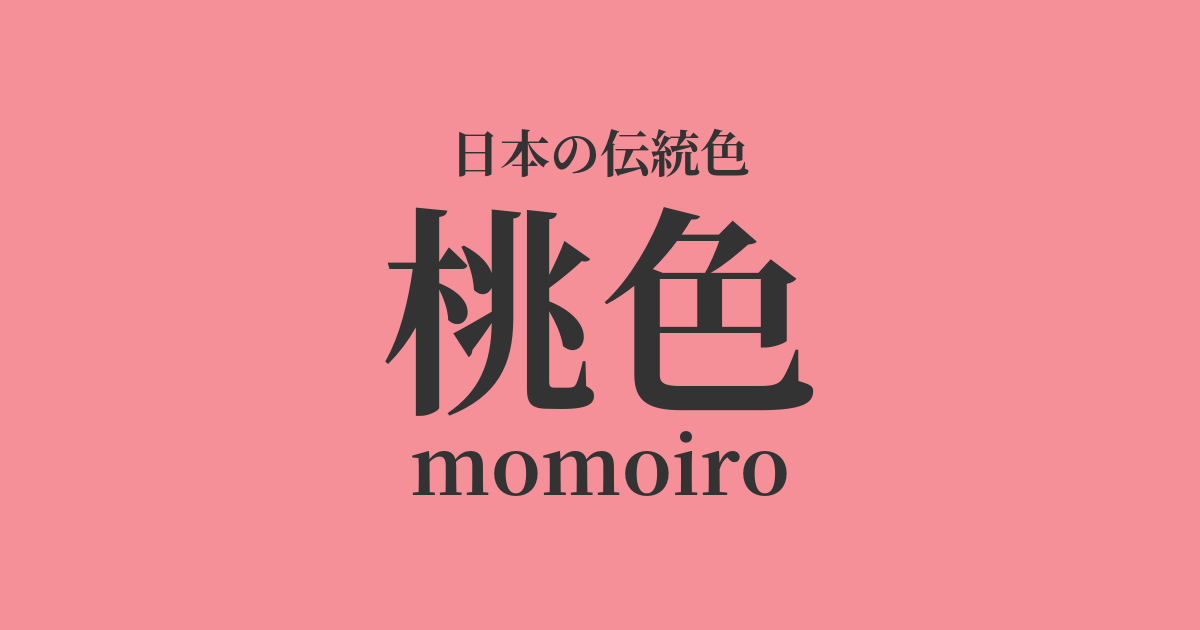
| Japanese color name | pink |
|---|---|
| reading | momoiro |
| HEX | #F58F98 |
| RGB | 245, 143, 152 |
What is pink? Origin and etymology
As the name suggests, "momoiro" (桃色) refers to a pale, gentle red color, like that of a peach blossom. In ancient times, it was also called "momohanairo" (桃花色). Peaches are native to China and are believed to have been introduced to Japan during the Yayoi period, with mentions of them appearing in the Kojiki (Records of Ancient Matters). In China, peaches were considered sacred trees that warded off evil spirits and brought eternal youth and longevity, and this belief spread to Japan. It is thought that the fact that Hina Matsuri (Girls' Day) is called "Momo no Sekku" (桃の節句) also stems from this belief.
The kanji character for "peach" is written with the radical for "tree" and the character for "omen." The character "omen" signifies the beginning of something or a large number, and is said to represent the many fruits that grow on a peach tree. For this reason, peaches have also come to be a symbol of vitality, fertility, and prosperity. The color pink has long been cherished by the Japanese people as a color that evokes images of happiness, love, and youthfulness, due to the cultural background of peaches and the lovely appearance of their flowers that herald the arrival of spring.
A pink historical background
Pink was already being used in dyeing during the Heian period and was a favorite color among the aristocracy. In classical literature such as "The Tale of Genji," the color of "peach blossom" (momoka) appears as a layered color in women's clothing. It is believed that the dyes used at the time were mainly safflower and sappanwood, and that various shades of pink were expressed by adjusting the number of dyeing cycles and the mordants used.
With the advent of the Edo period, dyeing techniques spread to the common people along with the popularization of cotton, and pink became a favorite color, especially for the kimonos and accessories of young women. Many ukiyo-e prints depict women wearing pink kimonos, suggesting that it was a fashionable color at the time. During this period, pink, possessing both vibrancy and charm, was one of the important colors that colored the lives of ordinary people.
After the Meiji era, the introduction of inexpensive, brightly colored chemical dyes from the West dramatically changed Japanese dyeing culture. This made it possible to express even more vibrant and diverse shades of pink than before. Even today, pink is widely used in fields ranging from traditional Japanese clothing to fashion and design, as a color that symbolizes spring and expresses gentleness and happiness.
Related literature, waka poetry, and seasonal words
Pink appears frequently in classical Japanese literature, particularly when describing spring scenes or the beauty of women. The Manyoshu anthology contains a poem by Otomo no Yakamochi that reads, "In the spring garden, the peach blossoms glow crimson; a young woman stands on the path illuminated by their light." This poem is known for its vibrant energy, as it juxtaposes the beauty of blooming peach blossoms with the image of a young woman walking beneath them.
In the Heian period novel "The Tale of Genji," the color "peach blossom" is described as the color of the characters' clothing, and it is an important element that expresses the characters' age, personality, and the sense of the season. In the world of haiku, "peach blossom" is also established as a seasonal word for spring, and is often used in poems to evoke peaceful spring scenery or the image of "Peach Blossom Land," which originates from a Chinese legend.
In the spring garden, the peach blossoms glow crimson, and a maiden stands on the path bathed in their light.
Color scheme preview
This is to check the readability of the text when this color is used as the background.
Pink color scheme proposal
Light blue (#C3D825)
This combination evokes the image of peach blossoms and newly sprouted leaves. It's a quintessential color scheme that heralds the arrival of spring, giving a bright and fresh impression full of vitality and hope. The colors complement each other, creating a natural and harmonious space.
White training (#F3F3F3)
When paired with pure, lustrous white, the delicate and gentle qualities of pink are further enhanced. This creates an elegant and refined atmosphere, resulting in a clean and sophisticated color scheme. It is particularly suitable for expressing feminine beauty in traditional Japanese clothing and designs.
Indigo (#165E83)
The deep, calming indigo color subtly balances the sweetness of the peach, creating a sophisticated and mature impression. These colors are almost complementary, enhancing each other's beauty and creating a modern, stylish atmosphere. It's particularly effective as an accent color for accessories and designs.
Practical Scenes
In the world of traditional Japanese clothing, pink is a color that particularly expresses the feeling of spring, and is widely used in furisode, houmongi, and komon kimonos. It possesses a gorgeousness and loveliness suitable for young women's formal wear and is favored for celebratory occasions. Incorporating it as an accent color in accessories such as obi, obiage, and obijime also has the effect of brightening the entire outfit.
In interior design, incorporating pink into wallpaper, curtains, cushions, etc., creates a bright and gentle atmosphere throughout the space. It is especially suitable for spaces where you want to relax, such as bedrooms and children's rooms. Rather than using it throughout, using it as an accent color can effectively add warmth and vibrancy to the space.
In web and graphic design, pink is used to convey friendliness and happiness. It tends to be frequently used in products and services aimed at women, baby products, and spring campaign websites. Because it gives a soft impression, it is an effective color when you want to evoke a sense of security and positive emotions in the user.