
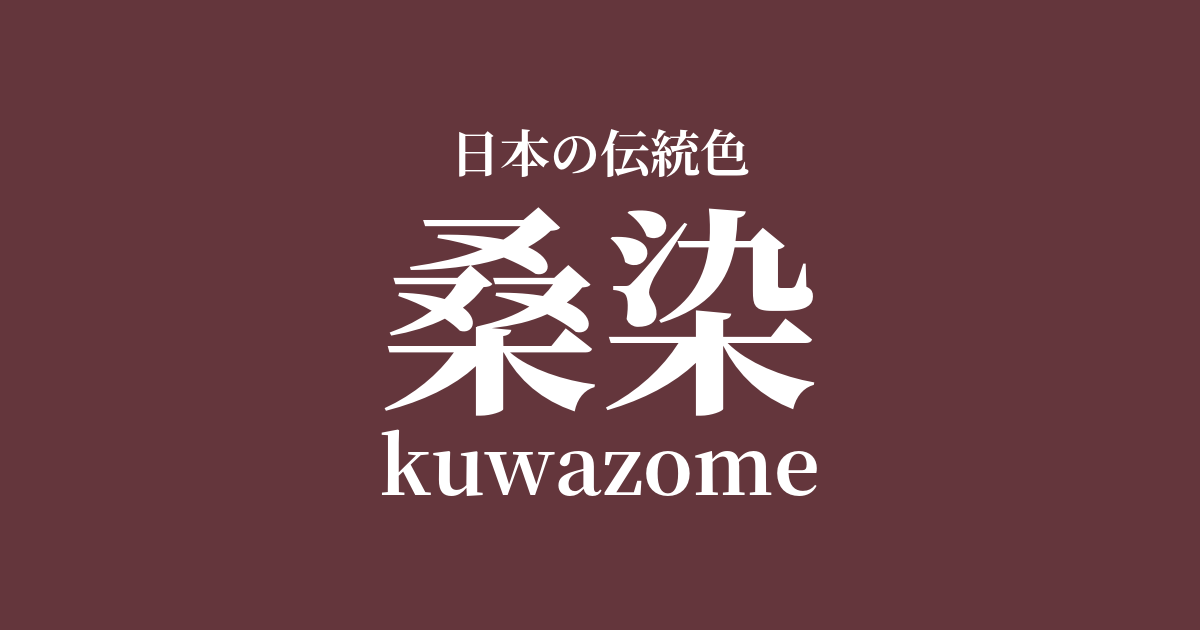
| Japanese color name | Mulberry dye |
|---|---|
| reading | kuwazome |
| HEX | #64363C |
| RGB | 100, 54, 60 |
What is mulberry dyeing? Origin and etymology
Mulberry dye, as the name suggests, is a color produced using the bark and root bark of the mulberry tree, a plant belonging to the Moraceae family. The bark of the wild mulberry is finely chopped and boiled to create a dye solution, which is then used to soak the fabric in. The color changes depending on the mordant used; using iron mordant results in a darker shade, while using lye or other mordants results in a yellowish hue. Mulberry trees, which have long been indispensable for sericulture, have also been deeply involved in people's lives as a dye.
The color of mulberry dye is described as a deep reddish-brown or dark reddish-brown. Although it is derived from the familiar mulberry plant, the color is subdued, conveying a sense of calm and elegance. It has the warmth and depth characteristic of naturally derived dyes, and one of its features is that its appearance subtly changes depending on how the light hits it. This understated color has resonated with the Japanese aesthetic sense since ancient times.
Historical background of mulberry dyeing
The history of mulberry dyeing is long, dating back to the Heian period. The Engishiki, a collection of laws compiled in the mid-Heian period, mentions "mulberry dyeing" among the regulations concerning dyeing, indicating that it was already established as an officially recognized dye color at that time. From this description, it can be inferred that it was a color used in important occasions, such as for clothing used in court ceremonies.
It is said that mulberry dye was also used as the color of the robes worn by the emperor. In particular, there is a theory that mulberry dye was sometimes used as a substitute for "kōrozen," the yellow dye worn by the emperor in important ceremonies after his enthronement. This suggests that mulberry dye was treated as a very noble and special color. From the Kamakura period onward, it was also used for the clothing of samurai and monks, and its simple and dignified color was favored.
Related literature, waka poetry, and seasonal words
Literary works from the Heian period, such as "The Tale of Genji" and "The Pillow Book," meticulously describe the colors of the characters' clothing, but the term "mulberry dye" does not appear directly in many examples. However, considering the dyeing techniques and color trends of the time, it is quite possible that some of the various shades of brown depicted in these works were close to the color of mulberry dye.
While mulberry dyeing itself is rarely treated as a seasonal word, the mulberry tree, from which the dye is derived, has been featured in waka and haiku poetry as a summer seasonal word, "mulberry fruit," and as a word related to sericulture. The scenery of lush green mulberry leaves in early summer and the sound of silkworms eating mulberry leaves have long been one of the scenes that symbolize the Japanese sense of the seasons. The color of mulberry dyeing is closely linked to these natural processes and the lives of people.
Color scheme preview
This is to check the readability of the text when this color is used as the background.
Mulberry dye color scheme proposal
Soot bamboo color (#6E5B46)
The reddish hue of mulberry dye and the yellowish-brown of smoked bamboo harmonize to create a deep and calming impression. Both are earth tones reminiscent of natural materials, and this color scheme brings a sense of unity and gravitas to Japanese spaces and traditional designs.
Deutzia color (#F7FCFE)
The deep hues of the mulberry dye highlight the pure and bright deutzia color, creating a beautiful contrast. This color combination exudes a refined and elegant atmosphere and is a traditional pairing often seen in the layering of colors in kimonos.
Light green (#A9D159)
The reddish-brown of mulberry dye and the vibrant, fresh green of young leaves are almost complementary colors that enhance each other. This color scheme evokes a sense of vitality and the breath of nature, bringing a modern freshness to a traditional atmosphere.
Practical Scenes
In the world of traditional Japanese clothing, mulberry dye, with its understated elegance, is used for formal kimonos, casual kimonos, and obi fabrics. It particularly adds depth and a sense of the season to autumn and winter attire, creating a refined and mature look regardless of age. It is also a popular color for men's kimonos and haori jackets.
In interior design, incorporating mulberry dye into wallpaper, fabrics, and furniture brings warmth and a sense of depth to a space. It pairs exceptionally well with natural materials such as wood, Japanese paper, and earthen walls, making it ideal for creating a quiet and relaxing Japanese modern space.
In web and graphic design, using mulberry dye as a background or accent color can convey a sense of luxury, tradition, and reliability. It is particularly effective for websites themed around history and culture, as well as for organic products and established brands, in building their brand image.