
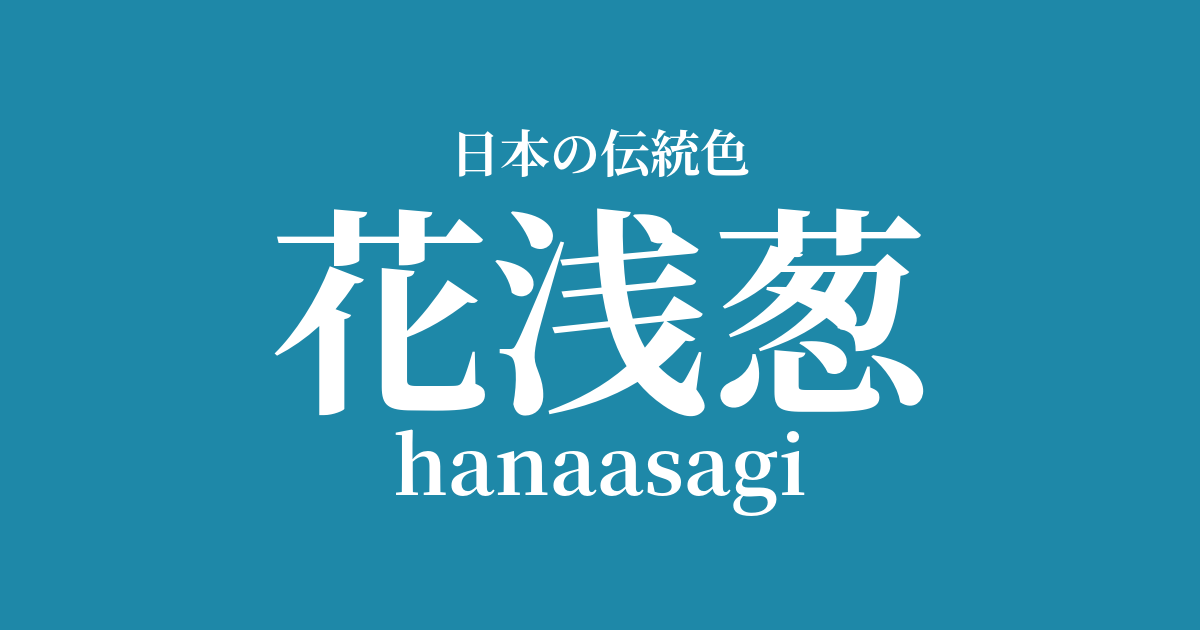
| Japanese color name | Hanaasagi |
|---|---|
| reading | hanaasagi |
| HEX | #1E88A8 |
| RGB | 30, 136, 168 |
What is Hanaasagi? Origin and etymology
Hanaasagi is a color name derived from Asagi-iro. Asagi-iro refers to a bluish-green color named after the light green of onion leaves and has existed as a color name since ancient times. Hanaasagi is created by adding the prefix "hana," which means something more beautiful or vivid, to this. This is similar to how "hanada-iro" is a more beautiful name for "hanada-iro," indicating a more vibrant and brighter shade than Asagi-iro.
The dyeing method is thought to have involved lightly dyeing the fabric with indigo, and then applying a small amount of yellow dye, such as that from Japanese knotweed, on top.
Historical background of Hanaasagi
While the color Asagi (light blue) has existed since the Heian period, the name "Hana Asagi" (flower Asagi) is believed to have become common only after the mid-Edo period. The Edo shogunate frequently issued sumptuary laws, restricting the colors of clothing that commoners could wear. As a result, people developed a delicate color culture known as "Forty-Eight Browns and One Hundred Grays," where they enjoyed subtle differences in shades within a limited range of colors such as brown, gray, and indigo.
Hana-asagi (a type of light blue) was one of the colors that emerged during that fashion trend, and it was favored as a stylish color for the clothing and accessories of ordinary people, especially for the costumes of Kabuki actors.
Related literature, waka poetry, and seasonal words
While the color name "Hanaasagi" (flower-light blue) doesn't appear directly in many classical literary works, the original "asagi" (light blue) is found in classical works such as "The Tale of Genji." For example, in the "Suetsumuhana" chapter, Hikaru Genji describes the old-fashioned attire of the princess of Hitachi-no-miya as "wearing a garment of asagi." In modern literature, in Natsume Soseki's "Botchan," there is a scene where the character "Akashatsu" wears a "Hanaasagi shirt," conveying the impression that it was a fashionable and stylish color at the time.
Although it is not a recognized seasonal word, its refreshing hue often leads people to associate it with summer scenes.
Color scheme preview
This is to check the readability of the text when this color is used as the background.
Suggested color scheme for Hanaasagi (light blue-green)
Coral color (#F88379)
The bluish-green hana-asagi and the reddish-orange sango-iro are close to complementary colors. They vividly enhance each other, creating a lively and bright color scheme. It can achieve a balance between a Japanese atmosphere and modernity.
White group (#80C2D1)
By combining Hanaasagi with Hakuraku, a pale blue-green color similar to Hanaasagi, a harmonious and refreshing gradation is created. It gives a cool and sophisticated impression, making it suitable for creating a refreshing atmosphere.
Blue gold (#FABE00)
The vibrant yellow of turmeric creates a beautiful contrast with the bluish hue of light blue. By enhancing each other's colors, they create an exotic and modern atmosphere. This combination is an effective way to create an eye-catching accent.
Practical Scenes
In traditional Japanese clothing, its refreshing and stylish impression makes it a popular choice for summer kimonos, yukatas, obiage (sash ties), and han-eri (collar ties). It pairs particularly well with natural materials such as cotton and linen, making it one of the best colors for creating a cool and refreshing look.
In interior design, incorporating accent walls, cushions, curtains, and other fabrics brings a sense of freshness and brightness to a space. When combined with white or natural wood-grain furniture, it can create a sophisticated Scandinavian or Japanese modern atmosphere.
In the fields of web design and graphic design, this color is used to express both trustworthiness and freshness simultaneously. It is effective as a corporate color, a service's theme color, or as an accent color for attention-grabbing buttons and links.