
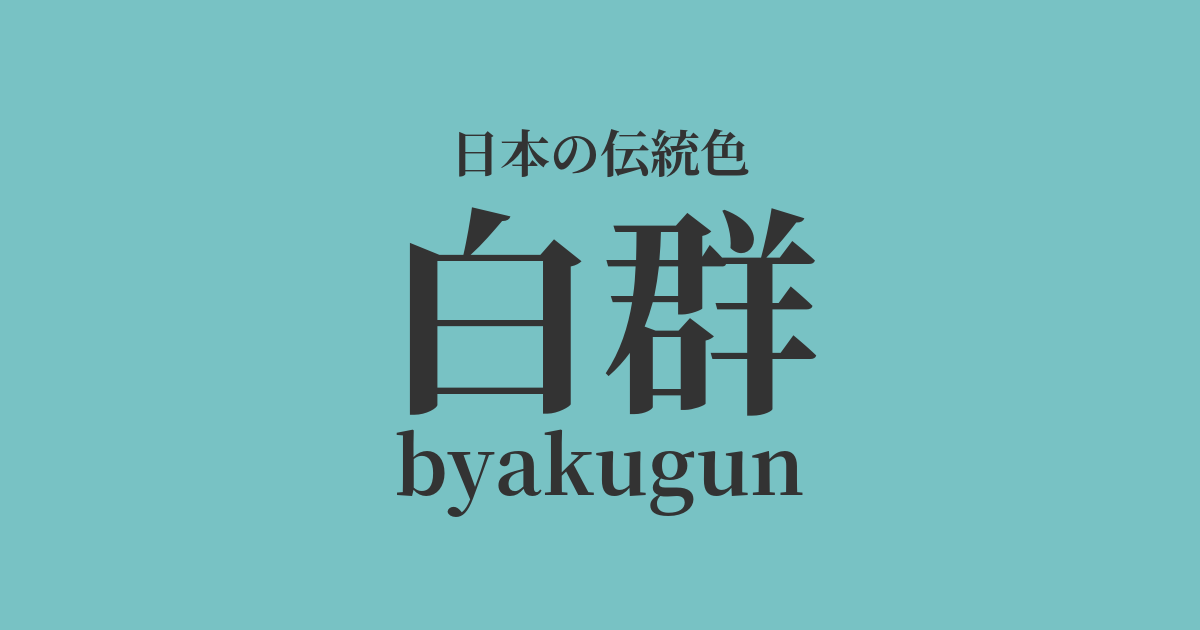
| Japanese color name | white group |
|---|---|
| reading | Byakugun |
| HEX | #78C2C4 |
| RGB | 120, 194, 196 |
What is Hakugun? Origin and etymology
Hakugun is a color name derived from the mineral pigments used in Japanese painting. Its raw material is azurite, and the pigment made by crushing this mineral is called "gunjo" (ultramarine). When the particles of this gunjo are further ground, the color gradually becomes lighter and whiter. This pale blue-green state is called "hakugun."
In other words, it's not a color created by mixing ultramarine with white pigment, but rather a hue born from the fineness of the particles, and this manufacturing method is said to be the reason why it bears the name "white."
Historical background of Hakugun
The pigment "ultramarine," from which the white pigment "Hakugun" is derived, has long been treated as extremely valuable. In the world of Japanese painting in particular, its vivid blue color was highly prized and used in scenes symbolizing sanctity and authority, such as Buddhist paintings and murals in temples and shrines. Hakugun, as a lighter shade of ultramarine, was used to represent clear skies and pure flowing water. During the Edo period, Rinpa school painters are said to have used it effectively in their decorative works, giving the paintings a sense of coolness and depth with its elegant hue.
Related literature, waka poetry, and seasonal words
The color name "Hakugun" (白群) is rarely mentioned directly in classical Japanese literature such as waka or haiku. However, the bright, clear blue-green image associated with this color is linked to the descriptions of scenes in many literary works. For example, it evokes images of the summer sky found in the Manyoshu anthology, or the color of the shallow waters of a clear stream depicted in The Tale of Genji, as a natural color that colors the worldview of classical literature.
Although it doesn't exist as a seasonal word, it can be said that this color is close to the refreshing image evoked by words like "mild heat" or "summer sky."
Color scheme preview
This is to check the readability of the text when this color is used as the background.
White group color scheme proposal
White training (#FCFAF2)
This color scheme features the refreshing quality of white, complemented by the soft, yellowish-white of white. It exudes cleanliness and gentleness, creating a refreshing impression reminiscent of a summer morning. This combination is easy to incorporate into interior design and fashion, regardless of whether it's Japanese or Western style.
Coral color (#F58F84)
The bluish-green of the white group and the warm-toned coral color are close to complementary colors, and they have the effect of making each other appear more vibrant. This combination is gorgeous yet somehow evokes a Japanese aesthetic, making it suitable for accents on accessories and designs.
Indigo (#274054)
By using varying shades of the same blue color family, a unified and calm impression is created. The brightness of the light blue and the depth of the indigo blue express depth and elegance. This color scheme is often seen in kimono combinations and the designs of sophisticated websites.
Practical Scenes
In the world of traditional Japanese clothing, the white-green color is often used for summer kimonos, obi sashes, and accessories such as obiage (sash ties). This is because its cool hue provides a visually refreshing feeling during the hot season. It is especially common in yukata patterns and in lightweight kimonos made of materials such as ro and sha.
In interior design, incorporating it as an accent color in wallpaper, curtains, cushions, etc., brings a bright and refreshing atmosphere to a space. It goes well with natural spaces based on white, beige, and wood tones, and has the effect of creating a sense of openness.
In web and graphic design, it is used as a color that conveys a clean and modern impression. It is particularly suitable for healthcare-related or environmentally themed websites, or as a corporate color for companies that want to convey trustworthiness and cleanliness.