
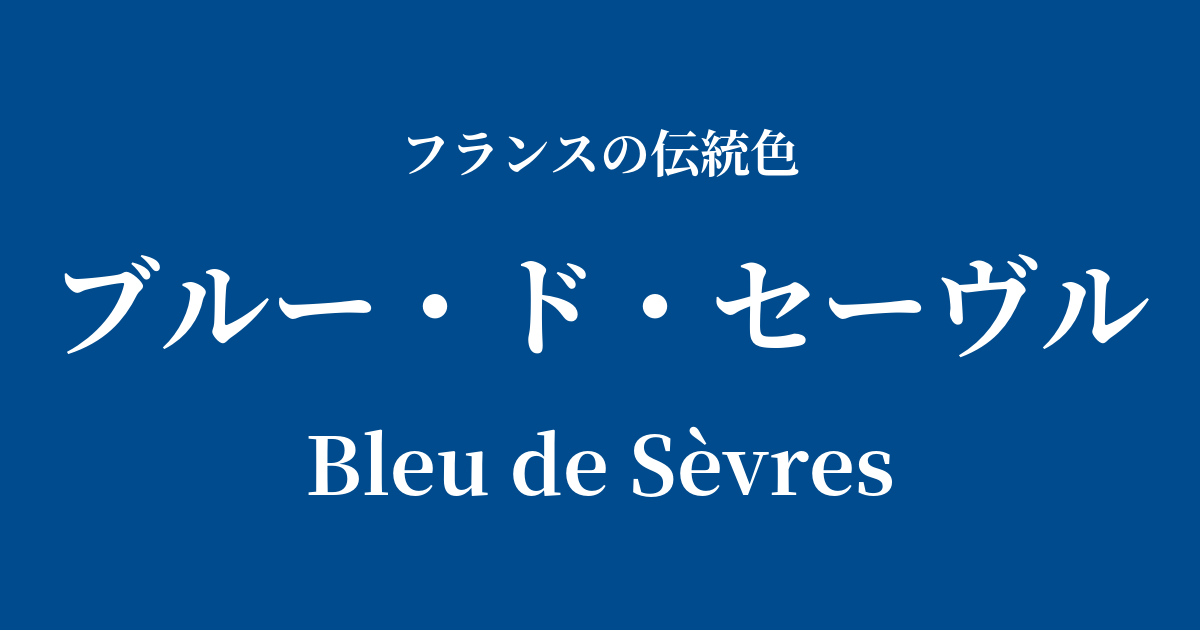
| French | Bleu de Sèvres |
|---|---|
| Katakana | Bleu de Sèvre |
| HEX | #004B8D |
| RGB | 0, 75, 141 |
What is Bleu de Sèvre? Origin and etymology
Bleu de Sèvres, as its name suggests, means "Sèvres blue" and is a traditional French color. This color originates from a deep, vibrant cobalt blue developed in the mid-18th century at the Royal Sèvres Porcelain Manufactory in France.
In Europe at that time, countries were fiercely competing in porcelain production to rival the whiteness of Chinese porcelain and the technology of German Meissen porcelain. Amidst this competition, France pursued its own unique aesthetic and created this iconic blue color. By firing a pigment primarily composed of cobalt oxide at high temperatures, they created a blue that possessed unparalleled transparency and depth.
The historical background of Bleu de Sèvres
The history of Bleu de Sèvres is deeply intertwined with the history of the French royal family. In particular, it cannot be told without mentioning Madame de Pompadour, Louis XV's mistress and a great patron of the arts. She was passionate about developing the Sèvres porcelain factory and elevated this noble blue to a symbol of court culture.
This color adorned the Palace of Versailles in the 18th century, when the Rococo style flourished, and was used in tableware, vases, and decorative items favored by royalty and nobility. Because of its majestic beauty, it was also called "Royal Blue (Bleu de Roi)," and became a color embodying the authority and refined aesthetic of the French royal family.
Even after the turbulent times of the French Revolution, its value remained undiminished and was carried on into the Napoleonic Empire. Bleu de Sèvres continues to shine to this day as a testament to France's world-renowned craftsmanship and artistry.
Bleu de Sèvre in the world of art and fashion
Bleu de Sèvres is closely associated with 18th-century Rococo art. It resonated with the elegant and sweet courtly scenes depicted by artists such as François Boucher, and Sèvres porcelain itself was considered the pinnacle of decorative art at the time. The combination with gold accents was particularly opulent, and the shimmering contrast of blue and gold in the light captivated many.
In the world of fashion, this deep blue paired exceptionally well with lustrous fabrics such as silk and velvet, and was a favorite color for ladies' dresses and interior textiles. This color, which conveyed nobility and intelligence, also served to indicate the wearer's status and refinement.
Even today, Bleu de Sèvre continues to inspire many designers. In luxury brand collections and interior designs, it exudes a special presence as a color that symbolizes timeless elegance and tradition.
Color scheme preview
This is to check the readability of the text when this color is used as the background.
Color scheme suggestion for Bleu de Sèvre
Jaune de Naples (#F7D98E)
This is the most classic and dignified color scheme, reminiscent of the opulent gold decoration of Sèvres porcelain. The deep blue and shimmering yellow complement each other, creating an elegant and vibrant impression.
Rose Pompadour (#ED87A3)
This combination of colors, inspired by Madame de Pompadour, evokes a historical narrative. The deep blue and elegant pink express the sophisticated and sweet world of the Rococo era.
Blanc d'Argent (#E8E4E1)
This color scheme, full of cleanliness and elegance, enhances the beauty of the white porcelain. The depth of the Bleu de Sèvres stands out, giving a modern, sophisticated, and calm impression.
Practical Scenes
In interior design, using this color as an accent wall, or incorporating it into fabrics such as sofas and curtains, brings depth, tranquility, and elegance to a space. Pairing it with gold or brass lighting and accessories creates a classic and luxurious atmosphere.
In fashion, it's perfect for special occasions, such as dresses and jackets. Incorporating it into glossy materials like velvet or satin further enhances the color's noble qualities. Additionally, using it as an accent color in accessories like bags or scarves adds a touch of elegance to the entire outfit.
In web and graphic design, it is effective when you want to convey trustworthiness, expertise, and sophistication. Using it as the main or accent color on websites for museums, historic brands, or law firms can express intelligence and refinement.