
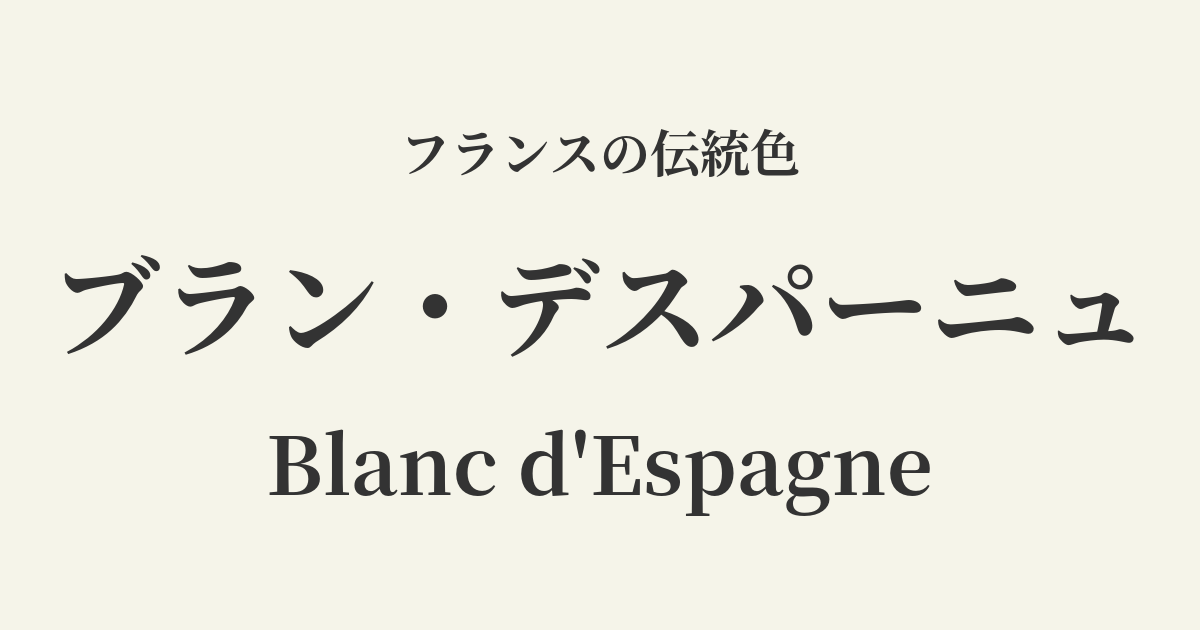
| French | Blanc d'Espagne |
|---|---|
| Katakana | Blanc d'Espagne |
| HEX | #F5F4E9 |
| RGB | 245, 244, 233 |
What is Blanc d'Espagne? Origin and Etymology
Blanc d'Espagne is a warm off-white color name that means "Spanish white" in French.
As the name suggests, this color originates from the highest quality white pigment once produced in Spain. This pigment, called "lead white," was primarily composed of lead carbonate. Due to its excellent opacity and brilliance, it has long been one of the most important white pigments for European painters.
Spanish lead white, in particular, was considered to be of high purity and was highly valued by French artists, earning it the special name "Spanish white." Although it is no longer used today due to the toxicity of lead, its gentle and elegant hue still lives on in French color culture.
The historical background of Blanc d'Espagne
The history of Blanc d'Espagne is deeply intertwined with the history of lead white, a pigment whose use dates back to ancient Roman times. Lead white established an unshakeable position in Western painting from the Renaissance through the 19th century.
In France, this color was particularly highly valued during the Bourbon dynasty of the 17th and 18th centuries. In the magnificent Baroque style of the Louis XIV era and the elegant court culture of the subsequent Rococo period, Blanc d'espagnole was used not only in paintings but also in interior decoration and cosmetics. In the time of Marie Antoinette, aristocratic men and women used face powder, primarily composed of lead white, to make their skin appear whiter, and this whiteness was also a symbol of social status.
However, in the 19th century, the toxicity of lead became a concern, and new, safer pigments such as titanium white were developed. As a result, blanc d'espagnè, or lead white, gradually faded into obscurity, but it remains remembered as an important color that adorned French history and art.
Blanc Despagne in the world of art and fashion
In the world of Western art, lead white, the basis for blanc despagne, was indispensable for painters who skillfully manipulated light and shadow. From Renaissance masters to Vermeer, known as the magician of light, and painters such as Jean-Honoré Fragonard and François Boucher, representatives of French Rococo, this pigment was used to brilliantly express the soft texture of human skin and the luster of silk dresses.
This color also had a significant influence on fashion and makeup culture. In the 18th-century French court, pale, smooth skin like that of Blanc d'Espagne was considered the ideal of beauty, and lead-white face powder became fashionable. This is clearly reflected in portraits of the time.
Furthermore, this warm off-white is often used as the background color for "Toile de Jouy," a traditional French textile. It continues to be loved as a background color that elegantly enhances the graceful rural landscape motifs depicted in a single color.
Color scheme preview
This is to check the readability of the text when this color is used as the background.
Blanc Despagne's color scheme proposal
Rose Pompadour (#EDADC7)
This elegant and sweet combination is reminiscent of the Rococo era. The warm white complements the soft pink, creating a feminine, sophisticated, and romantic impression.
Blue Roi (#2B60DE)
When combined with a vibrant blue known as "King's Blue," the colors complement each other, creating a noble and classic impression. The beautiful contrast conveys a dignified elegance.
Vert Veronnaise (#6A8372)
The calming green color scheme, inspired by Renaissance painters, creates a natural and tranquil atmosphere. It's an elegant and sophisticated combination that evokes the peace of nature.
Practical Scenes
In the field of interior design, Blanc Despagne, when used on large areas such as walls, ceilings, and curtains, creates a bright and warm atmosphere throughout the entire space. It is ideal as a base color for French chic and shabby chic styles, and harmonizes beautifully with wood materials and antique gold accessories.
In fashion, it's the perfect color for wedding dresses, high-quality blouses, and linen shirts. It blends better with the skin than pure white, giving a soft and elegant impression, naturally enhancing the wearer's charm. Its versatility, easily matching any color, is also a major appeal.
In web and graphic design, using it as a background color creates a calm and soothing impression. It is suitable for luxury brand websites that want to convey a sense of sophistication and trustworthiness without disrupting the content, as well as lifestyle media that value a natural atmosphere.