
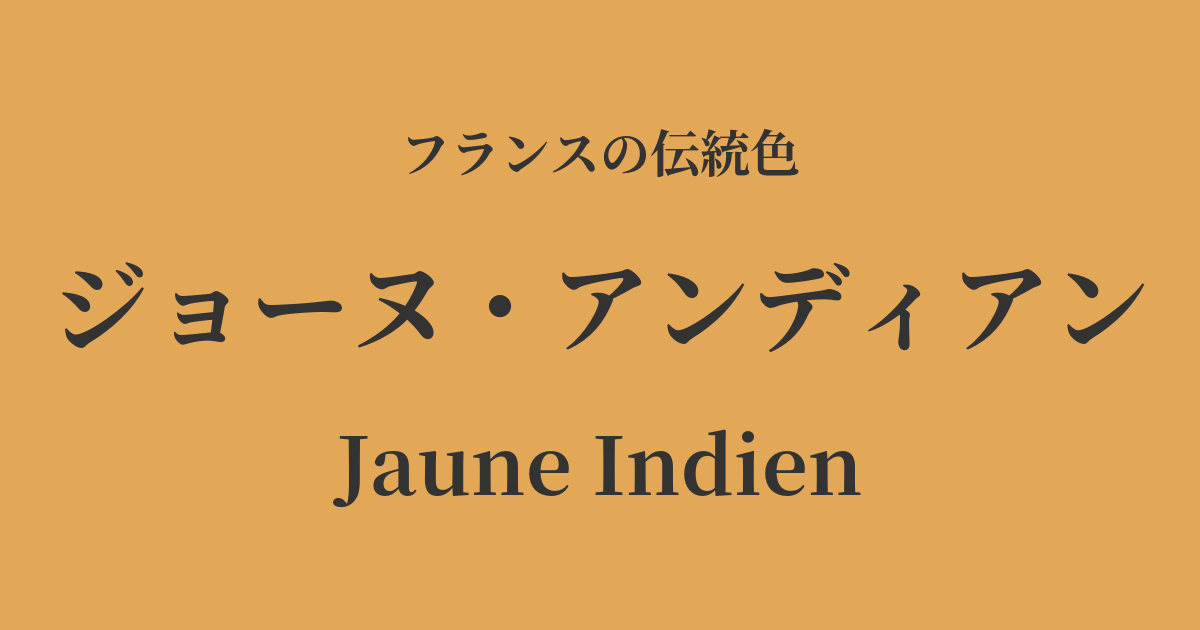
| French | Jaune Indien |
|---|---|
| Katakana | Jaune Indien |
| HEX | #E3A857 |
| RGB | 227, 168, 87 |
What is Jaune Indien? Origin and Etymology
"Jaune Indien" means "Indian yellow" in French, and it is a warm, deep golden color. As the name suggests, this color originates from a special pigment brought from India.
This pigment is known as "Indian Yellow," and its production method is said to have been very unique. One theory suggests that it was made by collecting the urine of cows that were fed only mango leaves, boiling it down, and refining it. This special method resulted in an unparalleled transparency and a vibrant, brilliant yellow color.
However, this manufacturing method was criticized from an animal welfare perspective, and also suffered from inconsistent quality, leading to its discontinuation in the early 20th century. The Jaune Indien we see today is a modern reproduction of its beautiful color using contemporary technology.
Historical background of the Jaune Indien
Jaune Indien first appeared in European color culture during the 17th and 18th centuries, a time when trade with Asia flourished following the Age of Discovery. Exotic pigments and dyes were brought to the European market through companies such as the East India Company.
In France in particular, its popularity reached its peak during the Rococo period of the 18th century. The royalty and nobility of the time had a strong admiration for the cultures of the East, such as China and India, and an Orientalism known as "Chinoiserie" became fashionable. The exotic brilliance of Jaune Indien perfectly matched the opulent and refined aesthetic of this era, and it was widely used in palace wallpaper, luxurious clothing, and porcelain painting.
This color was not merely a beautiful yellow, but a special color that symbolized wealth and a longing for distant lands, vividly adorning French court culture.
Jaune Indien in the world of art and fashion
In the art world, the unique transparency and radiance of Jaune Indien captivated many painters. This color was particularly invaluable to 19th-century Impressionist painters who sought to capture the effects of light. Its warm, shimmering tone was effectively used to depict light-filled landscapes and the bright sunlight illuminating the skin of figures.
Jaune Indien also played an important role in the fields of fashion and textiles. This color was used extensively in the silk dresses worn by Rococo ladies, shimmering like gold on the lustrous fabrics. It was also an essential color in the chintz fabrics that were introduced from India, captivating Europeans with its exotic charm.
Even today, due to its historical background and beauty, it continues to be cherished as an elegant accent color in the world of haute couture and interior design.
Color scheme preview
This is to check the readability of the text when this color is used as the background.
Jaune Indien's color scheme proposal
Blue Nuit (#0F2540)
This combination features a deep navy blue reminiscent of the night sky and a warm yellow that evokes moonlight. The colors beautifully complement each other, creating a sophisticated and intellectual impression. It's perfect for creating a classic atmosphere or for formal occasions.
Veil Olive (#58542B)
This combination of earth tones evokes the landscapes of Provence in southern France. It creates a warm, calming, and relaxing atmosphere, perfect for natural-style interiors and fashion.
Rouge Grenat (#822E2E)
This passionate and exotic color scheme evokes the spices and textiles of India. The brilliance of Jaune Indien and the deep, garnet-like red resonate together, creating a luxurious and dramatic impression.
Practical Scenes
In interior design, incorporating Jaune Indien into accent walls, cushions, or artwork brings warmth and sophistication to a space. In particular, combining it with dark brown wooden furniture and brass lighting creates a classic and substantial atmosphere.
In fashion, incorporating this color with high-quality materials such as silk blouses or cashmere knits highlights its elegant sheen. Pairing it with a navy jacket and gray trousers creates a sophisticated and stylish look that's perfect for the office.
In web and graphic design, this color is effective as a key color for brands that want to convey trustworthiness, tradition, and a touch of warmth. By adding it as an accent to designs based on white or dark blue, you can attract attention while maintaining a refined impression.